
What Sports Venues Usually Need on Site
A sports venue is not one sign type. It is a mix of entrance signs, field identifiers, sponsor boards, safety notices, turnstile labels, parking signs and temporary event branding. A cricket club in Centurion will need a different set-up from a community soccer field in Soshanguve or a private padel club in Hartbeespoort, but the aim is the same: people must find the right gate, move safely and know where they are going.
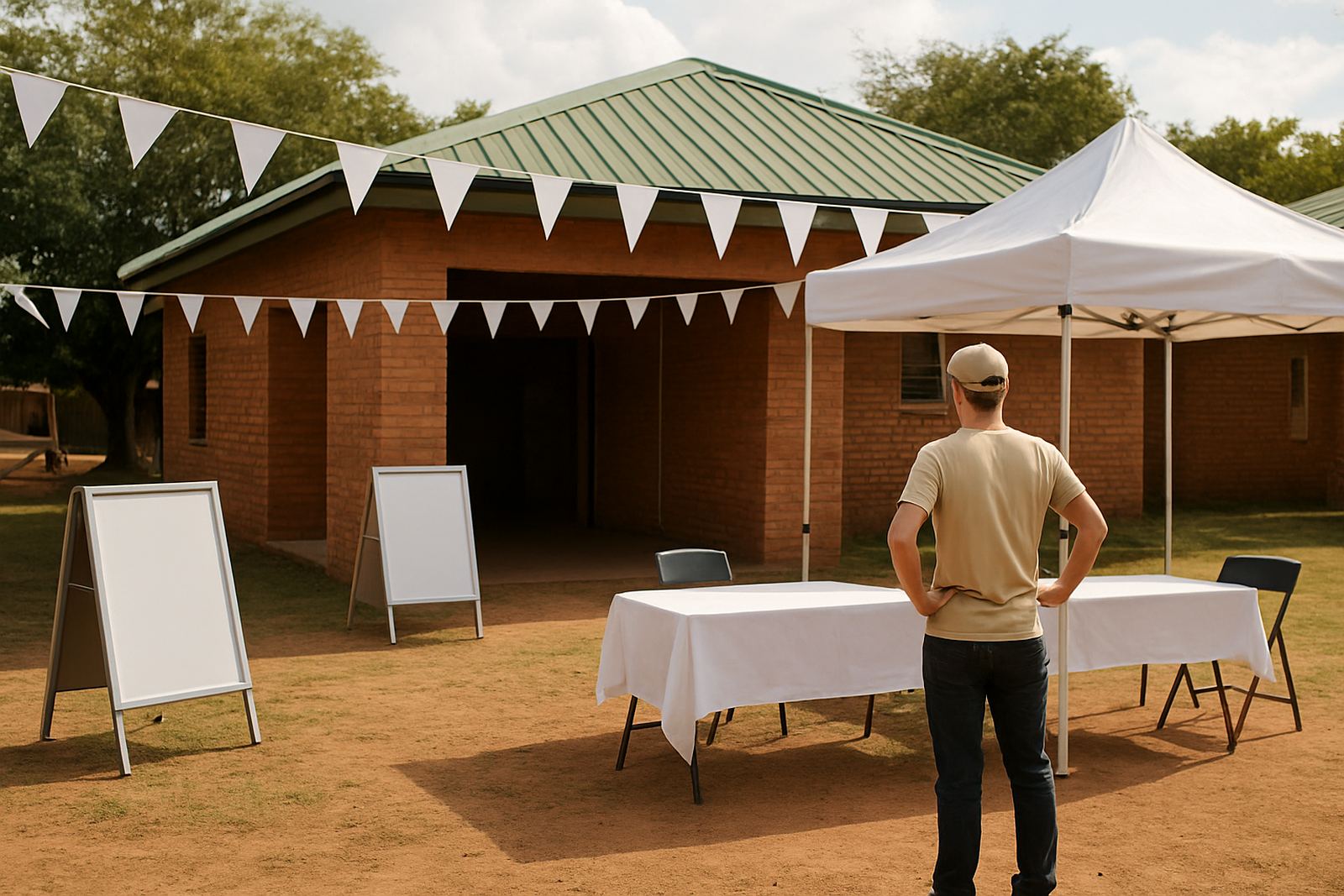
For most venues we start with the basics. That includes main entrance identification, directional signs for parking and changing rooms, spectator rules, emergency exit markers, no-smoking notices and branded panels for the boundary fence or grandstand. If the site hosts match days, school galas or corporate days, we also add temporary banner points, pull-up signage and portable event boards that can be moved when needed.
- Main entrance and gate signs
- Directional signs for parking, change rooms and ablutions
- Field or court number boards
- Safety and access control notices
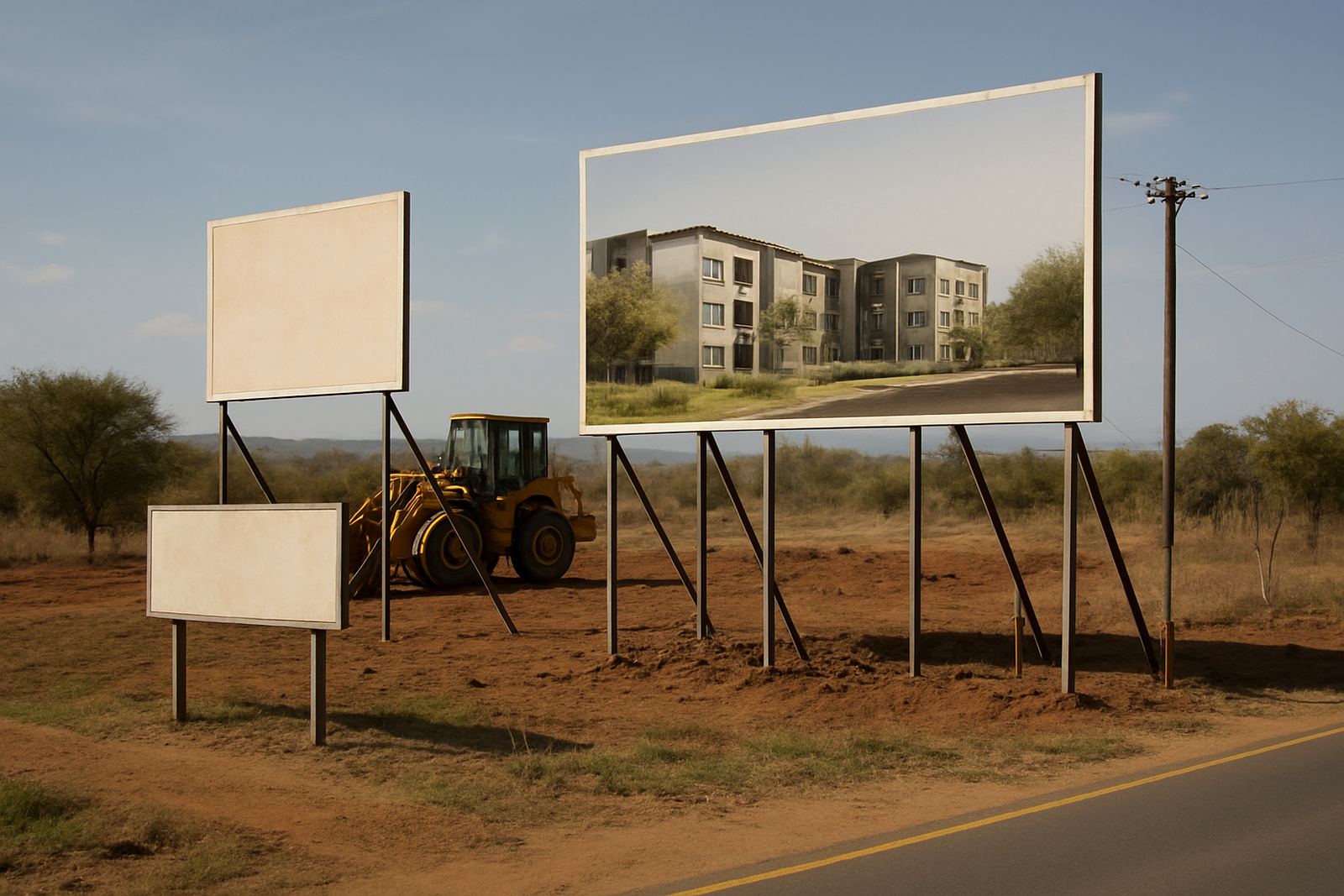
- Sponsor boards and perimeter branding
- Temporary event signs for fixtures and tournaments
Choosing the Right Materials for Weather and Wear
Sports venues in Gauteng take a beating from sun, wind, rain and dust. In Hartbeespoort and Brits, strong wind can lift light panels if they are not fixed properly. In Pretoria and Tshwane, high UV exposure fades poor-quality print quickly. For outdoor use, we usually recommend rigid panels, aluminium composite sheets, PVC foam board for shorter term campaigns, and vinyl graphics with a proper protective laminate where the sign will be handled often.
For coastal or high-moisture settings, or venues close to sprinklers and pools, fixings and frames need attention too. Rust stains on a fresh sign look bad very fast. We also look at reflected glare. If spectators need to read a board from across the field, the finish and colour contrast matter just as much as the message. A dark background with light lettering often reads better from a distance, especially on cloudy afternoons or under floodlights.
If the venue runs load-shedding schedules or evening fixtures, we can plan for reflective material, illuminated options or larger text that still reads well under reduced light. That small detail saves confusion at the gate and on the walk to the stands.
Layout Planning for Crowds, Vehicles and Event Day Flow
The best venue signage works with how people actually move. Before printing anything, we look at traffic points, pedestrian routes, parking access, player entry, media areas and emergency vehicle access. A clear site survey prevents signs being hidden behind a tree, blocked by a vehicle boom or mounted where the sun makes them hard to read. It is also the stage where we check by-laws or venue rules if municipal approval is needed for certain outdoor placements.
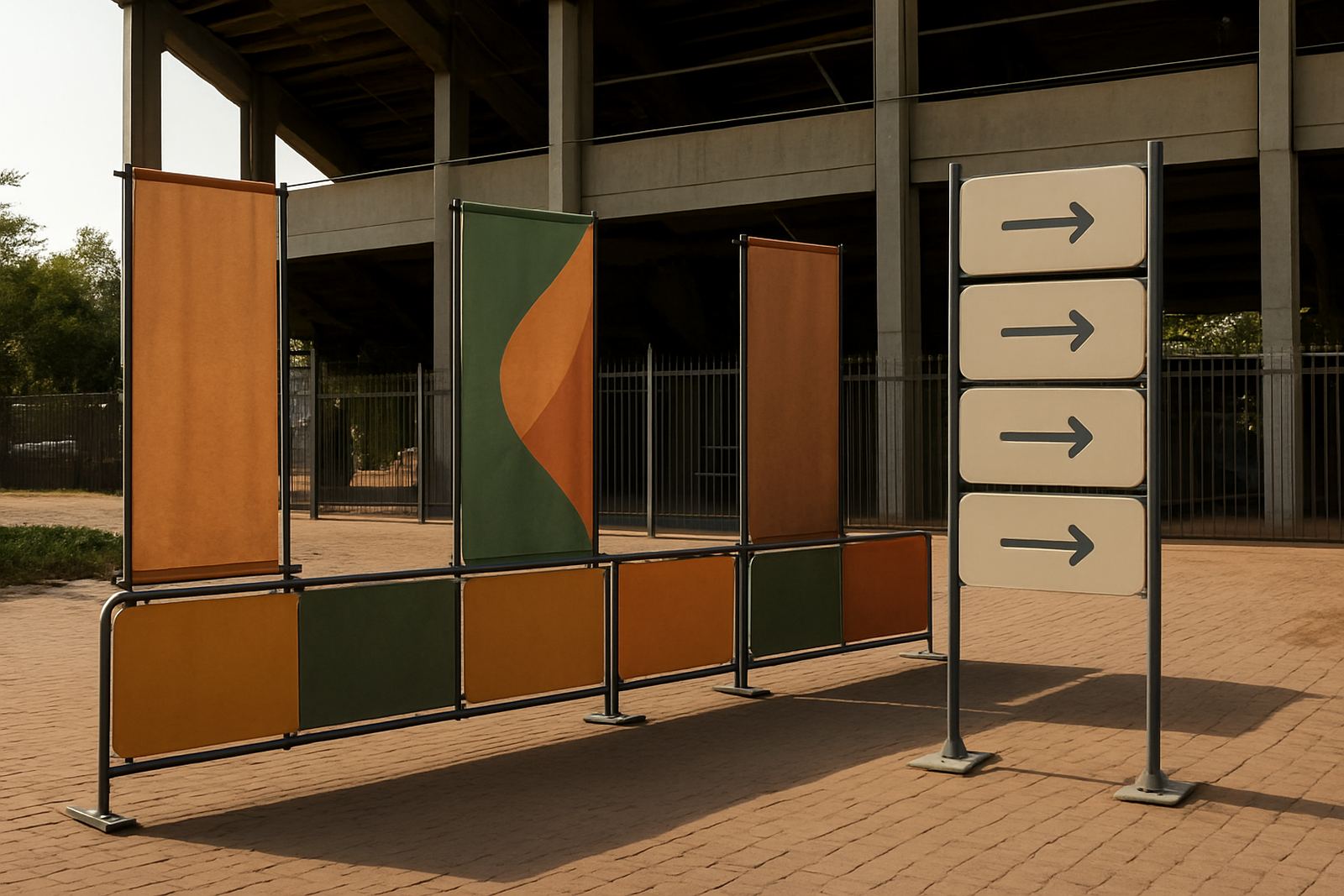
For a busy event day, the layout usually needs separate layers. Visitors need large directional boards from the main road or entrance. Drivers need parking arrows before the gate, not after they have already turned in the wrong place. Spectators need zone markers, while staff need back-of-house notices that keep changing rooms, stores and service areas controlled. If a venue hosts multiple codes, clear colour coding helps. Netball, rugby and athletics can each have their own area labels without cluttering the whole site.
- Use bigger wording for signs read from vehicles
- Keep the same colour system across the whole venue
- Place safety signs at eye level near risk points
- Allow for crowd lines, gates and temporary barriers
- Check night visibility if fixtures run after sunset
Common Mistakes We See at Clubs and Stadia
One common mistake is overloading a board with too much copy. A sign that tries to explain everything becomes hard to read in two seconds. Another is using small text on wide open grounds, where people need to read messages from a vehicle or from the far side of the fence. We also see signs installed without enough fixing points, so they rattle in the wind or start to bend after one storm.
Another issue is treating sponsor signs as an afterthought. If the branding is part of the income model, the panel size, position and print quality must be planned properly from the start. A faded sponsor board sends the wrong message to the people paying for exposure. Poor placement can do the same. If a camera angle, dugout roof or floodlight pole blocks the view, that value is lost.
Maintenance is often forgotten too. Football dust, rain splash and hand contact can mark boards quickly. For venues with regular events, it helps to choose materials that can be wiped down and replaced in sections instead of redoing the whole run. We see too many places spending twice because they did not plan for service access the first time around, which is costly and frustrating.
Budget Ranges for Sports Venue Signage
Budgets depend on size, quantity, fixing method and whether the venue needs temporary or permanent signs. For smaller community courts or club entrances, a basic set of directional and rules boards may start from about R3,500 to R12,000. A medium venue with several fields, sponsor panels and parking signs often falls between R15,000 and R45,000. Larger sites with multiple access points, event branding zones and fabrication work can move into the R60,000 to R150,000 range and beyond.
Temporary campaign signage is usually more affordable than fixed aluminium or framed panels, but the lower upfront cost should be weighed against replacement cycles. If a sign will be used for one tournament only, a lighter solution makes sense. If it needs to last through several seasons, spend more on the substrate, fixing and print protection. The right choice depends on how often the venue changes and how exposed the site is to weather and public contact.
We can also phase the work. Many clients start with entrance, parking and safety signs, then add sponsor branding, court markers and maintenance items once the first section is in place. That spreads cost and keeps the venue operational.
How We Handle Surveys, Fabrication and Installation
Our process starts with a site visit and practical measurement. We check mounting surfaces, viewing distances, access for installers and any risks that affect fixing. From there the artwork is prepared for the correct sizes and printed or cut in house. If the work includes rigid fabrication, we produce the frames and panels to suit the site rather than forcing a standard size onto an awkward wall or fence.
Installation is planned around venue use so we do not interrupt training, school sport or scheduled matches more than necessary. Kagiso Ndlovu leads our installation work, with Riaan Odendaal overseeing production and Retief Wessels handling fabrication details. Lerato Mthembu manages the flow between site, workshop and client approvals, while Revasha Desai keeps communication straight from start to finish. Hendrik Mokoena oversees the whole job so the final result is usable, neat and built for the conditions on site.
For venues that need recurring updates, we can set up maintenance and replacement schedules. That helps with seasonal campaigns, sponsor changes and event rollouts without starting from scratch every time. It is a simple way to keep the place looking sorted, especially when fixtures, crowds and weather all put pressure on the signage.
- Site survey and measurements
- Artwork prep matched to the actual mounting points
- In-house printing, cutting and fabrication
- On-site installation with attention to access and safety
- Maintenance, refurbishment and phased upgrades