
Estate access points that needed to work first time
The estate management team wanted a clean system for visitors, residents and contractors arriving from the main roads into Hartbeespoort. The site had a main entrance, a secondary access point, internal junctions, speed control areas and a list of rules that had to be visible before anyone drove too far in. The challenge was not just making the signs look good, but making sure the information was read quickly from a moving vehicle.
We started with a site survey and mapped the approach from both entry roads. That showed where drivers naturally slowed down, where glare hit in the afternoon, and which points needed larger copy. Because the estate sits near the dam, the signs also needed to cope with moisture, dust and strong sun. We recommended a mix of rigid directional boards and high visibility entrance signage rather than trying to use one style for everything.
- Main entrance welcome and control sign
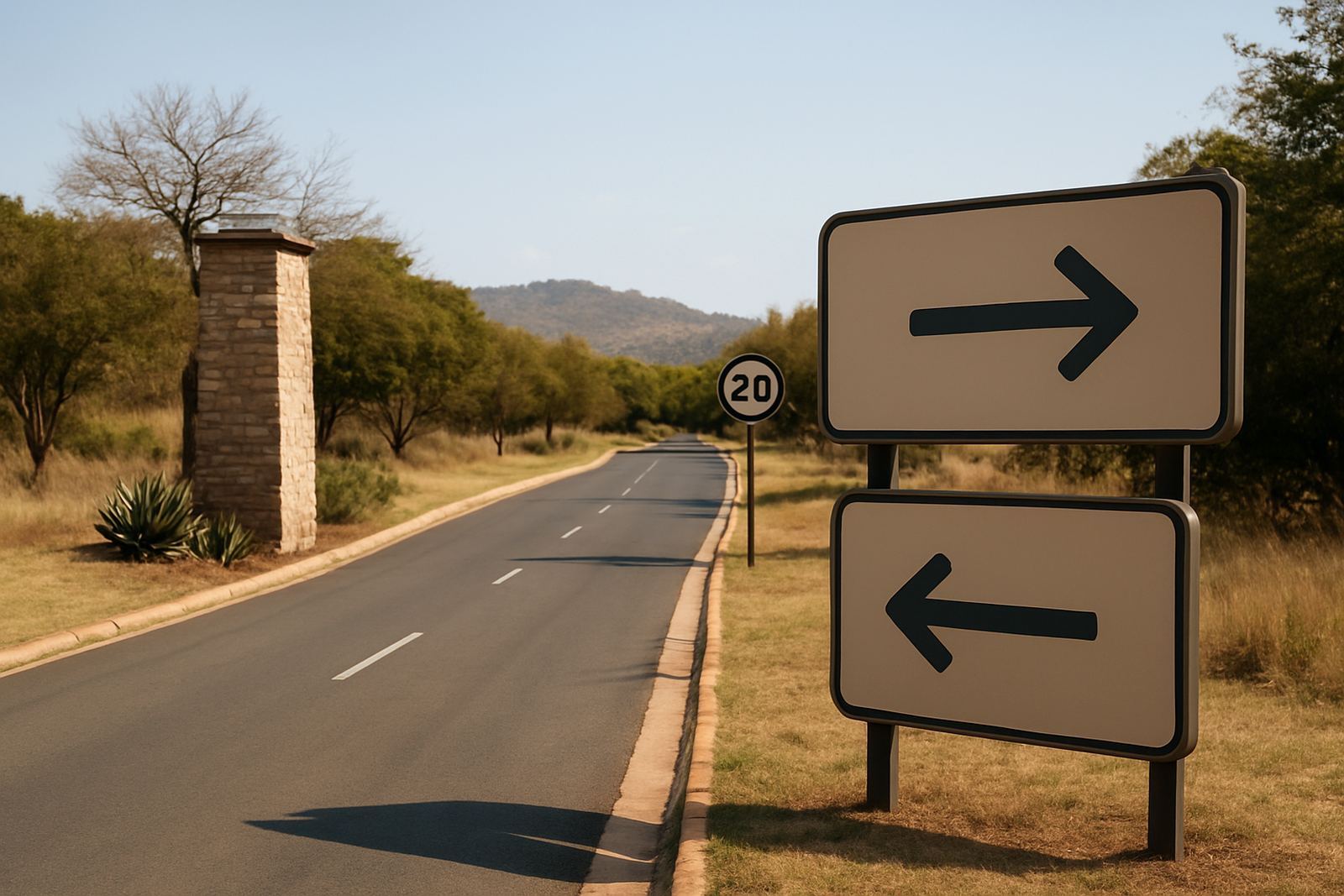
- Directional signs for internal roads and key turns
- Rules and compliance boards at access points
- Reflective numbering and driver guidance for night use
What the estate needed from the brief
The client wanted signs that matched the estate's calm residential look, but still carried enough authority for access control and by-law style notices. There was a strong focus on keeping the wording short, because too much text at the gate slows down traffic and creates confusion. We worked through the content in plain language, then tightened the layout so the most important message sat highest on each board.
The estate also needed signage that could be maintained over time. Some rules change, some house numbers get updated, and one or two boards can take knocks from delivery vehicles or the weather. So we planned the system around replaceable panels and a finish that would be easier to wipe down. That saves money later and keeps the place looking tidy, especially when the entrance gets a lot of daily use.
- Clear hierarchy of information for drivers and pedestrians
- Simple language for residents, visitors and security staff
- Materials suited to outdoor exposure and coastal-like humidity near the water
- Sign positions chosen to stay readable during load-shedding and low light periods
Materials and sign construction we supplied
We handled graphic design, artwork prep, sign fabrication and installation in-house. For the estate board set, we used aluminium composite panels for the main boards because they stay flat and hold up well outdoors. Directional blades were fabricated for clean edges and mounted on posts with secure fixings. Where the estate needed visibility after dark, we used reflective vinyl on the key messages and numbering.
The finish had to suit a smart residential setting, so we kept the colour palette restrained and consistent across every sign. All artwork was prepared to the same visual system, which means the entrance board, wayfinding arrows and rules panels all feel like one family. That makes a real difference at a gate where people make split-second decisions. It also helps security staff point people in the right direction without needing to explain everything twice.
- Aluminium composite boards for main signage
- Exterior-grade vinyl graphics for text and arrows
- Reflective elements for visibility after sunset
- UV-stable inks and protective finishing for outdoor use
Installation planning around gate traffic and resident movement
The install had to be done without causing a headache for residents or delaying gate operations. We scheduled the work in phases, starting with the main entrance and then moving into the internal directional points once the first set was fully checked. Kagiso and the installation team worked with the operations side to make sure each sign was placed at the correct height and angle before final fixings were drilled and sealed.
Because estate sites can be sensitive, we also kept the footprint tidy while working. That meant careful drilling, clean cable and fixings management where needed, and no loose waste left behind at the gate or along the roads. The last thing anyone wants is a neat new sign standing next to a messy install. We finished with a walk-through to check sight lines from a driver's position and adjusted two panels for better reading distance.
- Installation completed in staged visits to suit estate access
- Final height and angle checked from vehicle approach points
- Work area kept clean and cleared before handover
- Small tweaks made on site for improved legibility
Timeline, result and what changed after handover
The full project ran over three weeks from survey to final handover. Week one covered the site survey, wording, layout and approval. Week two was fabrication and print production. Week three was installation, final checks and snagging. That pace suited the estate because it allowed enough time for sign-off without dragging the process out. It also gave us room to manage any small changes to wording or position before drilling began.
After installation, the estate had a more orderly entry sequence and fewer moments where drivers had to slow down to ask directions. The rules boards were easier to read at the gate, and the directional signs took pressure off security staff. In practical terms, that means less confusion, better traffic flow and a cleaner first impression for anyone arriving at the property. The result was not flashy, just neat and effective, which is what an estate needs.
We also made sure the system left room for future updates. If the estate wants to refresh a rule board, add an area name or change visitor instructions later, the format allows for that without redoing everything from scratch. That keeps long-term costs sensible.
What we would do again on a similar estate
If we were starting a similar estate wayfinding job tomorrow, we would use the same approach: survey first, keep the wording tight, and design every sign around the speed at which people see it. We would also keep the material choices practical for North West conditions, because wind, dust and sun can show up quickly on exposed sites near Hartbeespoort and Pretoria.
The main lesson from this project is that wayfinding works best when it is treated as a system, not as separate signs thrown together. When the entrance, directions and rules all speak the same visual language, residents and visitors understand the site faster. That is what we aim for on every estate project, whether it is a small access point or a larger multi-gate layout.
- Start with traffic flow and sight lines before artwork
- Keep messages short and direct
- Use durable finishes that are easy to clean
- Allow for maintenance and future updates from the start
Key facts
| Project type | Residential estate wayfinding and rules signage |
|---|---|
| Location | Hartbeespoort, North West |
| Timeline | 3 weeks from survey to handover |
| Materials | Aluminium composite, exterior vinyl, reflective elements |
| Scope | Design, fabrication, installation and site adjustments |
| Use case | Entrance control, directional guidance and estate rules |
| Client type | Residential estate near the dam |