
What a post panel sign is and where it works best
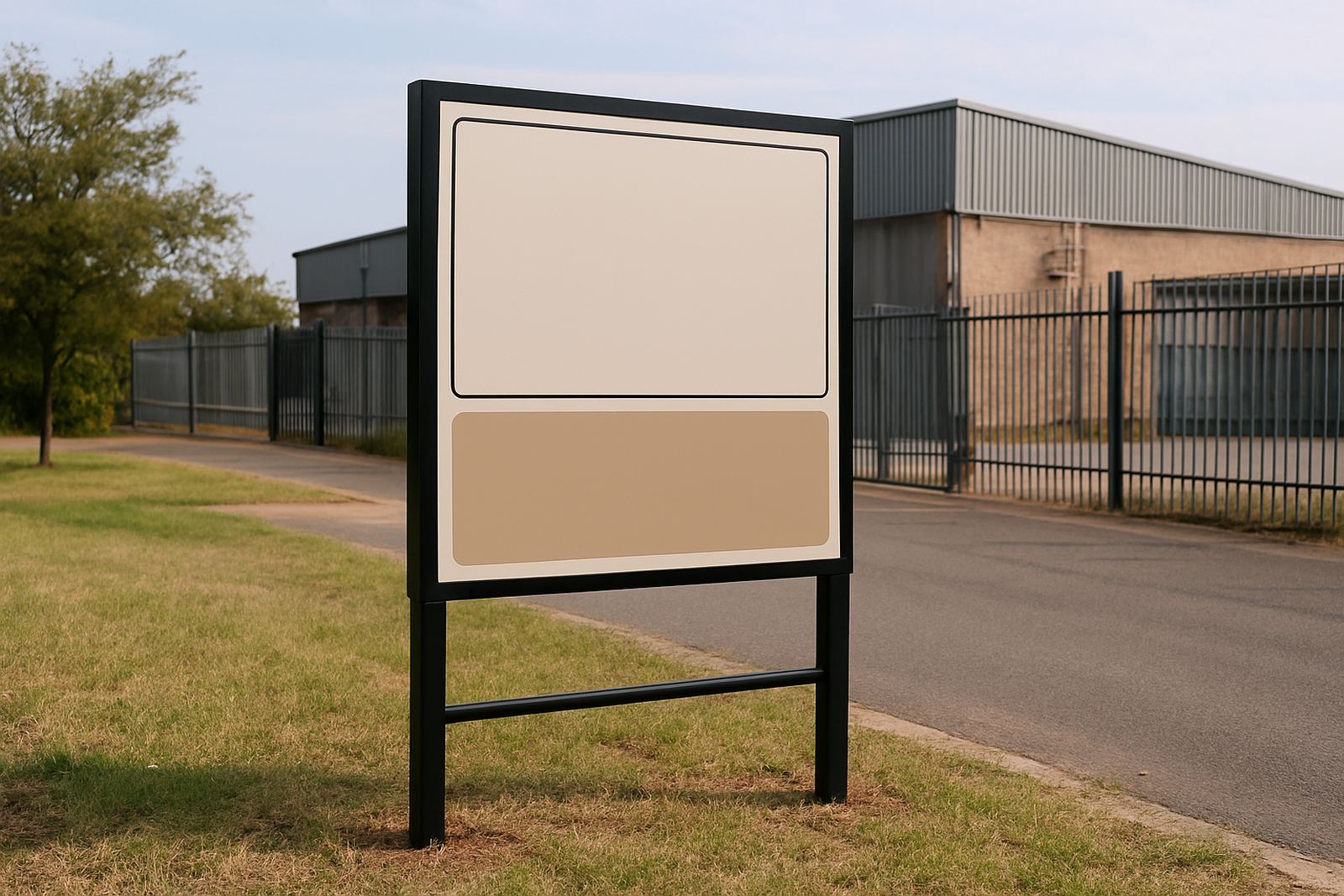
A post panel sign is a signboard mounted above ground on steel or timber posts, usually set into concrete footings. It is a simple, practical way to show a property name, directions, a tenant list or a site warning where people need to spot it quickly from a vehicle or on foot.
These signs suit entrances, vacant land, industrial yards, residential developments, service roads and business parks. They are often used on plots outside Brits, along main routes in Tshwane, or at entrance points where there is only a small frontage but the message still needs to stand out. Because the panel is raised off the ground, it can be seen over grass, fencing or low walls.
We produce post panel signs for single messages and also for multi-panel layouts where one structure carries more than one face. That can include a property name, directional arrows, opening hours, safety notices or campaign branding for a short term promotion.
Size, materials and finish options
Post panel signs can be made in a range of sizes, from compact wayfinding boards to larger roadside panels. The correct size depends on viewing distance, traffic speed and how much wording must fit on the face. For a gate sign that is viewed close up, a smaller panel may be enough. For a roadside sign in Pretoria or Centurion, bigger lettering and a larger board are usually better.
Common panel materials include aluminium composite, galvanised sheet, corrugated sheeting and rigid plastic board, depending on the application and budget. Posts are typically steel, galvanised for better corrosion resistance, with powder coated finishes available for a cleaner look. Coastal humidity is less of a concern in Hartbeespoort than on the coast, but weather still matters and the fixing method needs to handle sun, rain and wind.
- Single or double sided panels
- Powder coated or painted steel posts
- Flat faces, routed lettering or applied vinyl graphics
- Reflective or non reflective finishes for night visibility
- Optional tenant panels and changeable inserts
Where a cleaner corporate look is needed, we can include shaped panel edges, branded colour blocks or cut vinyl lettering. If the sign must be seen after dark, reflective material can help, although the final choice should match the site rules and the distance from which the sign is read.
How we install post panel signs on site
Installation starts with a site survey to check access, ground conditions, underground services and the best viewing angle. On municipal or commercial sites, that step matters because the wrong footing position can put a post too close to a pavement edge, drainage line or service route. In some cases permit approval or landlord permission may also be needed, especially where signs face public roads or shared entrances.
The posts are normally set in concrete footings sized to suit the sign height, panel area and wind load. For larger signs, deeper footings and heavier posts are used. If the ground is uneven or soft, we adjust the post lengths and footing depth accordingly so the sign does not lean later on. It is worth getting this right, because a sign that moves in the first heavy storm is a headache no one wants.
We handle manufacture and installation as one process, which keeps the panel layout, hole positions and mounting hardware aligned. Where a sign includes lighting or a secondary electrical item, we coordinate the practical side of the install, but most post panel signs do not need power at all.
- Site survey and measuring before production
- Footings poured to suit soil and wind exposure
- Posts aligned for road view and pedestrian view
- Mounting suited to concrete, paving or soil edges
- Permit assistance where required by the site or municipality
What to check before you order
Before ordering, it helps to confirm exactly what the sign must do. A site identification board is not the same as a directional sign, and a roadside sign is not the same as a warning panel. The text needs to be brief enough to read at speed, and the logo or graphic should not crowd the message. If there is a municipal by law or estate rule, we check that first so the final layout is practical, not just pretty.
Think about the viewing distance, the height of the posts and whether the sign must be read by drivers, pedestrians or both. If the site is in a busy corridor like Centurion or Rosslyn, the lettering size usually needs to be larger than what looks fine on paper. For land sales or development sites, it may also be useful to plan for a board that can be updated later, rather than replacing the whole thing.
- Exact wording and spelling, including names and unit numbers
- Site address, access point and direction of approach
- Desired height from ground to bottom edge of panel
- Whether the sign is single sided or visible from both sides
- Any colour rules, estate rules or municipal requirements
If you already have artwork, we can prep it for production. If not, we can set up the layout from your brief and make sure the final proportions suit the post structure. Clear details at the start save time and reduce rework, which is important on campaigns with tight deadlines.
Care, cleaning and long term servicing
Post panel signs are low maintenance, but they still need occasional attention. Dust, road grime and bird droppings can dull the face over time, especially near busy roads or on open plots where wind carries fine dirt. A gentle wash with clean water and a mild soap is usually enough. Avoid harsh thinners or abrasive scourers because they can damage printed surfaces and painted finishes.
We can also inspect and service signs if they become faded, loose or damaged. On sites where vehicles pass close to the sign, lower panels may get bumped and posts can shift if the ground is soft. In the high sun of Gauteng, vinyl and paint will eventually age, so replacement faces or a refurbishment may make more sense than starting from scratch.
- Check that posts remain upright after heavy rain or wind
- Look for cracked concrete around the footings
- Inspect fixings, brackets and panel edges for loosening
- Replace damaged graphics before the whole sign looks tired
- Schedule maintenance after site works or vehicle impact
If your property is part of a phased rollout across several branches or sites, we can keep the sign style consistent so future replacements match the original build. That matters for brands with more than one location, because a mismatched board stands out for the wrong reason.
Key facts
| Product type | Outdoor signboard mounted on one or more posts |
|---|---|
| Common uses | Sites, plots, business parks, entrances, warnings and directionals |
| Typical materials | Aluminium composite, galvanised sheet, corrugated sheeting, rigid board |
| Post options | Galvanised or painted steel, with powder coating available |
| Installation | Concrete footings, aligned to site conditions and viewing angle |
| Power or gas needs | Usually none, unless extra lighting or accessories are specified |