
What a pylon sign adds to your premises
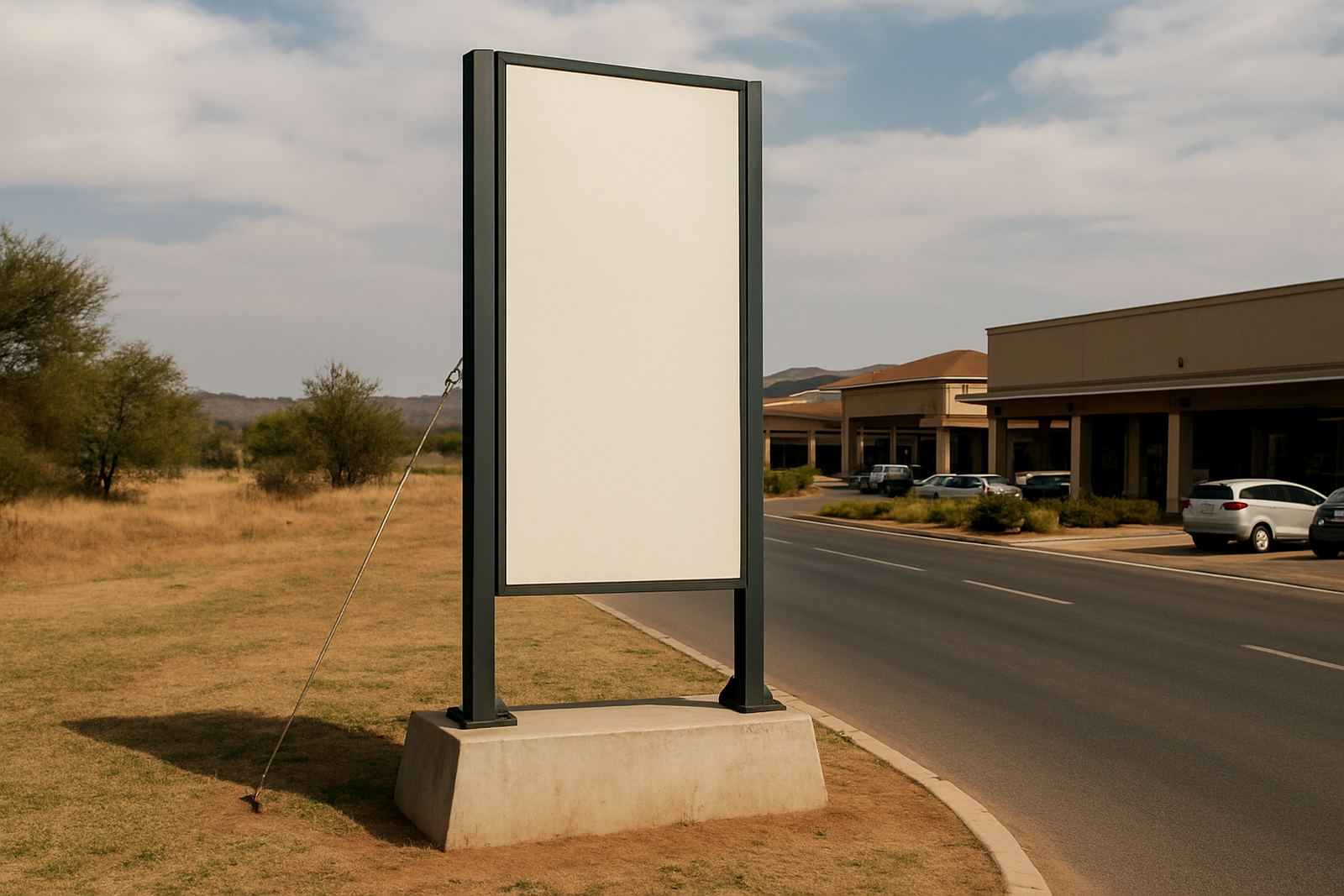
A pylon sign is a freestanding vertical sign structure used to show your name, tenants, trading hours or directions where roadside visibility matters. It is usually placed near the main entrance or boundary line so drivers can spot the site before they reach the gate. For centres, fuel forecourts, dealerships and business parks, it acts as the first point of identification and can carry one face or multiple faces depending on the layout.
We build pylon signs for permanent outdoor use in North West and Gauteng conditions, where hot summers, dust and heavy rain can take a toll on finishes. The structure is usually made from steel with a powder coated or painted finish, and the sign faces can be aluminium composite, steel, acrylic or LED lit panels depending on the brief. If the site has load-shedding or needs night visibility, we can include internal or external illumination options that are suited to local power conditions.
Sizes, shapes and build options
Pylon signs are not one-size-fits-all. The right height and width depends on road speed, setback from the road, number of tenants and how much text needs to be read from a distance. Smaller sites may need a 2 m to 3 m sign, while larger retail or commercial entrances often need 4 m to 8 m or more, with the final height governed by visibility, structure loading and municipal approval.
Common options include single-sided or double-sided faces, box-style panels, cut-out lettering and illuminated cabinets. We also design for tenant changes, so the face can be updated later without replacing the whole structure. For windy areas and exposed corners, the steel frame and footing design needs proper engineering, not guesswork.
- Typical face widths: 1.2 m, 1.8 m, 2.4 m and custom sizes
- Typical structural heights: 2 m to 8 m plus footing depth
- Material options: mild steel, aluminium composite, acrylic, polycarbonate and vinyl graphics
- Finish options: powder coating, automotive paint systems or marine-suited coatings for harsher weather
Where pylon signs work best
Pylon signs suit sites that need strong roadside presence and simple navigation. They are common at shopping centres, fuel stations, factories, office parks, schools, clinics, churches and municipal properties. In busy areas such as Pretoria, Centurion, Akasia, Rosslyn, Soshanguve and Brits, a well-positioned pylon helps passing traffic identify the property quickly, especially where entrances sit back from the road or are shared by several tenants.
For retail centres, the sign can carry the centre name plus tenant listings, parking directions or trading notices. For commercial properties, it can show the company name, unit numbers or a directional arrow to reception and loading areas. If the site has more than one entrance, we can plan the sign placement so the message is read from the correct approach road.
- Retail centres and mixed-use developments
- Forecourts and vehicle service sites
- Industrial parks and warehousing yards
- Schools, clinics and public facilities
- Corporate entrances and business parks
Installation, foundations and power supply
A pylon sign installation begins with checking the site properly. We check access, ground conditions, underground services, sight lines and the exact position of the sign relative to the road and entrance. The footing is then planned to suit the size and wind load, because a tall sign needs the right foundation depth and steel base plate arrangement to stay stable over time. On some sites, crane access or night work may be needed to avoid traffic disruption.
If the sign is illuminated, we plan the electrical supply at the same time as the structure. That may include a dedicated power point, isolator, timer, photocell or a low-energy LED system. For sites that face frequent outages, we can design for manual switch control or alternative backup arrangements where practical. Gas is not normally used for standard pylon signs, but if a special illuminated feature is requested, we will confirm the safest compliant method before fabrication starts. We also assist with permit requirements where local authority approval is needed.
- Site survey and set-out before fabrication
- Foundation design matched to size and exposure
- Electrical planning for illuminated units
- Permit assistance for municipal and roadside sites
- On-site installation with safe lifting and alignment
Care, cleaning and maintenance over time
A pylon sign lives outdoors every day, so it needs basic care to keep it looking neat and readable. Dust, bird mess, coastal moisture and exhaust residue can dull the faces and frame over time. Routine cleaning with mild soap and water is usually enough for painted or powder coated finishes, while printed faces should be washed gently to avoid scratching the graphic layer. Harsh chemicals and abrasive pads should be avoided.
We also recommend a seasonal check after heavy wind, hail or intense rain. That includes looking for loose fasteners, water ingress, faded graphics, cracked acrylic and any sign of movement at the base. If the sign is lit, the electrical parts should be inspected by a qualified technician. Regular servicing helps prevent small faults from becoming expensive repairs, and it is especially useful on larger signs where access is more complicated.
- Wash faces with mild detergent and clean water
- Check fixings, seals and access panels every few months
- Inspect lighting, wiring and timers if the sign is illuminated
- Repaint or refurbish the frame when coatings start to fail
What to check before ordering
Before we quote on a pylon sign, it helps to have a few site details ready. The more accurate the information, the easier it is to recommend the right size, structure and finish. If the sign is for a centre or multi-tenant property, tenant names and logo layouts should be confirmed early, because that affects the face size and the internal spacing on the panel.
It is also important to know whether the sign will face fast-moving traffic, stand close to a boundary wall or need to allow for future tenant changes. For some projects, height limits, servitude lines or municipal rules may affect the final design. A quick site survey can save a lot of rework later.
- Exact site address and entrance position
- Preferred sign wording, tenant list and logo files
- Approximate viewing distance from the road
- Whether illumination is needed at night
- Any height limits, municipal rules or landlord approvals
- Deadline for installation or campaign roll-out
Pylon Sign Planning And Installation
From our Hartbeespoort base, we manage signage from concept and artwork prep through to fabrication and installation. That matters on pylon signs, because these jobs need practical planning, clean graphics and a solid build that can handle local conditions. From our Hartbeespoort base, we serve Pretoria, Tshwane, Centurion, Brits and nearby Gauteng areas with a team that can manage surveys, production and on-site fitting under one roof.
Our process is straightforward. We measure the site, confirm the brief, prepare the design, manufacture the structure and install it with the right fixings and finish. For retailers, brands and municipalities, that means one point of contact and fewer delays. Hendrik Mokoena leads the business, with support from Lerato Mthembu, Riaan Odendaal, Ayanda Mavuso, Kagiso Ndlovu, Revasha Desai and Retief Wessels across operations, production, design, installation and client service.
Key facts
| Product type | Freestanding roadside pylon sign |
|---|---|
| Typical height | 2 m to 8 m plus footing depth |
| Structure | Steel frame with painted or powder coated finish |
| Faces | Single-sided or double-sided panels |
| Lighting | Optional LED illumination with timer, photocell or switch control |
| Service area | Hartbeespoort, Pretoria, Tshwane, Centurion, Brits and Gauteng |