Fleet Branding Brief For A Rosslyn Service Team
The client was a service contractor operating from Rosslyn and covering nearby industrial areas in Pretoria North, Akasia and parts of Tshwane. Their fleet included bakkies and panel vans used by field teams, so the main brief was simple: keep the branding consistent, make the vehicles easy to identify on site and ensure the decals held up to hard daily use.
They also needed the rollout to happen in stages because the fleet could not be taken off the road all at once. That meant each vehicle had to be planned carefully, with the artwork locked down before fitting started. The company already had a clear identity, but the application had varied over time and the new work had to bring everything back to one standard. We met on site, checked the body sizes, door shapes and existing markings, then mapped the rollout vehicle by vehicle.
- Client type: industrial service fleet
- Area: Rosslyn, with vehicles moving through Tshwane and Pretoria North
- Fleet mix: bakkies and panel vans
- Goal: standardised decals across all units
Measuring The Fleet Before Any Vinyl Was Cut
Before production, we carried out a site survey and measured each vehicle so the decals could be scaled correctly for the different body panels. Fleet work only goes well when the measurements are exact. One van may have a long side panel with a sliding door, while the next bakkie has a canopy, checker plate or extra fittings that change the usable space. We checked these differences in advance and adjusted the layout for each vehicle type.
The brief also included practical issues that matter in Rosslyn. Vehicles were parked in open yards for long periods, so we specified materials suited to sun exposure, dust and temperature changes. The decals also had to remain readable after repeated washing, because fleet vehicles often get cleaned quickly between jobs. By resolving these points before print, we reduced waste and avoided cutting anything twice, which saves time on a rollout like this.
- Site survey completed before production
- Body measurements taken per vehicle type
- Artwork scaled for doors, tailgates and load-bay panels
- Material choice based on outdoor exposure and fleet use
Artwork Prep And Sign-Off For A Consistent Look
Once the measurements were confirmed, our graphic design team prepared the artwork for each model in the fleet. The challenge with standardised fleet branding is keeping the look uniform while still working with different shapes and panel sizes. We laid out the core identity elements, contact details where needed and the key service message so they could repeat across the vehicles without looking crowded. In some cases we adjusted spacing by a few millimetres to suit a curve or door seam, rather than forcing the same layout everywhere.
The client reviewed the artwork before production and we made final corrections to line weight, alignment and sizing. That sign-off stage is important because once vinyl is printed and cut, changes become costly. We also checked readability from a distance, since many of these vehicles spend time moving through busy industrial roads where motorists and site managers need to identify them quickly. The final artwork was saved in a format that made future reprints straightforward if a vehicle was replaced or repaired.
- Artwork prepared per vehicle model
- Layout adjusted for panel gaps and body curves
- Final sign-off completed before print
- Files stored for future reprints and additions
Production, Cutting And Fitting Over A Staged Rollout
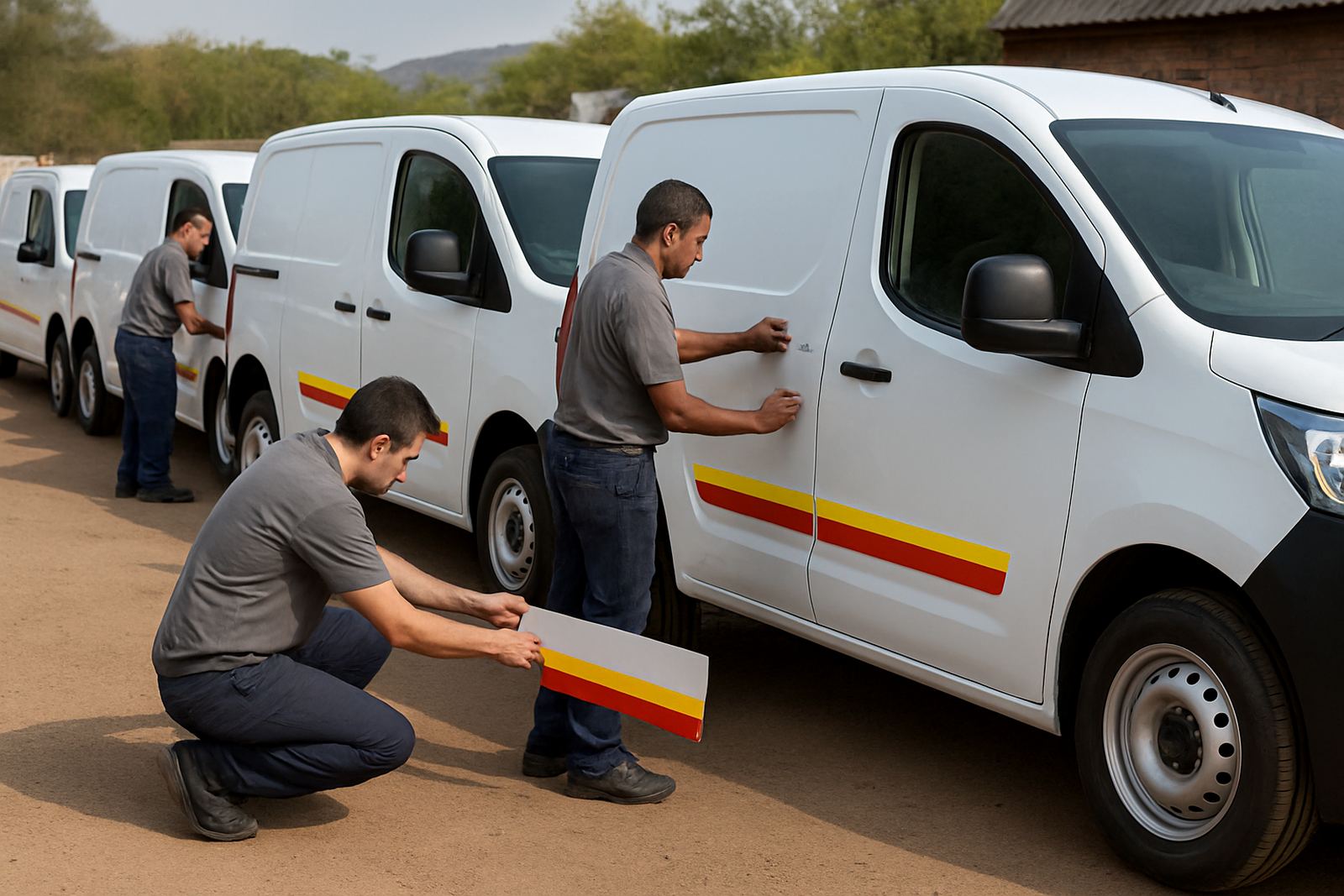
We produced the decals in-house so the turnaround stayed under control. Large format printing was used for the main graphics and vinyl cutting for text, shapes and registration details. The batch was then staged according to the fitment schedule so the fleet could stay in service during the rollout. Some vehicles were completed in the morning and returned to the road the same afternoon, while others were booked for a longer fitting slot depending on the amount of branding required.
Our installation team fitted the graphics on site and checked each panel for bubble-free adhesion, edge lift and proper alignment. The work had to be neat because fleet branding is seen up close by clients, road users and inspectors. We also worked around weather and load-shedding windows, keeping enough flexibility in the programme to avoid unnecessary delays. The rollout took just over 3 weeks from approved artwork to final vehicle handover, with the vehicles branded in phases so the business could keep working.
- Large format printing for the main graphics
- Vinyl cutting for text and detail elements
- On-site fitting completed in stages
- Rollout completed in just over 3 weeks
What Changed After The Vehicles Went Back On The Road
Once the fleet was branded consistently, the business had a cleaner public presence and a more organised look on site. That matters in industrial areas like Rosslyn where vehicles move between depots, factories and client premises every day. A standardised fleet is easier to recognise, and it also helps staff take pride in the vehicles they use. The client noticed that the older mixed decals no longer distracted from the main message, and the whole fleet now looked like it belonged together.
From our side, the biggest result was durability and repeatability. Because the artwork was locked down and the installation sequence was planned well, the client could add or replace vehicles later without starting from zero. If a panel is damaged in a fender bender or a vehicle is sold and replaced, the same artwork set can be used again with only minor tweaks. That makes ongoing fleet management simpler and keeps the brand consistent across time, not just on the day of install.
- Cleaner fleet presentation across all vehicles
- Better brand recognition in industrial areas
- Future reprints simplified for replacements or repairs
- Consistent look across the full fleet
What We Would Repeat For The Next Fleet Rollout
If we were repeating this job tomorrow, we would keep the same sequence: site survey first, artwork approval second and staged fitting last. That order works because it avoids confusion and keeps the vehicles moving. For a Rosslyn fleet branding project, especially where the client is operating on tight schedules and limited parking space, planning matters as much as the print quality. We would also keep the model-by-model measurement sheets because they save time when new vehicles join the fleet.
For the next rollout, we would again recommend a slightly longer preparation window if the fleet includes mixed body types or if vehicles are split between Rosslyn, Pretoria and Centurion depots. That gives enough time to confirm panels, check existing paintwork and plan the fitting order around work patterns. It is a practical way to keep the process calm and accurate, rather than rushing from one vehicle to the next.
- Best process: survey, artwork approval, staged fitting
- Keep measurement sheets for future additions
- Allow extra time where the fleet is split across sites
- Plan around working vehicles so downtime stays low
Key facts
| Project type | Standardised fleet decals for a service contractor |
|---|---|
| Location | Rosslyn, Tshwane |
| Scope | Artwork prep, large format printing, vinyl cutting and on-site fitting |
| Fleet mix | Bakkies and panel vans |
| Timeline | Just over 3 weeks from approval to final handover |
| Outcome | Consistent branding across the fleet with repeatable artwork for future vehicles |