
What the school needed on a busy Soshanguve campus
The client was a large educational site in Soshanguve with learners, staff, parents and service vehicles moving through the grounds from early morning to late afternoon. The main issue was not only visibility, but order. People needed to find the administration office, classrooms, assembly areas, parking, exits and restricted zones without stopping to ask for directions every few minutes.
The brief focused on practical wayfinding and clear school identity. We were asked to provide signs that could be read quickly from a distance, stay legible in bright sun, and still hold up in dusty conditions and summer rain. The campus also needed safety signs for no-go areas, pedestrian routes and emergency points. In a school environment, there is little room for confusion, so the message had to be direct and the layout easy to follow.
Site checks, layout planning and permit detail
Before any manufacture started, we carried out a site survey to confirm sign positions, fixing methods and the most sensible traffic flow across the property. On a school site, one poorly placed sign can block a gate, clash with learner movement or miss the sightline completely, so we checked the route from the entrance to the main blocks and key gathering points.
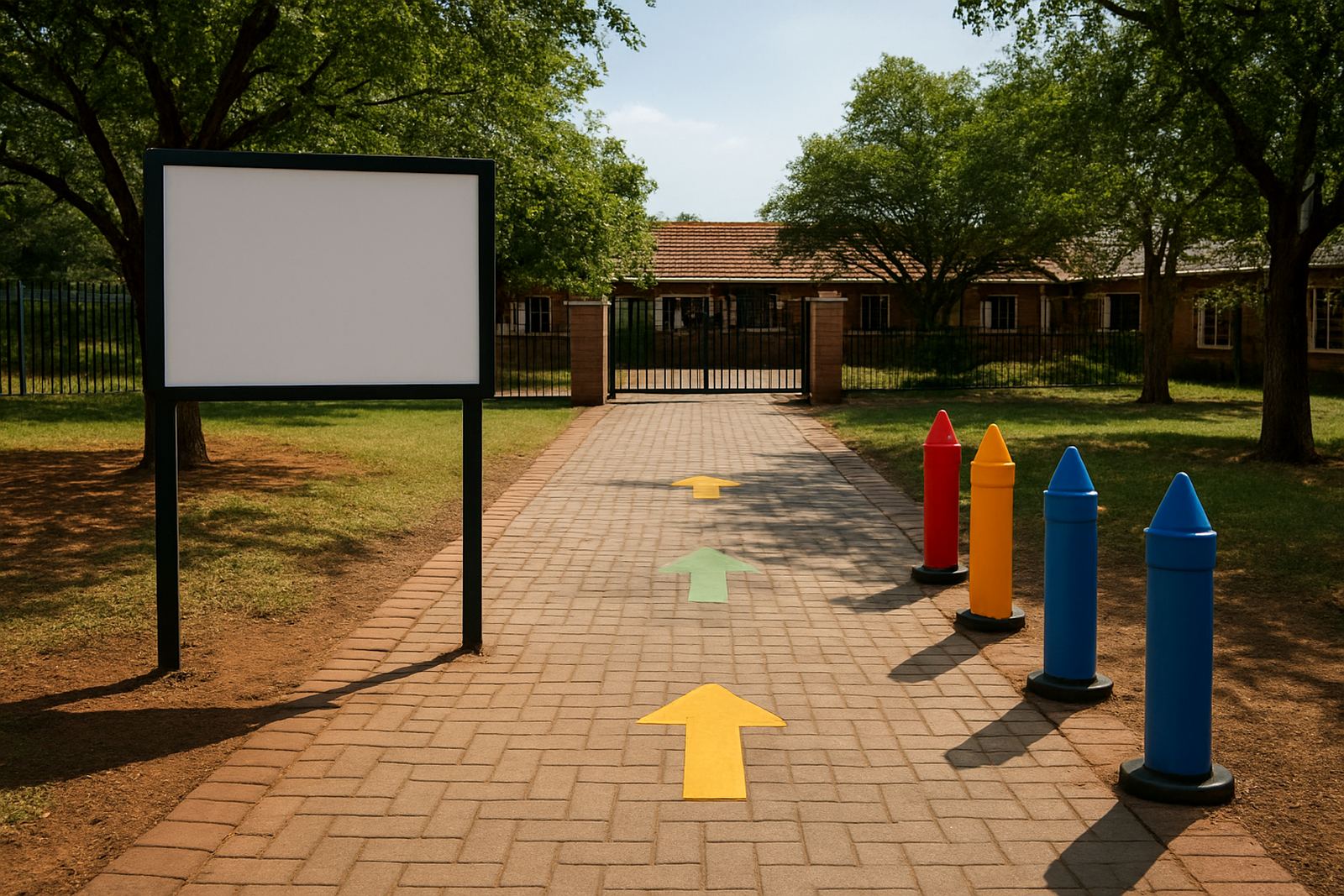
We also looked at the ground conditions for each installation point. Some areas needed pole-mounted signs, while others called for wall fixing or direct mounting onto existing structures. Where the school needed directional signs near public access points, we factored in local permit requirements and placement rules so the signs would sit correctly and remain compliant. The prep stage saved time later, and it kept the installation clean.
- Measured the main access roads, pedestrian paths and building entries
- Checked wind exposure and mounting heights for outdoor panels
- Mapped learner movement during peak break and dismissal times
- Confirmed permit needs for signs near boundary and roadside areas
What we manufactured and installed
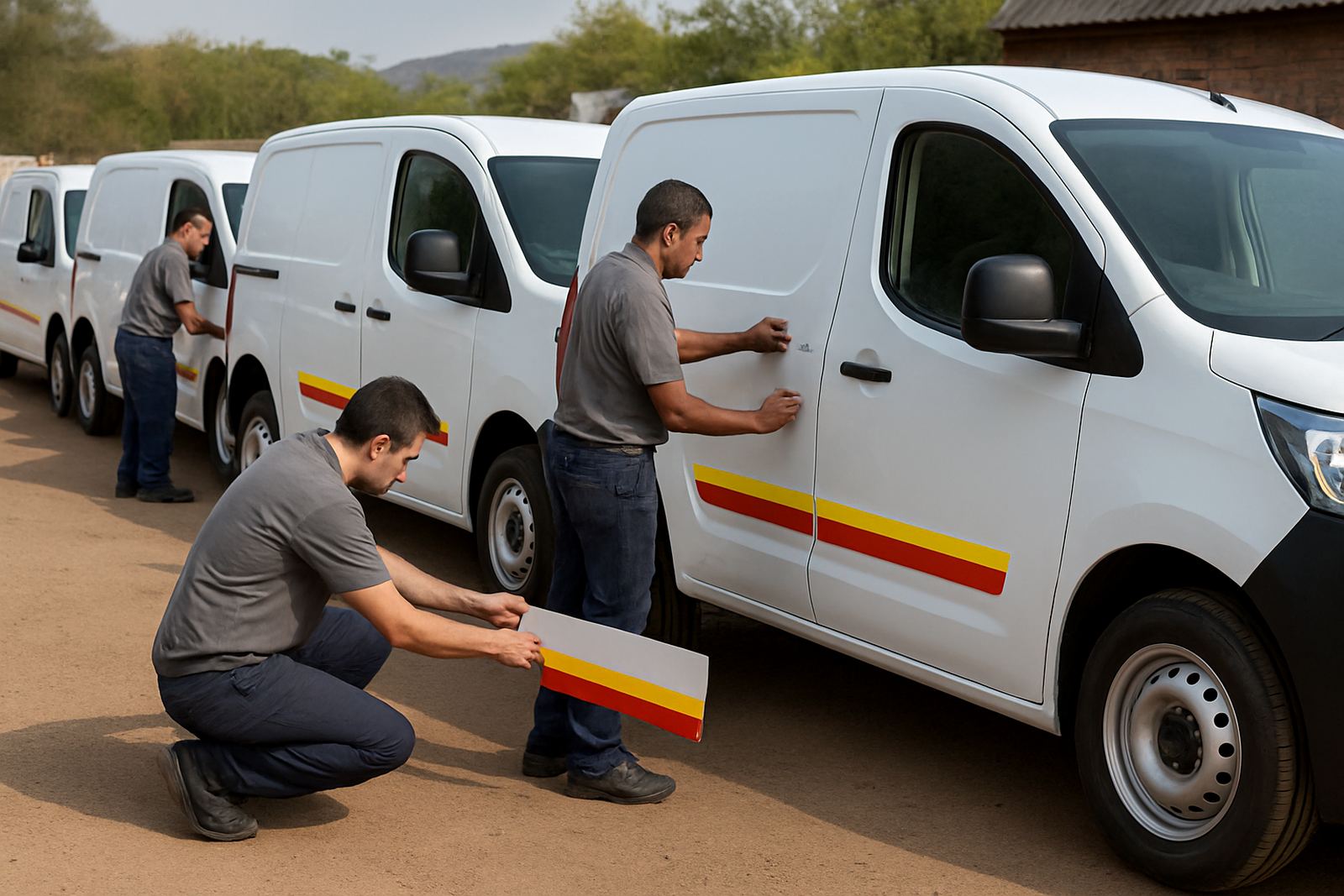
We supplied a full signage set for the site, including entrance identity signs, directional boards, room labels, safety notices and selected information panels. The main identification signs were produced on 3 mm aluminium composite for stability, with printed and laminated face panels for strong colour and good resistance to fading. Directional signs were cut to size for quick reading, with bold arrows and simple wording that could be understood at a glance.
For interior and sheltered areas, we used lighter panels where suitable, but kept the artwork consistent across the campus. Safety signs were produced in high-contrast colours and placed at eye level or just above it, depending on the location. The installation team fixed each item with the right hardware for the surface, whether it was brick, steel, fence line or masonry. Where a sign needed to be visible from a vehicle approach, we adjusted the angle so it read properly from the road and not only on foot.
- Aluminium composite panels for outdoor durability
- Vinyl cut lettering and printed directional graphics
- UV-laminated face panels for longer life in sun
- Mixed fixing methods for walls, fences and poles
Working around school hours without disrupting the day
Timing mattered. The school could not afford a noisy job with installers moving around during class changes or morning drop-off. We split the work into a short production phase and a controlled installation schedule so the site stayed functional. The full job ran over 3 weeks from survey to final handover, with the on-site work done during agreed windows to avoid peak activity.
Our installation lead coordinated access with the client services team so the right areas were opened at the right time. The production supervisor checked each sign before dispatch, which reduced the chance of rework on site. That level of planning matters at schools, because a missed bracket or wrong panel position can delay an entire section and upset the flow of the day.
We also worked carefully around existing infrastructure. Some parts of the campus had older signage still in place, and a few walls showed wear from years of weather and cleaning. We removed or replaced only what was necessary and made sure the finish looked tidy, not patched together.
Results on site after installation
Once installed, the campus became easier to move through. Visitors could find the office faster, learners had clearer direction to blocks and common areas, and staff had visible reminders for restricted access and emergency routes. The school’s grounds also looked more ordered, which helped reinforce a calm, organised feel from the entrance onward.
The biggest result was not just visibility, but reduced hesitation. When a sign does its job properly, people do not stop to ask where to go, and that saves time every day. The signage also gave the school a more consistent public face, which matters for open days, term starts and any event where many people arrive at once.
- Clearer wayfinding across the full campus
- Better identification of offices, blocks and shared spaces
- Safer movement near vehicles and restricted areas
- Cleaner entrance presentation for parents and visitors
What we would repeat for another school project
On another school signage project, we would still survey first, map movement on campus and manufacture to the exact positions required.: survey first, map the movement patterns, then manufacture to the exact locations instead of guessing. Schools change quickly and a sign plan has to suit the real use of the campus, not just a drawing on paper. That is especially true where there are multiple entrances, learner traffic and public access points.
For future school signage work, we would again recommend strong contrast, simple wording and hard-wearing finishes that can handle Gauteng sun and regular cleaning. Where the site is exposed to dust or strong weather, a laminated print on a stable substrate is still the safest option. Good signage should make the school easier to run every day, not only look neat on the first week.
HM Graphics & Signs continues to support educational sites across Soshanguve, Tshwane, Pretoria and the wider Gauteng area with practical signage that is designed, manufactured and installed with care.
Key facts
| Project type | Campus identification, directional and safety signage |
|---|---|
| Location | Soshanguve, Tshwane |
| Timeline | 3 weeks from survey to final installation |
| Main materials | Aluminium composite panels, vinyl graphics, UV-laminated print |
| Fixing methods | Wall mounts, pole mounts and fence-line fittings |
| Use case | Busy educational site with high foot traffic and vehicle movement |