What lamination actually does for printed signs
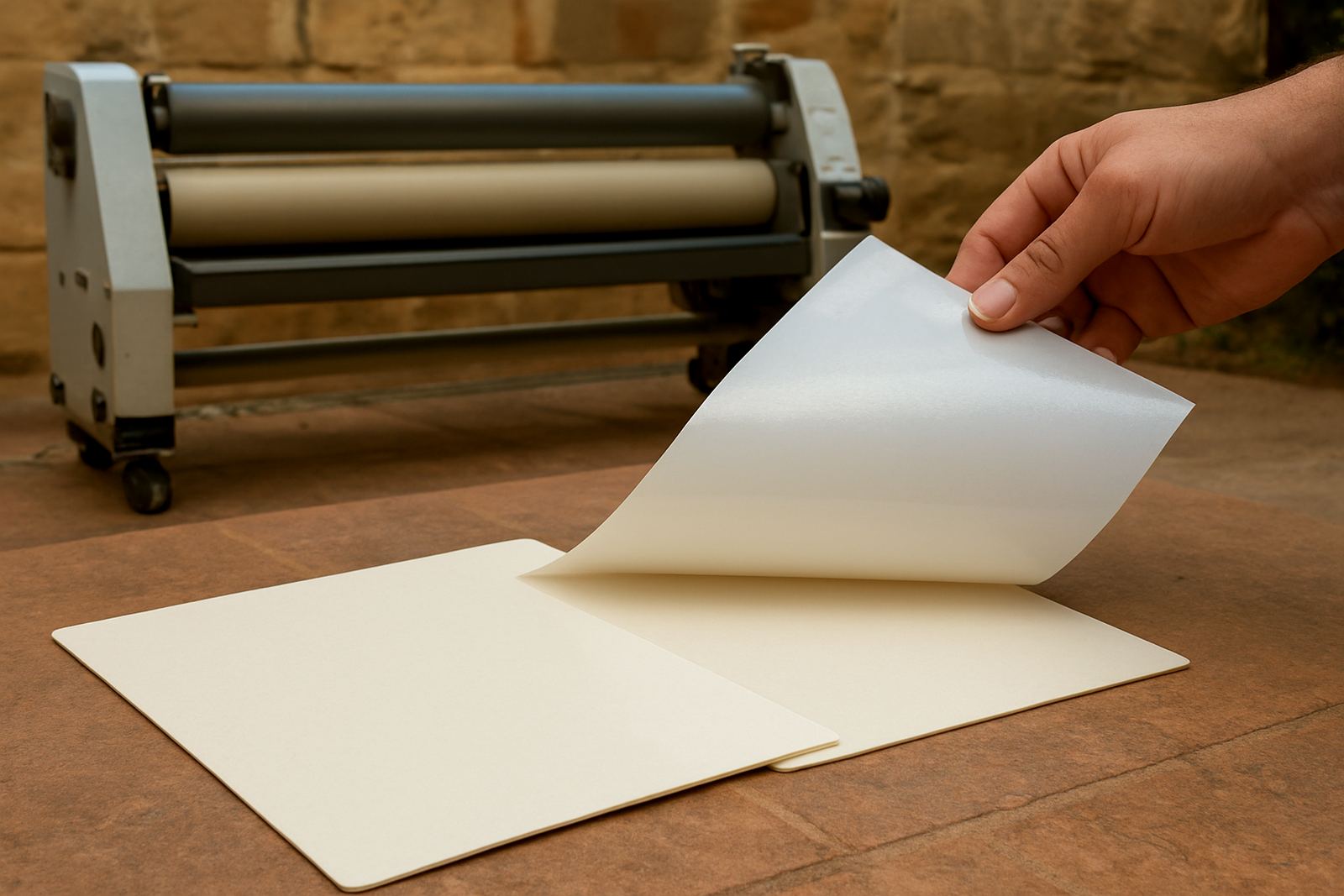
Lamination is a clear protective layer applied over printed graphics. It helps shield the print from scuffs, moisture, UV exposure and regular cleaning, which matters when a sign is touched often or sits outdoors. In our line of work, the question is usually not whether lamination looks nice, but whether the graphic will still look sharp after a few months of sun, dust and hands on the surface.
For retailers in Pretoria or Hartbeespoort, that can mean menu boards, promotional posters, window graphics and branded panels that get wiped down every day. For municipalities and contractors, it can mean notices, directional boards and temporary campaign material that must survive rain, dust and repeated handling. The laminate gives the print a second layer of protection without changing the message.
There are also different finishes to think about. Gloss can make colour pop, while matt reduces glare on signs viewed in bright daylight. A light textured finish can help reduce visible scratches on items that are handled often. The right choice depends on where the sign will sit and how close people will stand to it.
When lamination is worth the extra cost
Not every print needs lamination, and adding it where it brings little value can push up costs without much return. The clearest cases are the jobs that face constant wear, cleaning or weather. If the graphic must look presentable for months rather than days, lamination is usually a sensible choice.
- Shop window promotions that get removed and replaced often
- Vehicle graphics exposed to sun, dust and washing
- Interior signs in busy entrances, malls or reception areas
- Outdoor campaign boards in windy or rainy conditions
- Municipal notices that need repeated handling during rollout work
On a seasonal promotion in Centurion, for example, a retailer may put up laminated posters in a storefront and later move some of them to another branch. Without a protective layer, fingerprints and corner wear show quickly. With lamination, the same print can be cleaned and reused more confidently, which helps when a campaign has to run across several branches at once.
Where lamination can save a job from early failure
The biggest reason prints fail early is not always poor design, it is exposure. Sun, dust, heat and sudden rain are hard on signage in places like Hartbeespoort and Pretoria. Strong sun, heat, dust and sudden rain all shorten the life of unprotected graphics. In Hartbeespoort, for example, a printed board near a road or an open entrance can collect dust fast, then get wiped down often. That repeated cleaning is where a laminated surface earns its keep.
We also see problems where signs are installed close to food prep areas, wash bays or public counters. Those surfaces get touched and cleaned many times a day. A laminated print copes better with mild detergents, damp cloths and the odd spill. It is not a cure for poor placement or bad fixing, but it gives the job a better chance of lasting the full campaign period.
For vehicle graphics, lamination is often about resisting fuel splash, road grime and wash chemicals. On a bakkie used around Tshwane or Brits, that can be the difference between a sharp-looking fleet and a faded one after a few months.
- Stops light scratching during transport and installation
- Makes cleaning easier on public-facing surfaces
- Helps preserve colour in high-sun areas
- Reduces visible marks from fingerprints and dust
Gloss, matt or textured: choosing the right finish
The finish should match the setting, not just the artwork. A glossy laminate is useful when you want the colours to look bold and the print needs a polished look. It works well on retail promotions, branded panels and some vehicle graphics. But in strong sunlight or under bright interior lighting, gloss can create reflection, which makes the sign harder to read.
Matt finish is often the safer option for signs that people read at close range or from different angles. It cuts glare and gives text a calmer appearance. That is helpful in offices, schools, medical rooms and public service spaces where clarity matters more than shine. Textured finishes can help on surfaces that are likely to be marked, though they are usually chosen for practical reasons rather than style.
The right option usually depends on three practical questions: where will the sign be seen, how often will it be touched, and how much light will fall on it? A quick site survey often answers more than guesswork. On some jobs, the print itself is the main focus. On others, the finish is what keeps it readable through summer heat and daily use.
What lamination cannot fix
It helps to be clear about what lamination does and does not do. It protects a print, but it does not fix poor artwork, weak substrates or bad installation. If the base material is wrong for the job, or if the sign is mounted in a way that allows water to sit behind it, the laminate alone will not solve the problem.
It also does not make a low-grade print magically outdoor-ready for years. If the ink, vinyl or board is not suitable for the conditions, the result will still fail earlier than expected. That is why artwork prep, material choice and installation method matter as much as the protective layer. A good laminate works best as part of the full sign build, not as a quick rescue after the fact.
Another point is edge sealing. On some applications, if water gets under the edge, moisture can still lift the graphic over time. This is common on signs exposed to rain or frequent washing. The practical answer is proper trimming, good edge handling and the right adhesive or mounting method for the surface.
A local example from a busy Pretoria rollout
A retail group in Pretoria needed a short-term promotional run across several branches, with some graphics going up indoors and others near external entrances. The team wanted bright colour, easy cleaning and a finish that would hold up for the full campaign period, including during load-shedding when some areas were dimmer and signs had to read well in mixed light. For the indoor posters, a matt laminate reduced glare near the windows. For the exposed entry graphics, a tougher finish was used so staff could wipe off dust and fingerprints without lifting the print.
The result was simple: fewer damaged pieces, easier maintenance and less time spent replacing signs halfway through the campaign. That matters when there are several sites to manage and each branch has a different level of exposure. It also keeps the branding consistent, which is important for retailers and public-facing organisations that need the same message across multiple locations.
When a campaign spans Hartbeespoort, Centurion, Akasia and parts of Tshwane, the conditions are not always the same. One site may be shaded, another may face afternoon sun, and another may sit next to a busy road. Lamination gives you a bit more control over those differences, especially when timing is tight and the signs need to stay presentable from first day to last.
The practical rule we use before recommending lamination
The simplest rule is this: if the print will be touched, cleaned, moved or exposed to weather, lamination is usually worth considering. If it is a short indoor run with low handling, it may not be needed. That practical view saves money where it should be saved and adds protection where the risk is real.
At HM Graphics & Signs, we look at the site, the usage and the expected life of the graphic before advising on finish. Sometimes the best answer is a lighter print with no laminate. Other times it is a tougher build with a protective layer because the sign has to survive weekly cleaning, road dust or repeated installation and removal. The right choice depends on how the sign will be used, not just how it looks on day one.
- Short indoor use can often go without lamination
- Outdoor, high-touch and washable surfaces usually benefit from it
- Finish choice should match visibility and lighting conditions
- Good installation is still needed for long life
For projects across Pretoria, Brits, Centurion and the wider Gauteng area, that kind of planning saves time and avoids reprints. It also means the final sign does what it should do: stay clear, stay tidy and keep carrying the message.