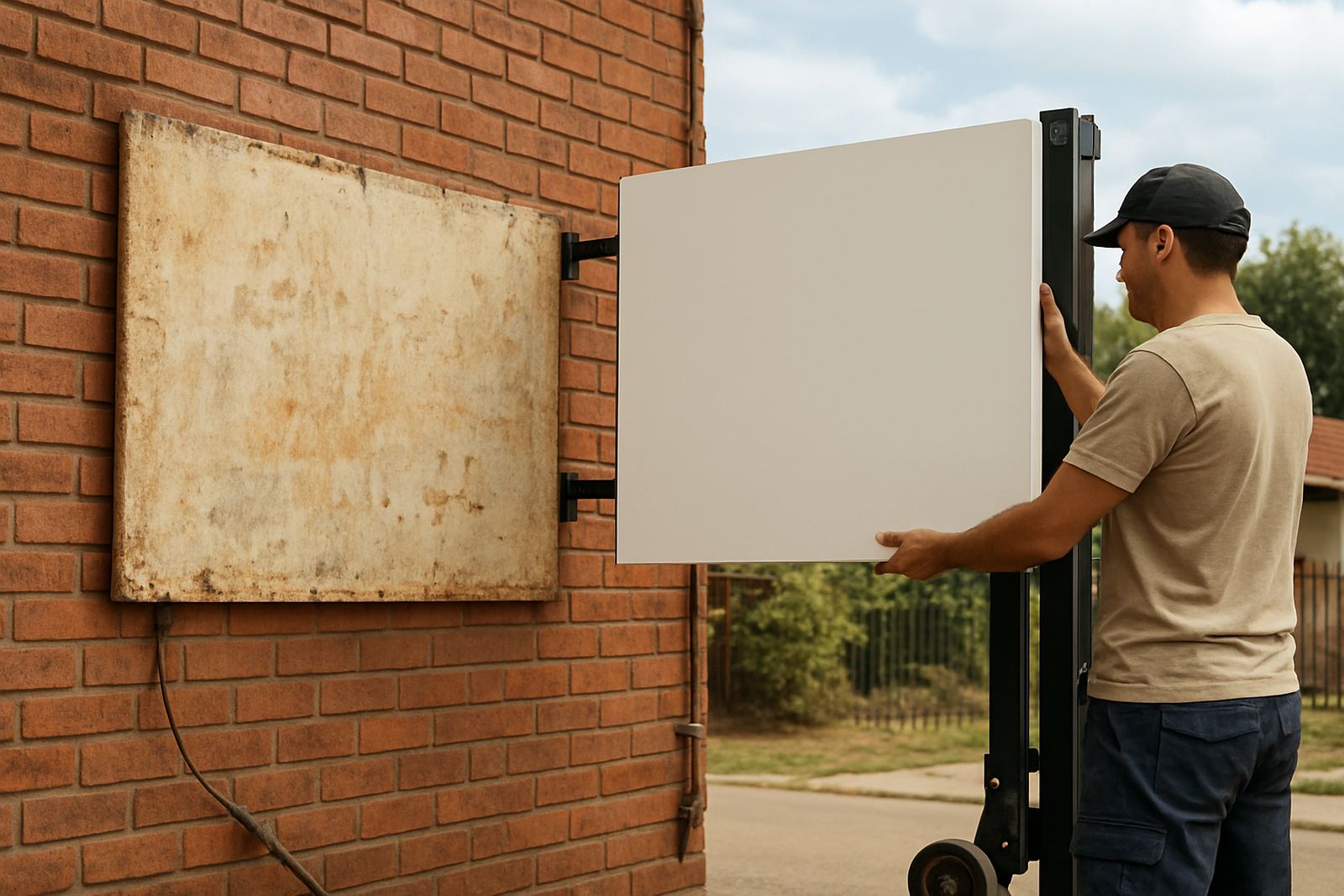
Start with the structure, not just the face
When a sign starts looking tired, the first question is not what the print looks like, but what is happening behind it. A faded panel can often be changed, but if the frame, fixing points or lighting have failed, a quick makeover may only hide a bigger problem for a short while. In Hartbeespoort and Pretoria we often see signs that still have good bones, especially where the frame was made properly and the site has not been exposed to constant water seepage or strong wind.
Check for rust, warping, loose brackets and any movement in the mounting points. On roadside sites and high-traffic centres, a sign can take a beating from dust, sun and vibration. If the sign body is sound, refurbishment can be a sensible route. If the structure is soft, corroded or unsafe, replacement is usually the better option.
- Look for rust at the base, corners and welds
- Check if panels are buckling or lifting
- Test whether the frame still sits level and secure
- Inspect for water ingress around joints and seals
Signs that are good candidates for refurbishment
Refurbishment works best when the frame is stable, the message still suits the site and the sign type allows for part replacement. A shopfront fascia with faded vinyl, a pylon with a damaged face panel, or an indoor board with scuffed graphics can often be renewed without rebuilding from scratch. This is especially useful when the layout still matches the business identity and the proportions remain right for the space.
It also helps when the sign is only a few years old and the main issue is wear from sunlight, dust or cleaning chemicals. In Gauteng, UV exposure can flatten colour faster than many owners expect, and coastal humidity is not the only weather factor that affects materials. A panel change, fresh vinyl or re-printed graphic can restore the look without the cost of a full remake.
- Faded but undamaged printed panels
- Vinyl graphics that are peeling, cracked or outdated
- Frames that remain straight and secure
- Signs where the brand message is still current
When replacement gives better value
Replacement becomes the sensible choice when repairs start stacking up or when the old sign no longer fits the business. A sign with repeated water damage, cracked acrylic, burnt-out electrics or a frame that has reached the end of its life can keep demanding attention. At that point, putting more money into patchwork repairs often costs more over time than starting again with a proper new build.
There is also the question of function. If the wording has changed, the logo has been updated, or the site needs better visibility from the road, a refresh may not solve the real problem. A new sign can improve legibility, meet current municipal requirements and make maintenance simpler later on. For municipal and commercial sites, this can matter as much as appearance.
- Severe corrosion, cracks or structural damage
- Electrical faults or dead illumination that keep returning
- Outdated branding or incorrect information
- Signs that no longer meet site visibility or compliance needs
The cost question is not only about Rand
Many clients want to know whether refurbishment is the cheaper option, and often it is on the quote. But the full picture includes downtime, access equipment, transport, labour and how long the result will last. A quick repaint on a damaged frame may look cheaper now, then fail again after one rainy season or a few weeks of harsh sun. That is money spent twice.
Good sign advice should balance the upfront amount with the expected life of the repair. If a site is in Centurion, Akasia or Rosslyn and access is difficult, it may be worth doing a proper replacement while the team is already on site. If the sign is simple and the structure is sound, a clean refurbishment can stretch the value for another few years.
The practical question is this: will this work keep the sign doing its job, or just slow the next problem down?
What to inspect before you decide
A proper assessment saves a lot of guesswork. Before choosing refresh or replace, look at the sign in daylight and, where relevant, after dark. That helps you spot colour loss, failed illumination and any damage that only shows up at night. On vehicle graphics or roadside signs, small defects can become very noticeable once the sun hits them from the wrong angle.
At HM Graphics & Signs we usually check the condition of the substrate, print, fixing points and surrounding site access. We also consider whether the sign needs new artwork, fresh fabrication or permit assistance before any work starts. If a sign is near a busy access road or municipal boundary, practical site planning matters just as much as the finish.
- Photo record of the current condition
- Check measurements against the existing mounting space
- Confirm whether the message still matches the business
- Review access for installation and maintenance
A local example from Pretoria
We recently looked at a retail fascia in Pretoria that had done good service for years. The aluminium frame was still sound, but the printed face had faded badly and the lettering no longer matched the updated store name. The client first asked for a simple touch-up. After inspection, it was clear the frame could stay, but the face panels needed replacement and the lighting had to be checked before any new graphics went up.
That made the project a hybrid job rather than a full rebuild. We kept the usable structure, replaced the worn components and brought the message up to date. The result was cleaner, easier to read and more cost effective than starting from zero. That is the kind of decision that saves money without cutting corners.
For sites in Tshwane, Brits or Hartbeespoort, the same principle applies. If the base is good, keep it. If the base is failing, do not throw good money after bad.
A practical rule of thumb for owners and managers
If the sign still supports the business, is structurally safe and only needs fresh graphics or minor repairs, refurbishment is usually the smart move. If the frame, electrics, fixing points or message are past their useful life, replacement is the better call. The right answer depends on condition, not on habit.
As a simple rule, refresh the parts that are worn and replace the parts that are failing. If you are unsure, get a site survey before making a decision. A few minutes of inspection can prevent a bigger repair bill later, and it helps make sure the sign still works for the site, the weather and the people who need to read it.