
Planning The Job Before Anyone Arrives On Site
The best way to avoid disruption is to plan properly before the first ladder comes off the truck. A site survey tells us where customers walk, where deliveries come in, where security points are placed and what time of day the site is busiest. In Hartbeespoort, Pretoria and Centurion, that can mean everything from early mall loading bays to township streets with heavy foot traffic before and after school hours. When we know the movement on site, we can schedule the work around it instead of forcing the business to work around us.
For active retail and office sites, we look at access, height, power supply, weather exposure and local rules. If the project needs permits, we build that into the programme early so nobody is left waiting for approval while a shopfront sits half finished. Hendrik Mokoena and the team keep the sequence tight from artwork prep through to final installation, which helps prevent the classic problem of materials arriving before the site is ready.
That planning also matters for safety. A clean plan reduces loose stock, blocked walkways and unnecessary noise. It also makes it easier to work in phases, which is often the right answer for a business that cannot close for a full day.
Installing In Phases So Trading Can Continue
Many sites do not need one long shutdown. They need a well timed phased install. We often break the work into sections so one entrance, aisle or frontage stays open while another part is being fitted. That approach works well for supermarkets, medical practices, fuel station forecourts, office parks and municipal buildings where people still need access during the day.
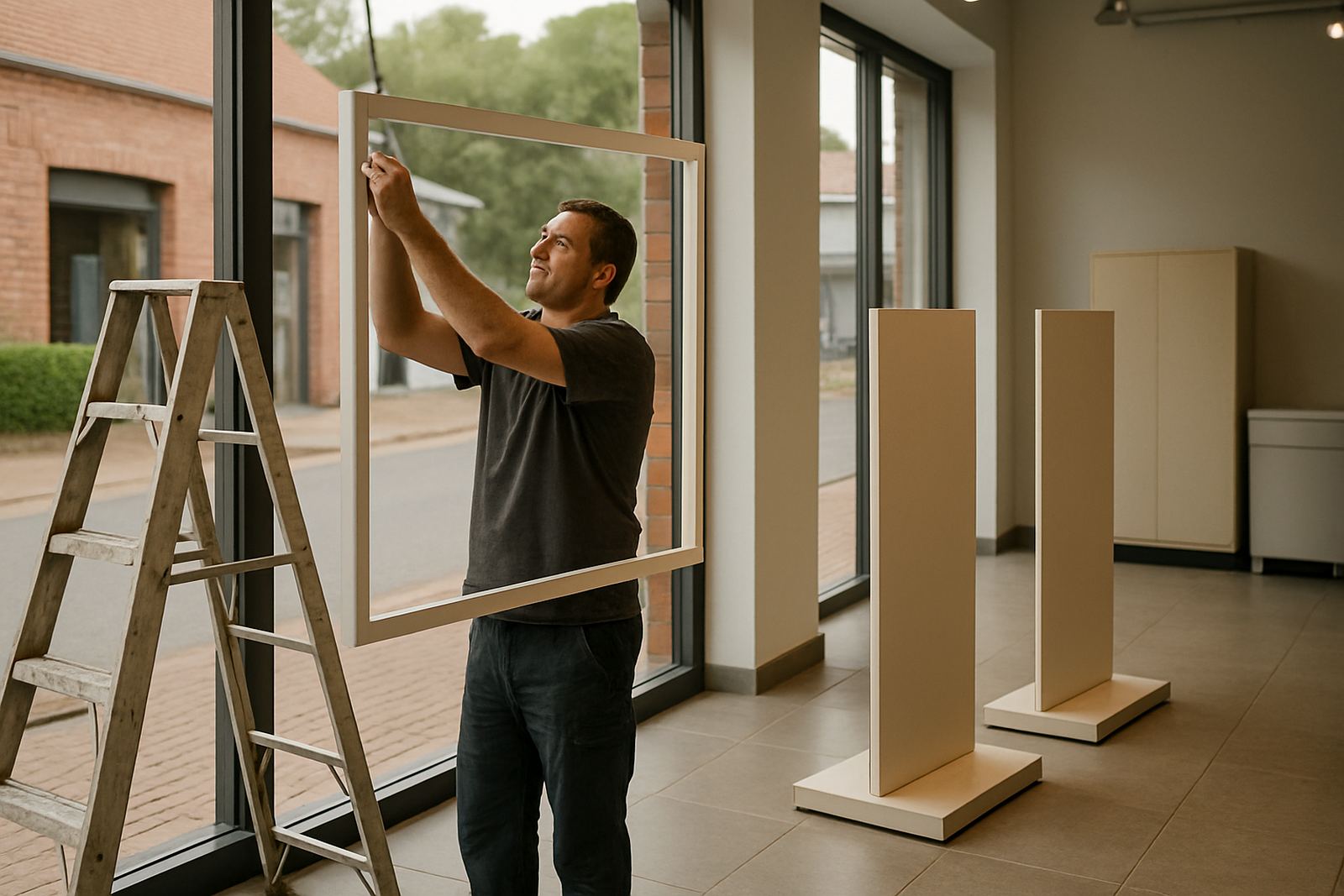
Phase work is especially useful for larger campaigns. If a retailer has multiple branches across Tshwane, Brits and Pretoria, the rollout can be staged by zone and by trading time. One day might be dedicated to external fascia signs, another to internal directional signs, and another to vehicle wrap fitting or promotional branding. Riaan Odendaal in production and Kagiso Ndlovu on site make sure each stage is ready before the next one starts, so there is less standing around and less noise for staff and customers.
- External work is often done before opening or after closing, so foot traffic stays clear.
- Internal signage can be fitted one section at a time, with walkways left open.
- Vehicle branding is usually scheduled outside delivery peaks to avoid transport delays.
- Maintenance and refurbishment are planned in short visits where possible, instead of long site occupation.
For active premises, timing is just as important as the sign itself. A neat install done at the wrong hour can still upset trading, while a well timed one keeps the business moving with very little fuss.
Managing Noise, Dust And Customer Movement
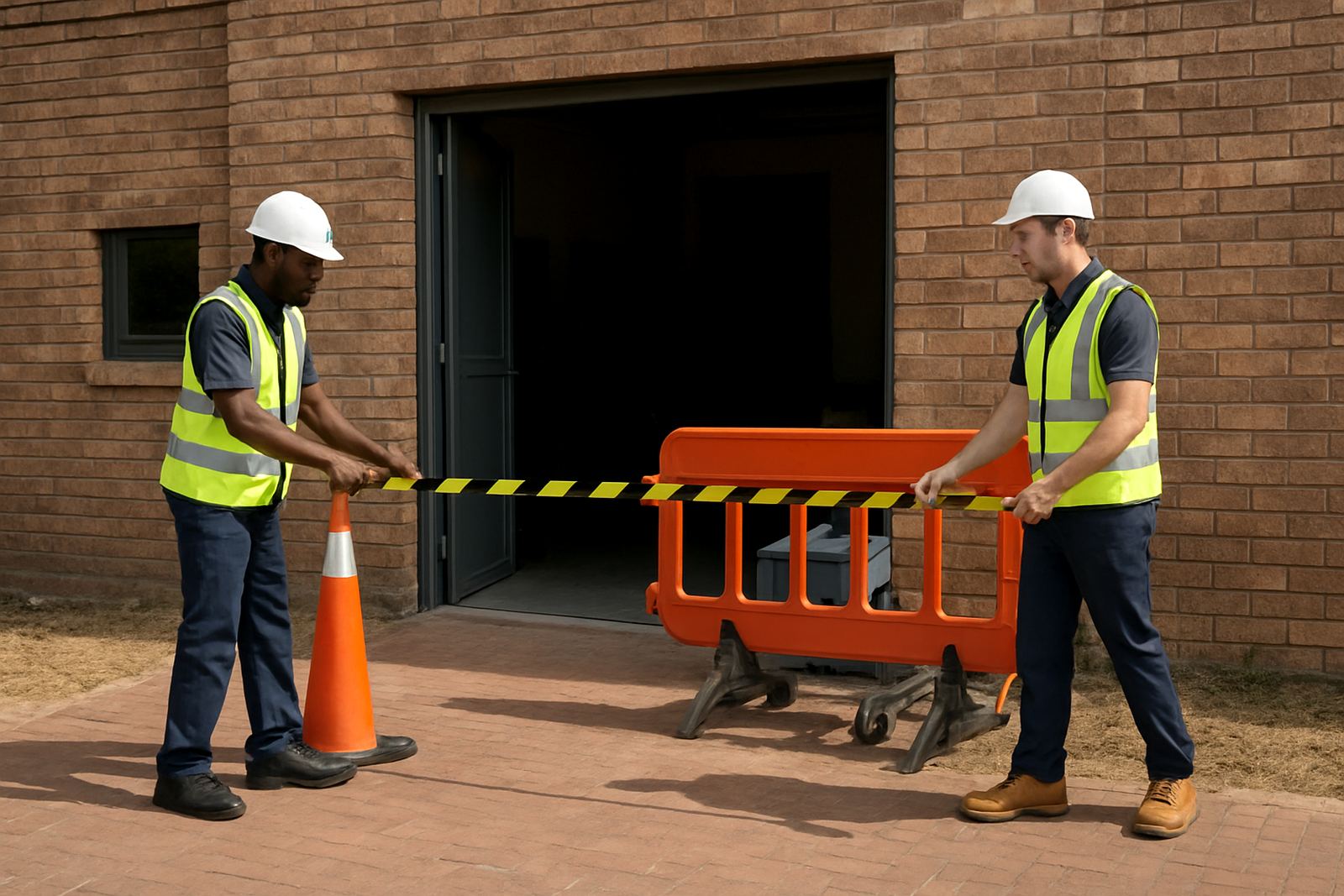
Trading sites need a work method that respects people inside the building. Cutting, drilling and drilling backplates can create dust and short bursts of noise, so we set up with care and keep the work area contained. In malls and office blocks, that often means using barriers, floor protection and controlled access routes. On street facing sites, it can mean using shorter install windows and keeping tools and materials off the pavement as much as possible.
We also think about customer movement. If an entrance must stay open, the team will direct the work so customers can still see where to go. For a municipal office or service point, clear temporary notices matter too, because visitors need to know which door is open and which area is closed. Ayanda Mavuso prepares artwork that reads well from a distance, while Revasha Desai keeps the client informed about what the public will see on the day.
On coastal or humid days, adhesives and fixings can behave differently, so the team adjusts the method rather than pushing ahead blindly. That matters in Gauteng too when a hot morning turns into a sudden storm. Good installers watch the conditions and keep the job moving without risking a poor finish.
Keeping Stock, Staff And Security Untouched
One of the easiest ways to cause trouble on an active site is to ignore the people already working there. Store staff need to restock shelves, managers need access to tills or offices, and security teams need clear sight lines. We take those daily routines into account before the job starts. That way, signage work does not block exits, interfere with deliveries or create blind spots at a gatehouse.
For retail fit outs, we often coordinate around low trade periods and stock take times. For business parks, we may work near tenant hours so a single unit is not shut because of a common area project. Retief Wessels on fabrication makes sure components are ready in advance, which reduces the time spent on site and keeps the footprint small.
- Materials are brought in just before use, not left stacked in trading areas.
- Power tools are used only where they will not interrupt tills, servers or reception areas.
- Security access points stay clear and visible during the whole job.
- Waste is removed as the work goes, so the site does not look messy halfway through the day.
This is the point where good coordination really shows. A business should be able to keep serving customers while the work is happening, not after the team has packed up and left.
A Local Example From Hartbeespoort To Pretoria
A practical example is a retail client with a branch in Pretoria and another in Hartbeespoort. The stores needed new exterior branding, internal directional signs and some maintenance on older panels, but both branches were trading hard. Instead of blocking off whole entrances, we scheduled the work in short windows, starting before opening and finishing before the lunch rush. The exterior signs went up first, then the interior wayfinding, and finally the refurbishments on older elements that had faded in the sun.
Because the teams knew the local routines, there was no need to shut the stores for a full day. Delivery points stayed open, customers still found the tills, and the staff could continue helping people without stepping around a cluttered work zone. That kind of job needs experience with real site conditions, not just a drawing on a page. It also helps to know the area, because a job in Akasia or Rosslyn may need different access planning from one in a smaller shopping node or a municipal office park.
That is why site surveys, permit assistance and maintenance planning are part of the service, not extras. They keep the job realistic from the start and reduce the chance of last minute changes that slow everyone down.
What Clients Can Do To Make The Day Easier
Clients also play a part in keeping trading smooth. The more we know about your peak times, security procedures and loading restrictions, the easier it is to plan the work. If there are staff meetings, public events or delivery windows on the same day, tell us early so we can build around them. A quick note about generator points, alarm systems or restricted areas can save a lot of back and forth on site.
Before installation day, these are the details that help most:
- Opening and closing times for the branch or site.
- Where customers enter and where goods are received.
- Any planned promotions, school events or council visits.
- Whether the site has backup power, and where it is located.
- Any safety rules, contractor sign in steps or municipal access limits.
When those details are shared early, the install can happen with less interruption and less stress for staff. Revasha Desai keeps the communication clear, and Lerato Mthembu makes sure the schedule matches what the site can actually handle.
Signs That Need Less Time, Not More Trouble
Some clients wait too long to replace a damaged sign because they think the work will be messy or disruptive. In practice, a tidy maintenance visit is often quicker than letting the problem drag on. Faded panels, loose vinyl, cracked faces and worn directional signs can usually be sorted with a short return visit, especially when the original specifications are known. That is often better than letting a poor sign stay up and reflect badly on the business.
For active trading sites, the aim is simple: keep people moving, keep the area safe and finish the work neatly. When the plan is right, customers hardly notice the installation happening. They just see a site that looks organised and ready for business. That is the standard we work to across Tshwane, Brits, Centurion and Gauteng.
At HM Graphics & Signs, practical planning is part of the service from the first survey to the last screw. It keeps the job clean, the site open and the trading day moving.