

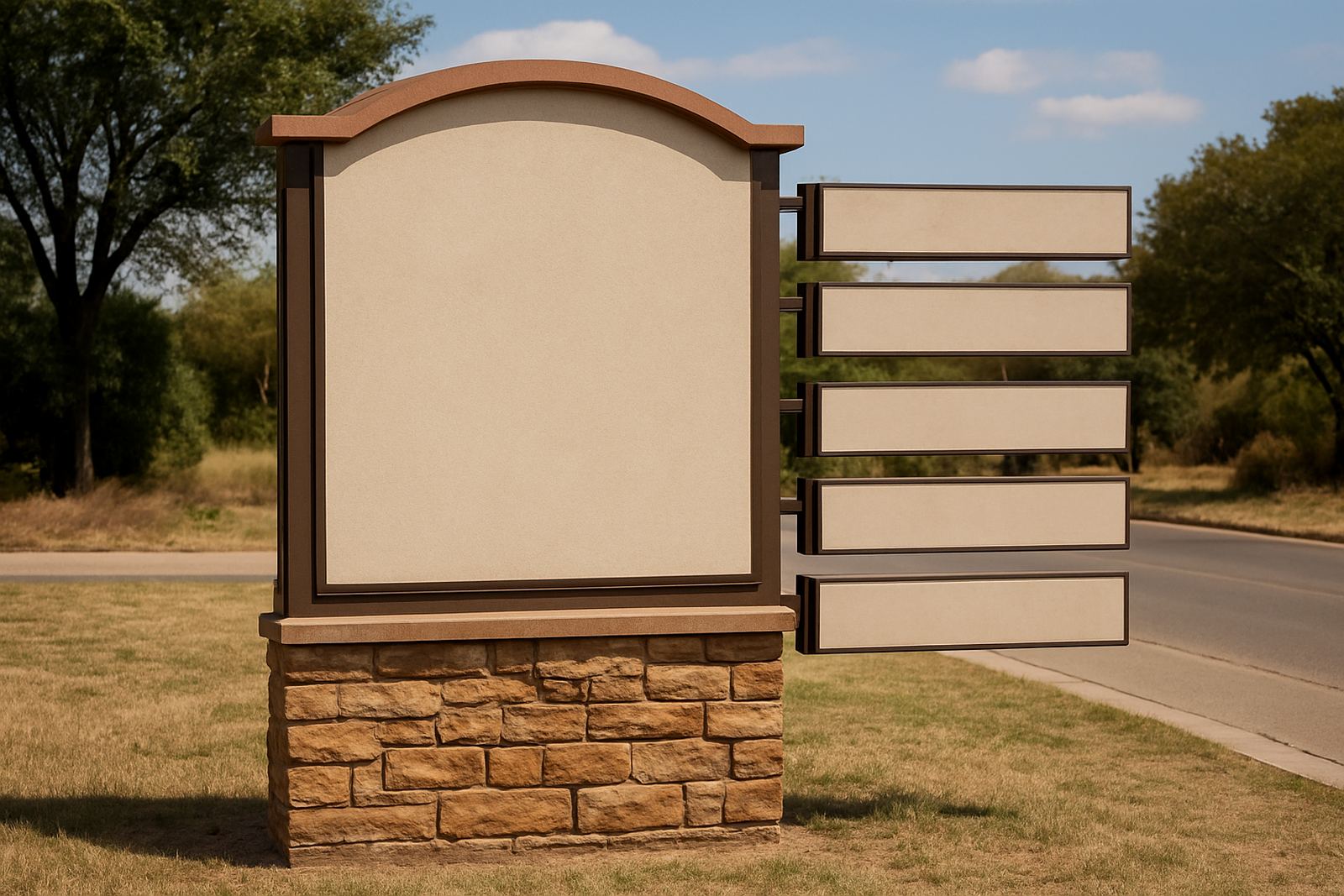
Start With the Estate Journey, Not the Sign Itself
Before you choose materials or artwork, map how people move through the estate. Think about the main entrance, guardhouse, visitor parking, refuse area, clubhouse, pedestrian paths and secondary exits. If the layout is confusing, the signs need to solve that first. A good estate sign plan starts with a site survey and a simple wayfinding sketch that shows where each message belongs.
For estates in Pretoria, Centurion, Brits and Hartbeespoort, the site context matters too. Strong sun, wind, dust and summer rain all affect visibility. In gated communities and mixed-use complexes, you also need to consider whether signs must be seen by motorists, pedestrians or both. A sign that works at 20 metres for a driver may be too high or too small for someone walking to a clubhouse.
- Identify every decision point where a visitor might slow down.
- List the messages that are essential only, not everything at once.
- Check sight lines from both vehicle height and walking height.
- Note any security restrictions, municipal requirements or landlord rules.
Entrance Signs That Set the Tone and Carry the Rules
The entrance sign does the heavy lifting. It should be clear, durable and well proportioned for the wall, gate or pylon it sits on. Many estates use a main identity sign with the estate name, then a separate rules panel or house rule board close to the guardhouse. That keeps the main feature clean while giving security staff a place to point visitors to the relevant information.
Choose materials and finishes that suit the location. In coastal humidity or high UV exposure, powder coated metal, aluminium composite, acrylic and outdoor grade vinyl all perform differently. If load-shedding is common and the entrance depends on lighting, make sure the sign still reads well in daylight without relying only on illumination. Reflective elements can help on darker access roads, but they must be used carefully so the sign does not glare.
- Main sign: estate name, logo, and optional crest or icon.
- Rules panel: speed limit, visitor procedure, no entry points and security notices.
- Directional panel: reception, clubhouse, gatehouse, visitor bays or office directions.
- Lighting check: ensure the sign is visible during early morning and evening arrivals.
Directional Signs That Reduce Confusion Inside the Estate
Directional signs should be simple enough to read while someone is moving. Use short words, clear arrows and consistent placement. If the estate has several clusters or phases, repeat the same naming convention throughout. When names change from one board to the next, people miss turns and security gets interrupted by avoidable questions.
Directional signs work best when the family of signs is planned together. That means the same colours, the same arrow style and the same type sizing across all internal boards. It also means thinking about maintenance from the start. A sign that gets clipped by a delivery truck or bleached by the sun should be easy to replace without redoing the whole system.
For larger complexes around Tshwane and Gauteng, consider a hierarchy. The first board gives the broad direction, then smaller signs confirm the exact destination. This is better than placing one oversized board at every corner.
- Use one arrow style throughout the estate.
- Keep wording short, such as Office, Gate 2, Visitors or Exit.
- Place signs before turning points, not after them.
- Test the route from a visitor's point of view in a vehicle and on foot.
Rules Boards, Safety Notices and Compliance Details
Estate rules signs must be readable, orderly and easy to update. Common items include visitor instructions, speed limits, parking controls, pet rules, noise restrictions, CCTV notices and emergency contact procedures. When these are buried in tiny text, nobody reads them. When the board is over crowded, it looks busy and gets ignored. The goal is a clean layout with the most important points given real space.
For complexes that fall under homeowner association rules or municipal conditions, permit assistance may be needed for certain sign types, especially large pylons or signs near public roads. It helps to confirm placement early, before fabrication starts. That avoids delays and extra cost later. If the estate is managed by a committee, approval should also cover spelling, logo use, colour choice and who may update the content.
Keep the rules board practical. Avoid long paragraphs and use headings where possible. If a policy changes often, it may be better to separate the permanent board from an update panel or replaceable insert.
Materials, Size and Finish for Local Conditions
Material choice should match the site, not just the budget. A small complex in Hartbeespoort may need a different setup from a large estate in Pretoria East or Centurion. Sun exposure, dust, vandal risk, cleaning access and wall type all matter. Steel frames are suitable for heavier structures, while aluminium and composite panels are often easier to maintain. Vinyl can work well for graphics, but only if it is specified for outdoor use and properly applied.
Size depends on viewing distance. A gate sign seen from a slow moving vehicle can be smaller than a roadside board. Internal signs need enough contrast to be read quickly, especially where drivers are turning. Choose finishes that reduce glare and make sure text does not disappear in bright afternoon light. In wet or humid areas, sealed edges and clean mounting details help prevent premature wear.
- Match materials to sun, rain, wind and cleaning chemicals.
- Allow for replacement of content on rules boards.
- Use contrast, not just colour, for better visibility.
- Specify mounting points that allow safe maintenance later.
From Artwork Prep to Installation Day
Once the layout is approved, the artwork needs careful checking. Names, arrows, numbering and legal wording should be proofed before print or fabrication begins. A small error on an estate sign can affect visitors every day, so it is worth checking the copy twice. After that comes production, which may include large format printing, vinyl cutting, sign fabrication and protective finishing.
Installation should be scheduled with access in mind. Estates often have delivery windows, security procedures and resident quiet times, so the team needs a clear plan. On site installation also needs the right fixings for the wall, gate or post type. If a sign is fitted poorly, wind movement and vibration can loosen it over time. A proper handover should include a short maintenance note on cleaning and when to call for a repair.
For estates with phased upgrades, campaign rollouts can help. That means replacing signs in stages so the estate stays operational. It also helps when new phases, new parking rules or revised access points are introduced.
A Simple Checklist Before You Approve the Final Sign Set
Use this checklist before giving the final go ahead. It keeps the project practical and helps everyone involved work from the same plan.
- Have all decision points on the estate been mapped?
- Are the entrance, rules and direction signs separated clearly?
- Have viewing distance, lighting and weather exposure been checked?
- Are the estate name, arrows and house rules spelled correctly?
- Has the committee or managing agent signed off the artwork?
- Are any municipal or access permissions needed before installation?
- Is there a maintenance plan for cleaning, repairs and updates?
When these points are covered, the estate signs do their job quietly and properly. Visitors find the right place, security staff spend less time explaining the layout and the estate presents itself with consistency from the gate onward.