
Start With the Vehicle, Not the Artwork
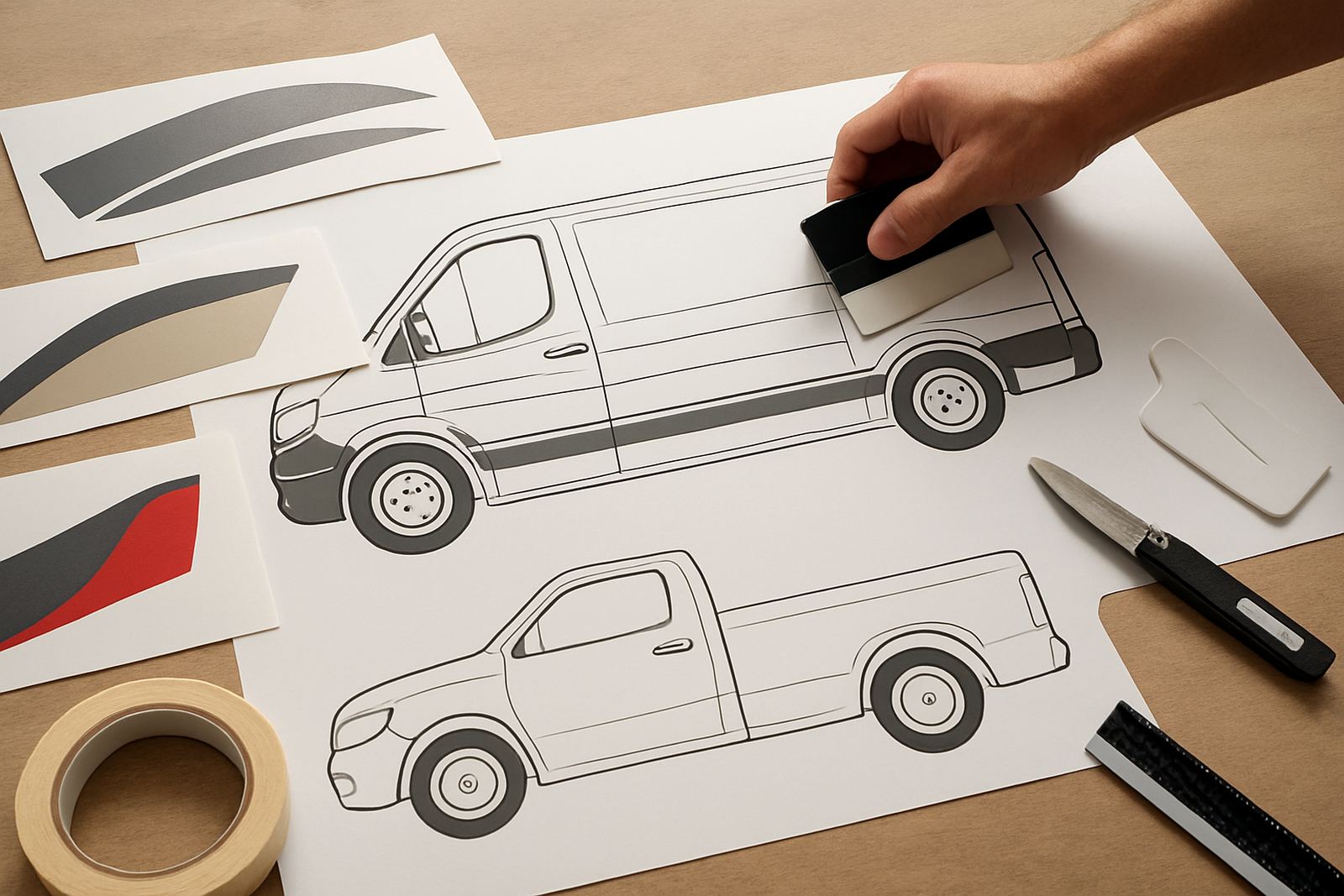
Before any artwork is set up, the vehicle must be checked properly. A panel van, sedan, bakkie, trailer or truck each gives you different usable areas, different curves and different door gaps. That affects what can be printed, cut or applied, and where seams will land. A good site survey saves time later and helps avoid a wrap that looks fine on screen but struggles on the actual bodywork.
We always check the age and condition of the paint, the state of plastic trim, dents, scratches and any previous branding. If the clear coat is failing or a panel has been resprayed badly, the vinyl may not bond well. In coastal areas, salt and humidity can also shorten the life of poorly prepared graphics, so prep matters as much as print quality.
- Check the vehicle make, model and year
- Note any dents, rust, chips or fading
- Confirm if the vehicle is leased, owned or shared
- Measure flat panels, curves and door seams
- Decide whether you need partial branding or a full wrap
Choose the Right Branding Format for the Job
Not every vehicle needs a full wrap. For some businesses, a clean logo, contact detail and service line on the doors is enough. For others, especially fleets moving around Tshwane, Brits, Centurion and Pretoria daily, a stronger livery helps with visibility and consistency. The right choice depends on budget, message and how long the vehicle will stay in service.
Vehicle branding can include printed wraps, cut vinyl lettering, reflective elements for visibility, magnetic panels for temporary use and rear window graphics. A full wrap gives more coverage, but it also takes longer to fit and needs careful planning around handles, mouldings, lights and fuel flaps. Partial branding can still be very effective if the layout is clear and readable from a distance.
- Door branding: best for basic contact and company details
- Partial wrap: covers selected panels for a stronger visual impact
- Full wrap: suitable for larger campaigns or high visibility fleets
- Temporary panels: useful for promotions, events or short term use
Plan the Message Before the Design Starts
The best vehicle branding is easy to read in traffic and simple to remember after one glance. Keep the message short. A logo, service line, website or contact path is usually enough. Too much text becomes hard to read when the vehicle is moving or parked in a busy area. For municipal or commercial fleets, it is also wise to keep the layout consistent across every unit so the team looks organised.
Think about where the vehicle will operate. A construction bakkie in Rosslyn may need a tougher, more practical layout. A sales vehicle in Centurion may need something cleaner and more polished. In both cases, the contact details must be large enough to read at a distance and the colours should still work in bright sun.
- Use one main message only
- Keep phone numbers and web addresses large and legible
- Use strong colour contrast so branding and safety text stay clear in bright sun, shade and at night.
- Leave space around the logo so it does not feel crowded
- Match the branding to the rest of the fleet or company identity
Prepare the Vehicle Before Installation Day
Preparation has a direct effect on how long the branding lasts. The surface must be clean, dry and free from wax, polish and road film. If the vehicle has just been sprayed, it may need time to cure before vinyl is applied. We also check that the vehicle is available for the full fitting window, because rushing the job can lead to lifting edges or trapped dirt.
For fleets, it helps to schedule branding in batches. That reduces downtime and keeps the look consistent from one vehicle to the next. If the vehicles are used for deliveries or client visits, plan around off-peak hours where possible. In Gauteng, traffic delays can affect delivery and fitting times, so a clear schedule matters.
- Wash the vehicle properly before arrival
- Remove wax, grease and heavy dirt
- Allow newly painted panels to cure where needed
- Bring the vehicle with enough working space around it
- Remove loose roof racks, damaged trims or old stickers if required
Installation, Curing and First Week Care
Installation should be done by an experienced team because vehicle curves, rivets and panel joints all need proper handling. After fitting, the adhesive needs time to settle. A freshly branded vehicle should not be pressure washed too soon, and it should be checked for any lifted edges after the first few drives. Heat, dust and load-shedding related downtime can also affect how and when a fleet is returned to service, so a practical handover plan is useful.
Drivers should be told how to look after the branding. A little care in the first week can extend the life of the graphics. This includes avoiding harsh brushes, checking for petrol spill contact near the fuel cap and watching any problem areas around handles or corners. If the vehicle works near trees, construction dust or heavy rain, a quick visual check now and then helps catch damage early.
- Avoid washing for the first 48 to 72 hours unless advised otherwise
- Do not use strong solvents on printed or cut vinyl
- Check edges after heavy rain or long highway trips
- Report lifting, scratching or impact damage early
- Keep a record of the vehicles fitted in each batch
Fleet Rollouts, Maintenance and Permit Checks
When you are branding more than one vehicle, consistency becomes important. The layout should be applied the same way across the fleet, with the same colours, spacing and logo placement. That helps your business look professional whether the vehicle is in Hartbeespoort, Pretoria, Akasia or Soshanguve. It also makes future repairs easier because the artwork can be repeated without guessing.
Some vehicles need extra checks before branding, especially if they operate under municipal or regulated use. That can include permit questions, visible numbering, safety markings or site-specific requirements. Maintenance is also part of the picture. If a panel gets damaged, it is usually better to replace that section than to leave it peeling or faded. A good maintenance plan protects the image of the whole company.
- Keep artwork files and vehicle measurements on record
- Set a standard layout for all fleet units
- Include permit or compliance checks where needed
- Plan for replacement panels on high-wear vehicles
- Review branding every few months for fading, scratches or edge lift
A Simple Check Before You Approve Vehicle Branding Artwork
If you are branding one vehicle or a full fleet, the approval step should be straightforward. Confirm the wording, the spelling, the layout and the vehicle list before anything is printed. Once the film is cut and fitted, changes take longer and cost more. A careful sign-off saves money and helps the job go through without delays.
For businesses serving clients across Tshwane and Gauteng, the goal is not just a good-looking vehicle. It is a mobile advert that works in traffic, holds up in the weather and keeps your company visible every day. If the plan is right from the start, the branding can do its job for a long time with very little fuss.
- Vehicle details confirmed
- Artwork checked and signed off
- Colour choices approved against the actual vehicle
- Installation date arranged
- Driver care instructions handed over