
Start With the Routes People Use Most
The best school signage plans begin with movement, not decoration. Map the way people arrive, park, walk, queue and leave the site. A parent at the gate needs different information from a learner moving between classrooms, and a delivery driver needs different directions again. When the main routes are clear, the whole campus feels easier to use.
Start with a simple site survey and walk the property as if you are a first-time visitor. Check where confusion happens, such as split campuses, side gates, pedestrian entrances, bus drop-off points and areas where vehicles and learners cross paths. In older schools around Pretoria, Brits and Hartbeespoort, the main issue is often that signs were added one by one and never linked into one system.
- Main entrance and reception direction signs
- Parking and drop-off signs
- Pedestrian route markers
- Block, hall and office identifiers
- Emergency exit and assembly point signs
Use a Clear Sign Hierarchy Across the Campus
A school needs more than a few boards at the gate. A proper signage system has levels. The first level catches attention from a distance, the second gives direction, and the third confirms the exact destination. This matters on larger campuses where a visitor may need to move from the gate to admin, then to a class block, sports field or hall without asking for help at every turn.
Use a consistent look for direction arrows, room numbers, building names and safety notices. Keep wording short and keep fonts readable from the expected distance. For outdoor signs, think about sunlight, glare and fading. In the North West and Gauteng heat, dark colours on cheap material can distort quickly, so material choice matters as much as the message.
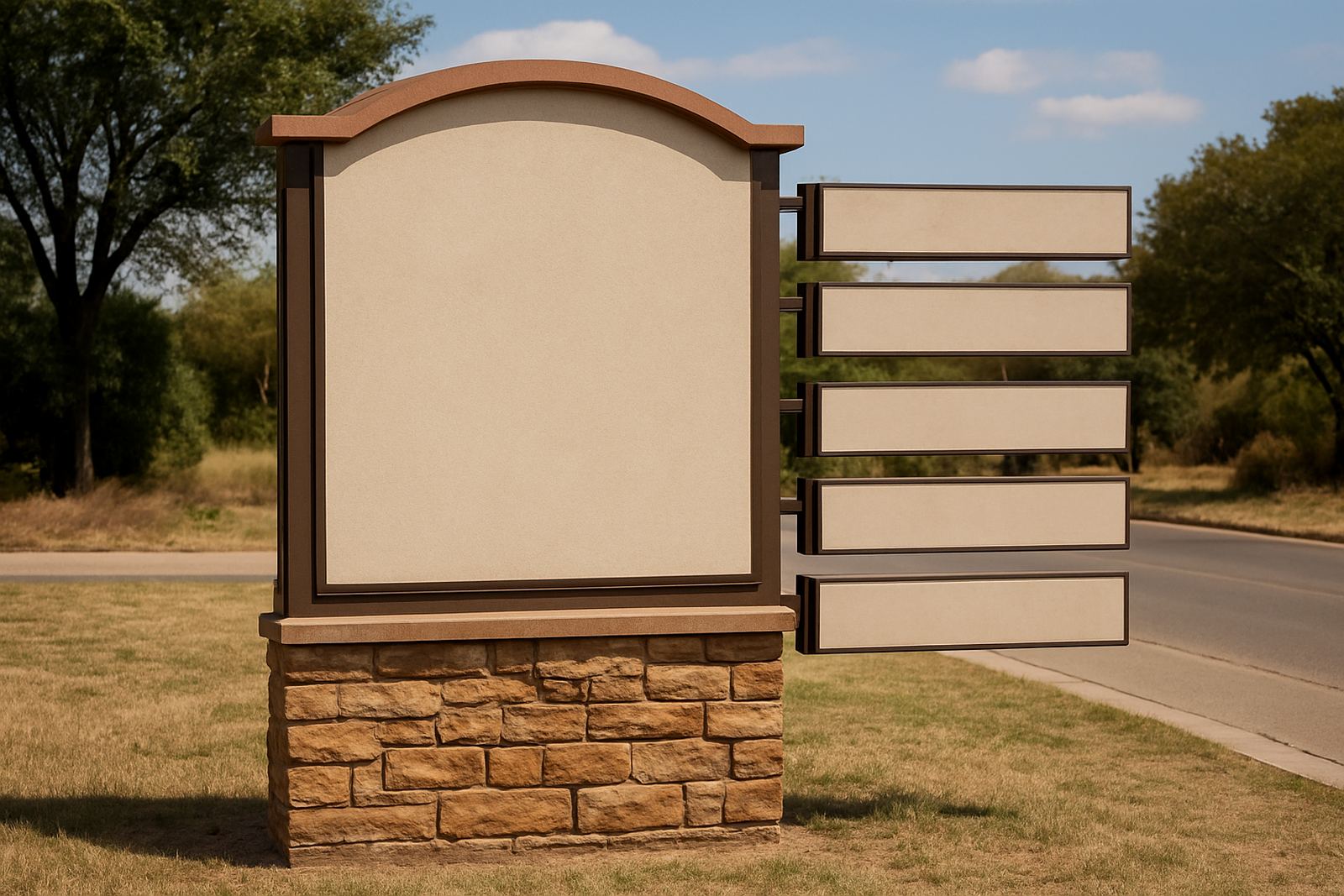
- Gate or roadside identification sign
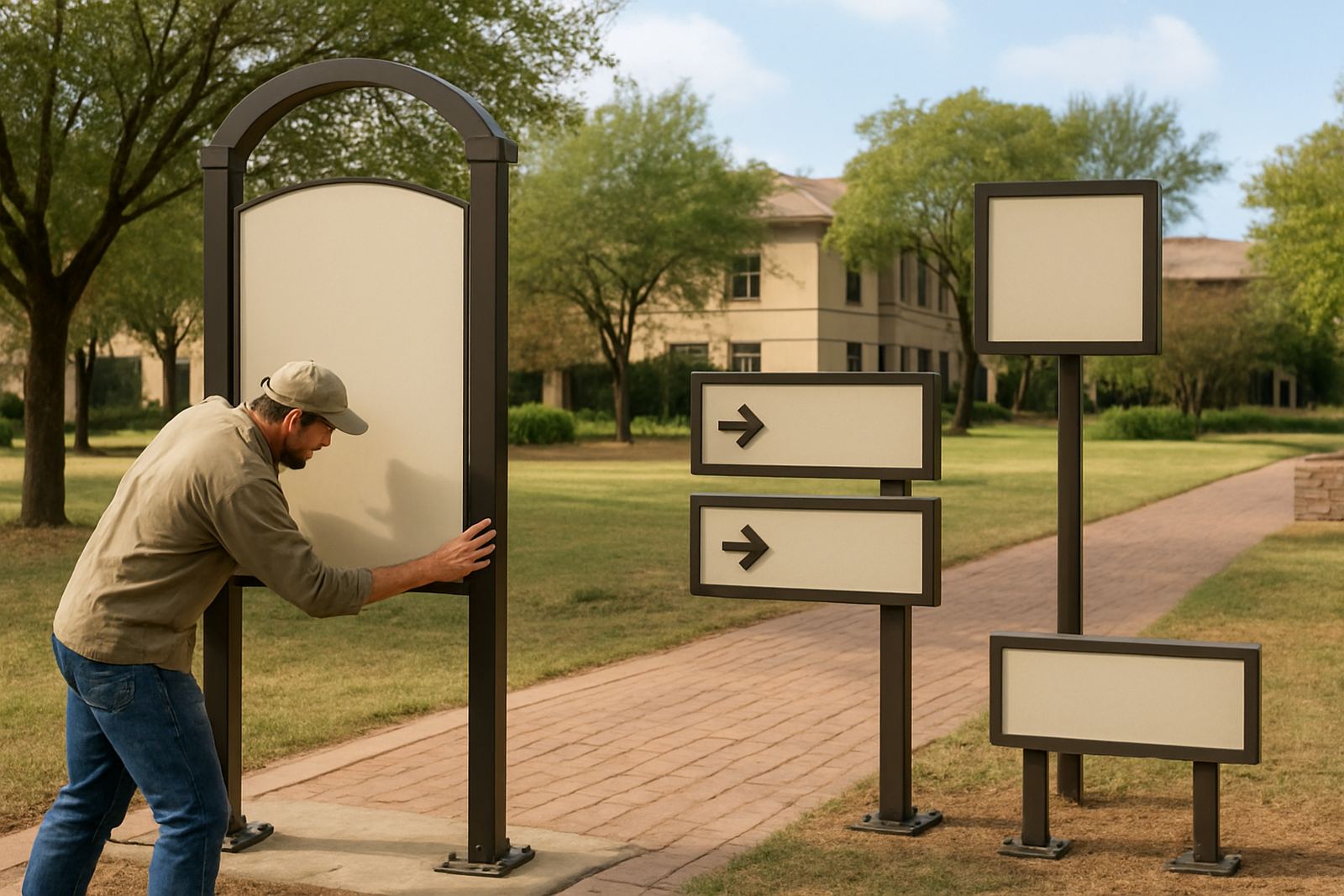
- Directional signs for vehicles and pedestrians
- Building and room identification
- Notice boards for notices, calendars and notices from management
- Safety and compliance signs for restricted zones
Plan for Safety, Security and Compliance
Schools carry a duty of care, so signage must support safe movement and clear rules. Emergency exits, fire equipment locations, no-entry areas, speed controls and visitor procedures should all be visible where they are needed. If your campus has restricted sections for staff only, storage, maintenance rooms or electrical rooms, those areas need proper identification too.
Where municipal or site rules apply, signage should be fixed in the right places and sized so it can actually be read. In some schools, especially near busy roads in Tshwane or Centurion, traffic flow signs around the gate help reduce confusion during peak times. Permit checks may also be needed for signs facing public roads or installed on boundary walls, so it helps to plan early and avoid delays.
For safety signs, use durable materials and fixings. Wind, dust and summer storms can loosen poor installations, and in coastal humidity or wet conditions the wrong fittings will rust fast. A sign that bends, fades or falls off becomes a risk instead of a solution.
- Fire exit and assembly point signs
- Visitor reporting instructions at the gate
- Speed and vehicle control signs
- Restricted area and staff only signs
- Emergency contact and evacuation notices
Choose Materials That Last Through School Conditions
School signs take a beating. Learners touch them, weather ages them, and vehicles or cleaning equipment can damage them. That is why material choice should match the site. A classroom block sign under a covered walkway can differ from a road-facing sign that deals with sun, rain and dust all year.
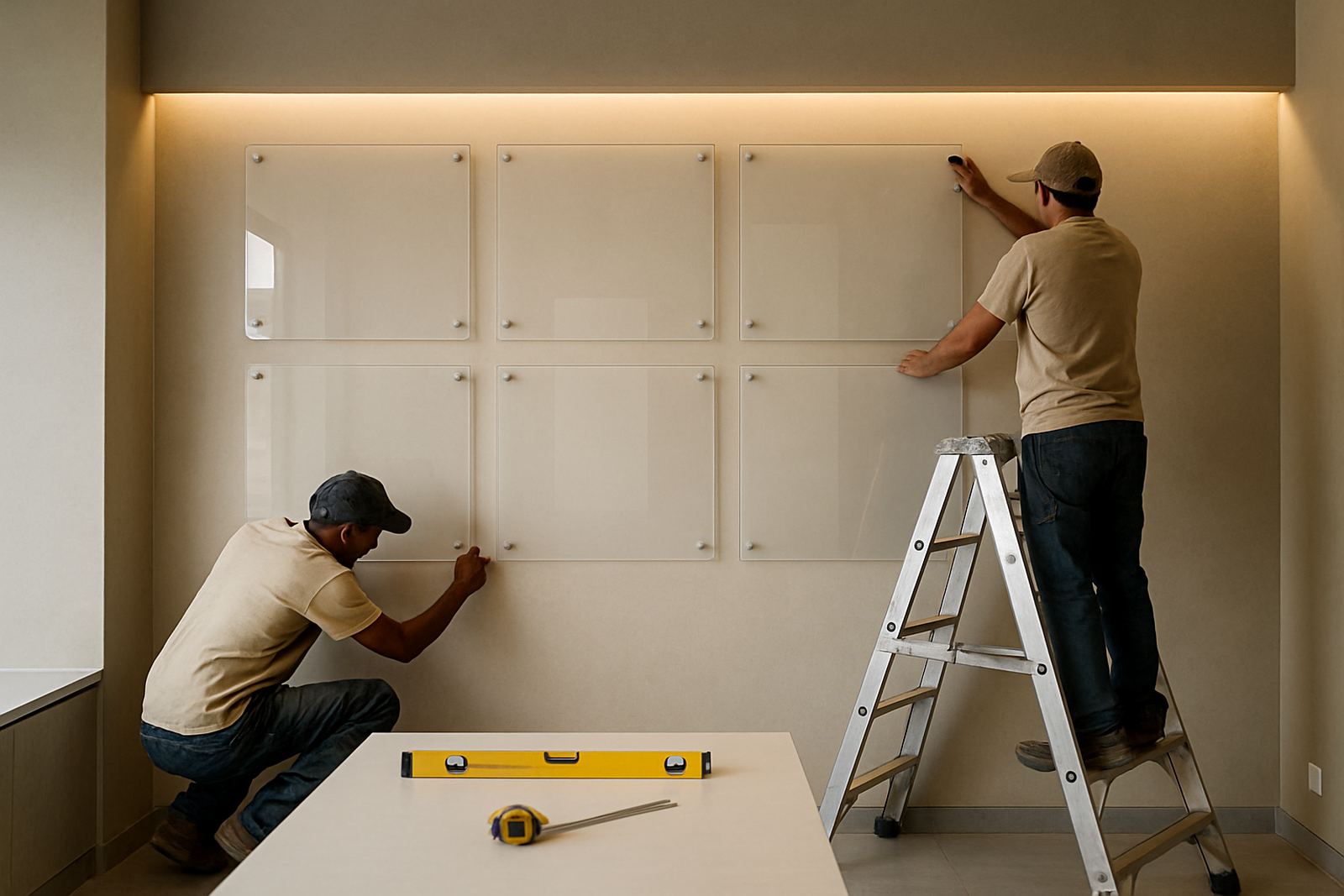
For outdoor use, signage often needs strong substrates, UV-resistant print, protective laminates and mounting that can handle vibration and wind. Indoor boards may need a cleaner finish and easier update options. If your school updates notices often, plan for panels that can be replaced without rebuilding the whole sign. That saves money over time and keeps the site neat.
Schools should also consider maintenance from the start. A sign system that can be cleaned, tightened and refreshed is easier to keep in good condition than one that needs full replacement every few years. This is especially useful where power cuts and weather delays can slow repair work, so the system must hold up in the meantime.
Include Branding Without Losing Clarity
School identity matters, but the message must still come first. Colours, logos and house names can help a campus feel consistent, yet they should not make signs harder to read. Use the same visual style across the property so visitors can recognise official signs at a glance. When the design changes from one board to another, the campus starts to feel piecemeal and less organised.
The goal is to support the school identity while still giving practical direction. That means strong contrast, legible type and enough space around text. If your school has multiple phases, separate blocks or sports areas, naming each area clearly makes life easier for everyone. Learners quickly learn the system and parents spend less time asking for directions.
- Keep logos smaller than the main direction text
- Use one font family across the site
- Repeat the same arrows and symbols everywhere
- Match colours to the school identity, but keep contrast strong
- Use separate styles for wayfinding, safety and notice boards
Build a Maintenance Plan That Staff Can Follow
Even the best signage system needs upkeep. Paint fades, adhesive weakens, screws loosen and printed panels can get damaged by weather or vandalism. A maintenance plan helps the school stay ahead of small issues before they become expensive replacements. The plan should name who checks the signs, how often they are inspected and what gets repaired first.
It is useful to review signage at least once a term. Check whether any departments have moved, whether temporary notices have become permanent and whether any signs are now hidden by new trees, containers or structures. If the campus has a busy public side, review roadside signs after storms and strong winds. One missing board can confuse visitors for months if nobody notices it.
When schools treat signage as part of operations, not just a one-off order, the campus becomes easier to manage. That includes keeping a record of sizes, positions and fixings so future updates are simple.
- Inspect all signs once per term
- Replace cracked, faded or bent panels quickly
- Remove outdated temporary notices
- Check mounts, brackets and posts after storms
- Keep a simple site map of every sign location
A Simple Checklist Before You Order
Before placing a sign order, walk through the campus and confirm what is really needed. Many schools save money by standardising sizes and reducing duplicate signs. Others find that one good entrance sign and a clear directional set solve more problems than ten small boards spread randomly around the site.
Use this checklist to prepare your brief. It helps the design, manufacture and installation stages run more smoothly and reduces changes later. A clear brief also makes permit assistance easier where boundary or roadside signs need checking. The more detail you have at the start, the fewer surprises once work begins.
- Campus map and entrance points confirmed
- List of departments, blocks and special areas
- Safety signs and compliance needs noted
- Material preference based on weather and wear
- Maintenance responsibility assigned
- Any permit or gate access issues identified
A practical school signage system should make the campus easier to use from the first day it is installed. When the signs are planned properly, learners move confidently, visitors find their way faster and staff spend less time giving directions.