
Estate signage built for daily access and control
Estate signs are more than a name board at the gate. They help drivers find the entrance, show visitors where to go, and set the tone for the whole property. For residential estates, mixed-use estates and lifestyle developments, the right signage package usually includes an entry sign, directional markers, rules boards, speed limit notices, and smaller identification signs for roads, clusters or facilities.
We handle the full process from concept and artwork through to fabrication and installation. That means we can match the signage to the estate layout, security points, architectural style and municipal requirements where applicable. In Hartbeespoort and Pretoria, many estates need signs that remain readable in bright sun, dusty conditions and heavy summer rain, while still looking neat at the entrance. A good sign should be easy to clean, simple to update, and fixed securely enough to deal with wind and vibration from passing vehicles.
Typical sign types, sizes and material choices
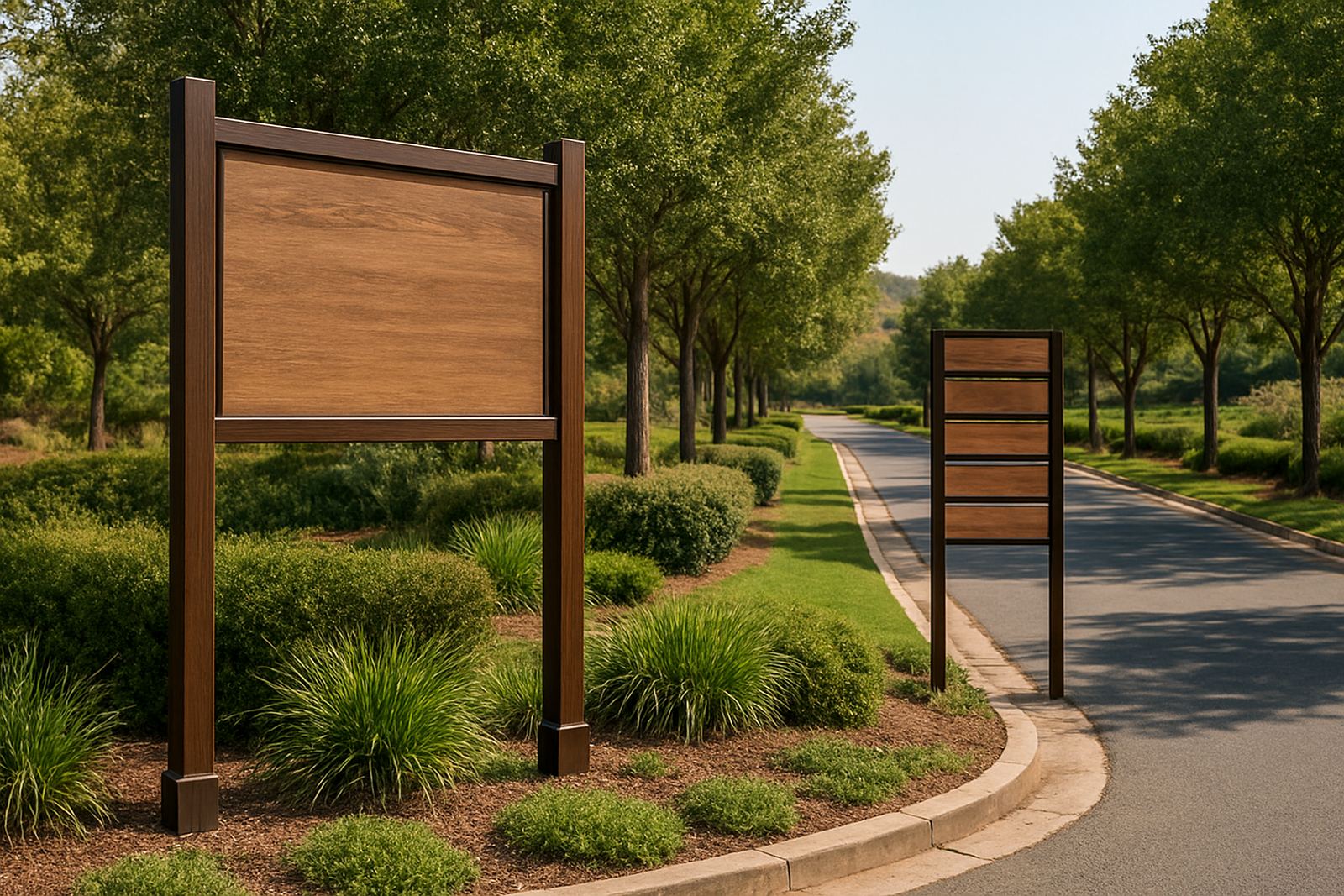
Estate sign packages are usually made up of a few core items, each sized to suit the viewing distance and the speed of approaching traffic. Entrance signs often work best when the main name panel is large enough to read from 20 to 40 metres, while internal directional signs can be smaller and more direct. We can produce single-sided or double-sided signs, wall-mounted boards, freestanding pylons, post-mounted panels, illuminated panels and modular notice boards.
- Main entrance panel: common sizes from 1200 x 600 mm to 4000 x 1200 mm
- Directional sign: from 300 x 150 mm to 1200 x 300 mm depending on lane width
- Rules board or notice board: 600 x 900 mm, 900 x 1200 mm or custom sizes
- Post-and-panel set: mild steel, aluminium, aluminium composite, PVC or acrylic face options
- Finish options: powder-coated frames, printed face, cut vinyl lettering, reflective detail or non-reflective face
For coastal or humid areas, or where irrigation spray is constant, we often recommend aluminium or aluminium composite for the face panels and properly sealed fixings. In high-traffic entrances, a powder-coated steel frame with a replaceable face panel can be practical and cost-effective. If the estate has a strict architectural guide, we can keep the colours, spacing and proportions consistent across the whole site.
Where estate signs work best on the property
Different points on an estate need different sign formats. The entrance usually needs the strongest visual presence, but internal wayfinding is just as important once a visitor has passed the gate. We plan signs for gatehouses, boom points, visitor parking, clubhouses, refuse areas, pedestrian paths, road junctions and shared facilities. If the estate includes sectional title units, mixed retail, schools or office components, the sign set may need a second layer of branding and clear zoning.
Common placements include primary gate entrances, secondary vehicle entrances, pedestrian access points, security offices, delivery entrances, clubhouses, pool areas, recycling areas and speed calming points. We also produce estate name boards for boundary walls and roadside visibility, as well as wayfinding arrows and unit markers for internal roads. For new developments, temporary site signs can be installed first and then replaced with permanent signs after handover, which helps the estate keep a clean look during phasing.
- Residential estates with controlled access and visitor management
- Mixed-use estates with homes, offices, shops or communal facilities
- Lifestyle and golf estates with roads, gates, club areas and notice points
- Security estates that need clear access rules and emergency information
- Developments that need phased rollout from temporary to permanent signage
Installation, anchoring and power requirements
Proper installation is critical, especially at gate entrances where vehicles, wind and gate movements can all affect the sign over time. We assess the site first, check the surface, measure the viewing line and confirm fixing points before fabrication starts. Depending on the sign type, installation may involve wall plugs, chemical anchors, base plates, concrete footings or post sleeves. Larger freestanding signs normally need a site survey and a footing detail before work begins.
Some estate signs do not need power at all, which keeps maintenance low and avoids trouble during load-shedding. Where illumination is needed, we can specify low-voltage lighting or internally lit options if the estate wants visibility after dark. If the sign includes illuminated elements, the estate must provide a suitable power point or allow for a planned electrical connection. Any gas requirement is rare for estate signage, but where a decorative feature or special display calls for it, the installation plan must allow for safe routing, access and compliance with site rules. We do not proceed without confirming the position of underground services, boundary lines and any municipal or HOA approval needed on site.
Keeping estate signs neat, readable and current
Estate signs sit outdoors all year, so they need routine care. Dust, bird droppings, sun and water marks can dull a sign quickly if it is left untouched. A simple wash with mild soap and water usually keeps most face panels in good condition. Avoid harsh solvents on printed graphics or acrylic, because they can cloud the surface and shorten the life of the finish. On coastal or high-humidity properties, stainless or galvanised fittings help reduce rust around screws and brackets.
We also offer maintenance and refurbishment for estates that need a refresh without replacing the whole sign. That can include new vinyl text, respraying the frame, replacing faded panels, tightening fixings or updating rules after a by-law change. If a gatehouse sign has become damaged by a vehicle or faded from sun exposure, we can assess whether a repair or a full remake is more economical. For estates with seasonal changes, such as holiday occupancy or access rule updates, we can plan the panel layout so that future updates are easy and less costly.
What to check before ordering estate signs
Before we manufacture estate signs, it helps to confirm a few details so the final result suits the property and avoids delays. Clear measurements, approved wording and the right site position save time during production and installation. If the estate has trustees, a managing agent or an HOA, it is worth getting the sign content approved early so there are no changes after fabrication has started.
- Exact wording for the estate name, rules and directional text
- Final size and position of each sign, including height from ground level
- Whether the sign is freestanding, wall-mounted or gate-mounted
- Any colour standard, logo file or style guide that must be followed
- Approval requirements from trustees, municipality or security management
- Lighting, power access and any restriction on drilling or trenching
It also helps to know whether the sign must be readable for pedestrians, slow-moving vehicles or traffic approaching from a main road. That detail changes font size, panel height and the amount of contrast used on the face. If there are multiple entrances, we can keep the signage family consistent so visitors recognise the estate immediately, and staff do not need to guess which gate is which. For estates in Pretoria, Centurion, Brits and Tshwane, we can also plan around busy access times and schedule installation with minimum disruption to residents.
Key facts
| Product type | Entrance, directional and rules signage for residential and mixed-use estates |
|---|---|
| Typical sizes | From 300 x 150 mm directional signs up to 4000 x 1200 mm entrance panels |
| Material options | Aluminium, aluminium composite, mild steel frames, PVC and acrylic faces |
| Mounting options | Wall-mounted, post-mounted, freestanding, gate-fixed and modular notice boards |
| Finish options | Printed graphics, cut vinyl lettering, reflective detail, powder coating and protective sealing |
| Service area | Hartbeespoort, Pretoria, Centurion, Brits, Tshwane, Akasia, Rosslyn, Soshanguve and Gauteng |