What hanging signs are used for in busy spaces
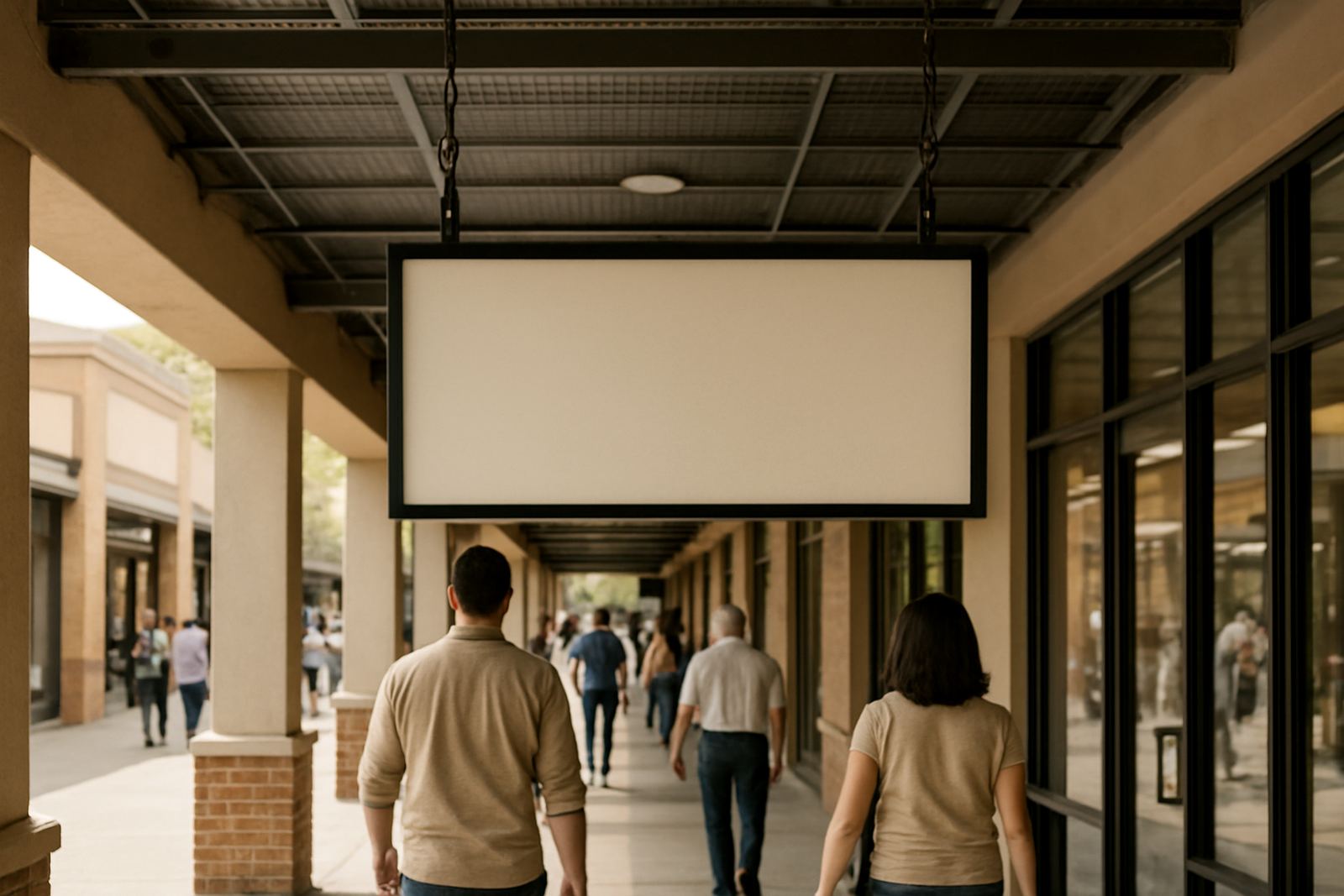
Hanging signs are suspended signboards fixed from a ceiling, truss or support frame so they can be seen from a distance above foot traffic. They are commonly used in shopping centres, retail passages, warehouse aisles, office corridors and municipal buildings where wall space is limited or where a sign must be visible from two sides. In a busy space, the right hanging sign reduces confusion and helps people move faster, which matters when there are load-shedding interruptions, emergency routes or changing tenant layouts.
These signs can carry a store name, department code, directional arrow, bay number, floor indicator or safety message. They are also useful for temporary campaigns and seasonal retail rollouts. For indoor wayfinding, hanging signs are often preferred because they stay in sight above displays, shelving and crowds. If the design is clear, the sign does the work for years with very little maintenance.
- Common uses: mall directories, aisle markers, floor guides and tenant identifiers
- Suitable for indoor and sheltered semi-outdoor areas
- Can be single-sided or double-sided for visibility from both directions
Sizes, shapes and build options we make
We manufacture hanging signs in a range of practical sizes, from compact directional markers to larger branded panels for atriums and long passages. Typical sizes start at 300 x 300 mm for small wayfinding signs and go up to 1500 x 600 mm or larger where the ceiling height and sight lines allow it. Round, square, rectangular and custom contour-cut shapes are all possible depending on the message and fixing method.
Materials are chosen for the site and budget. For indoor retail and office use, we often work with lightweight aluminium composite, PVC foam board, acrylic, aluminium sheet and printed vinyl applied to a rigid panel. For higher-end retail and public spaces, illuminated options can also be built with internal LED lighting or edge-lit acrylic faces where power is available. If a sign needs to hang in a humid coastal environment or near an entrance that gets dust and wind, we specify the fixings and finish accordingly so it lasts longer.
- Panel materials: aluminium composite, acrylic, PVC foam board, aluminium sheet
- Finishes: printed, laminated, vinyl applied, routed edges, powder coated frame
- Display format: flat panel, double-sided panel, folded edge, directional blade sign
Where hanging signs work best
Hanging signs are a smart choice anywhere people need quick direction without stopping to search for wall signage. In malls and retail centres, they mark departments, entrances, lifts, stairs and service points. In warehouses and distribution spaces, they guide staff through aisles, bays and stock zones. In municipal buildings, clinics and transport areas, they help visitors find reception, licensing counters, records and exits.
We also install hanging signs for campaign rollouts where the same format must be repeated across several branches in Pretoria, Centurion, Brits, Akasia, Rosslyn and Soshanguve. That kind of repeat work needs consistent sizing and print setup so every sign reads the same way. On sites with higher ceilings, we allow for longer drop rods or cable suspensions so the sign stays readable from the floor. If the passage is narrow, the sign size must be controlled carefully so it does not interfere with movement or sightlines.
- Best suited to malls, passages, aisles, atriums and reception zones
- Works well for tenant directories and directional systems
- Can be matched to existing corporate colours and branding rules
Installation details, fixing points and power needs
Installation begins with a site survey to check ceiling height, access points, structure and the route for power if the sign is illuminated. Some hanging signs are fixed with threaded rods, others with stainless steel cables, brackets or a concealed frame. The right method depends on the weight of the sign, the ceiling type and whether the building is concrete, steel or suspended ceiling construction. We always check that the fixing point can safely carry the load and that the finished sign hangs level.
For non-illuminated hanging signs, no power is needed. For illuminated signs, you need a safe electrical supply and access for maintenance, usually through the ceiling void or a nearby service point. If the sign uses LEDs, the power draw is low, but it still needs a proper isolator and compliant wiring. In public spaces and shopping centres, permission from the landlord or centre management may be required before drilling or fitting any suspended element. We handle permit assistance where needed, especially on sites with municipal or building control rules.
- Fixings can include rods, cables, brackets or frame mounts
- Illuminated signs need electrical access and safe maintenance points
- Site survey helps confirm structure, height, clearance and permissions
Care, cleaning and servicing over time
Indoor hanging signs do not need constant attention, but they should be checked from time to time because dust, vibration and minor knocks can loosen fixings. In centres with air-conditioning or frequent foot traffic, the face of the sign may need a light clean with a soft cloth and mild cleaner. Harsh chemicals should be avoided because they can cloud acrylic or lift printed laminate. If the sign sits near a main entrance, it may collect more grime from wind and traffic, especially in Pretoria and areas with heavy dust movement.
Where the sign includes lighting, we recommend routine servicing so failed LEDs, wiring faults or driver issues are picked up early. This is particularly important during load-shedding or when power returns after an outage, because repeated switching can reveal weak points. If a sign is damaged by a tenant change or shop refit, we can refurbish the panel, replace the face or update the artwork without rebuilding the entire unit. That saves time and keeps the site looking orderly.
- Wipe the sign with a soft cloth and a mild cleaning product only.
- Check fixings, suspension points and level after any store works
- Schedule servicing for illuminated signs and replace worn parts early
Before You Order an A-Frame Sign
To make the right hanging sign, we need a few clear details upfront. First, measure the available space and confirm the ceiling height from floor to fixing point. Next, decide what the sign must say and whether it needs to be read from one side or both. You should also check if the site manager requires fire-safe material ratings, approved fixing methods or landlord sign-off before installation. If the passage is narrow or the ceiling is low, the finished size may need to be adjusted so it stays compliant and practical.
Please also tell us whether the sign is for a permanent installation or a campaign period, and whether the site is indoors, semi-covered or exposed to moisture. That affects the material choice, finish and suspension method. If you already have artwork, we can prep it for print. If not, our graphic design team can set out the wording, arrows and spacing so the sign is easy to read at speed. Getting these points right at the start avoids changes later and keeps the rollout on schedule.
- Confirm dimensions, viewing distance and single or double-sided use
- Check site rules, ceiling type, fire requirements and landlord approval
- Tell us if the sign is temporary, permanent or part of a wider rollout
How HM Graphics & Signs handles suspended signage projects
We manage hanging signs from concept through to final installation. That includes site surveys, graphic design, artwork prep, in-house manufacture and on-site fitting. Our team works from Hartbeespoort and Pretoria across Tshwane, Brits, Centurion and wider Gauteng, and we are used to working in active retail spaces where access windows are short and the public still needs to move through safely. Hendrik Mokoena leads the business, with support from Lerato Mthembu, Riaan Odendaal, Ayanda Mavuso, Kagiso Ndlovu, Revasha Desai and Retief Wessels across operations, production, design, installation and client service.
If you need suspended signage for a mall, corridor or branded wayfinding system, send the details through the enquiry form on our contact page. We can advise on size, fixing method and material choice before production starts, which makes the process simpler and helps avoid delays on site.
Key facts
| Typical sizes | 300 x 300 mm to 1500 x 600 mm and larger on request |
|---|---|
| Common materials | Aluminium composite, acrylic, PVC foam board, aluminium sheet |
| Mounting methods | Threaded rods, stainless steel cables, brackets and frame systems |
| Finish options | Printed, laminated, vinyl applied, routed, powder coated |
| Lighting | Non-illuminated or LED illuminated options where power is available |
| Best for | Malls, passages, aisles, atriums, reception areas and indoor wayfinding |