
Ground-Mounted Signs Built For First Impressions
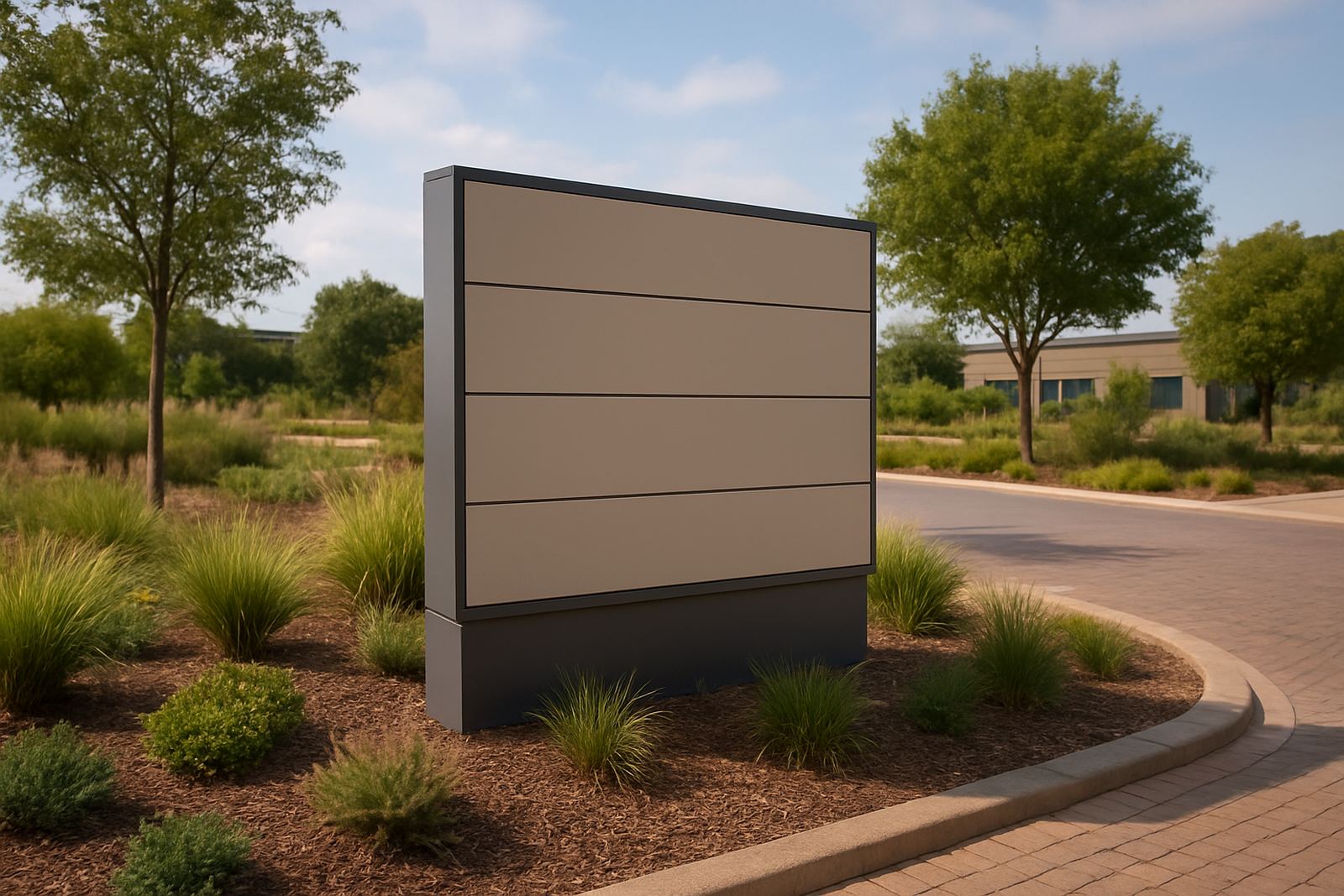
Monument signs sit low to medium height at ground level and are made to mark an entrance, corner point or boundary with a clean professional finish. They work well where you need a sign that is easy to read from a vehicle, holds up in wind and sun, and still looks good after years of traffic dust, rain and heat. In Hartbeespoort, Pretoria and the wider Tshwane area, these signs are often used at estate gates, retail entrances, office parks, schools and public facilities.
A monument sign can be simple and direct, or more detailed with built-up lettering, printed panels, lighting and decorative cladding. The structure is usually fixed to a concrete foundation so it stays stable in strong summer weather and windy open sites. On dusty inland sites we also allow for easier cleaning and servicing access, because a sign that cannot be maintained will not stay sharp for long.
Sizes, Shapes And Material Choices
These signs are made to suit the site, the viewing distance and the amount of information that must be shown. A small estate entrance may only need a single-sided sign about 1.2 m wide by 0.8 m high, while a road-facing corporate or municipal sign may run to 4 m wide or more. Height is usually kept within what the site can safely carry and what local approvals allow, especially near roads and access points.
Common material options include powder-coated steel frames, aluminium trims, composite cladding, masonry or plastered plinths, high density board for internal components, acrylic faces and printed or cut vinyl graphics. For coastal humidity or exposed sites, we recommend corrosion-resistant fixings and a finish that can handle moisture and UV. If the site is near a busy road, reflective elements can also improve day and night visibility.
- Single-sided or double-sided formats
- Flat face, curved face or layered profile designs
- Powder-coated steel, aluminium and masonry finishes
- Printed panels, routed lettering or applied vinyl branding
- Optional illumination for night visibility
Where Monument Signs Suit Best
Monument signs suit places where you want the entrance to do more than simply point people in the right direction. They are often used for shopping centres, medical facilities, lifestyle estates, schools, churches, warehousing sites, factories, and municipal facilities. They help visitors find the site quickly and they set the tone before anyone reaches the gate or reception area.
For retailers and brands, the sign can support wayfinding and promotion at the same time. For municipalities and public sites, it can carry the site name, precinct details, operating hours and directional information. Where there are multiple tenants, we can design a layout that keeps the main identity clear while still allowing for smaller tenant panels or changeable inserts.
We also consider local access conditions. In areas like Akasia, Rosslyn and Soshanguve, signs may need to deal with heavy vehicle movement, dust and street exposure. In Pretoria and Centurion, estate and commercial park entrances often need a neater, more formal look that matches boundary walls, paving and security access points.
Installation, Foundations And Site Requirements
Proper installation starts with a site survey. We check the slope, ground conditions, traffic flow, visibility lines, underground services and any restrictions from the property owner or municipality. A monument sign needs a suitable foundation, and the size of that footing depends on the sign height, wind load and structure type. Bigger signs may require reinforced concrete and anchor bolts, while lighter signs can use a smaller base if the site allows it.
Power is only needed if the sign will be lit. Options include internal LED lighting, external spot lighting or backlit features. If the site has no reliable supply, we can advise on routing, switching and practical load-shedding planning so the sign still looks presentable after dark. Gas is not normally required for monument signs, though some sites choose a decorative feature elsewhere on the frontage and that can be planned separately.
- Site survey before manufacture
- Foundation depth matched to soil and wind conditions
- Electrical planning for lit signs only
- Permission checks for public-facing or municipal sites
- Installation scheduling to reduce disruption to traffic and operations
Care, Maintenance And Refurbishment Over Time
A monument sign should be easy to clean and simple to service. Most finishes only need regular washing with mild soap and water, especially in dusty areas around Gauteng. For laminated graphics and painted panels, avoid abrasive pads or harsh thinners because these can damage the surface. Around busy roads, exhaust soot and dust may build up faster, so a regular cleaning cycle keeps the sign legible.
We also handle sign maintenance and refurbishment when a sign starts to fade, chip or show signs of water ingress. That may include replacing faces, repainting the frame, refreshing the graphics, resealing joints or updating wording after a tenant change or rebrand. In the North West heat and winter cold, expansion and contraction can loosen fixings over time, so inspections are worth doing even when the sign still looks acceptable.
If your site is exposed to vandalism or accidental vehicle contact, we can suggest stronger materials and access panels that make future repairs easier. A well built sign should not need constant attention, but a small amount of care now saves a bigger repair bill later.
What To Check Before You Order
Before production starts, it helps to confirm the message, the exact site position and how the sign will be viewed. Measure the frontage and note the distance from which drivers will first see the sign. Also check whether the sign must carry a logo, directional text, operating hours or other site information. If the sign will be used at night, decide whether you want lighting from the start or whether the structure should simply be prepared for later electrical fitment.
It is also important to confirm any site rules. Some business parks and municipalities have limits on height, size, projection and foundation work. If the sign is near a public road, we may need to consider visibility, setback and safety. Please also confirm whether the sign must match an existing brand standard or if there is room to adjust the design for better legibility from the road.
- Exact wording and spelling on the sign
- Mounting position and viewing distance
- Lighting requirement and power availability
- Any estate, municipal or landlord approval needed
- Preferred finish: painted, cladded, printed or mixed media
How We Handle Monument Sign Projects
HM Graphics & Signs manages monument sign projects from concept through to installation. We begin with a site survey and a practical layout, then prepare the artwork and fabrication details in-house. Our team includes designers, production staff and installers who work together so the sign is built to suit the real site conditions, not just a drawing on paper. Hendrik Mokoena leads the company, with support from Lerato Mthembu, Riaan Odendaal, Ayanda Mavuso, Kagiso Ndlovu, Revasha Desai and Retief Wessels.
We serve Hartbeespoort, Pretoria, Centurion, Brits and the wider Gauteng region, including Tshwane, Akasia, Rosslyn and Soshanguve. Whether the sign is for a retailer, a brand or a municipal entrance, we focus on a finish that is strong, readable and suitable for the environment. If you need a monument sign that makes the entrance easier to find and more professional on arrival, send your enquiry through the contact page and we will take it from there.
Key facts
| Typical width | 1.2 m to 6 m, depending on site and viewing distance |
|---|---|
| Typical height | 0.8 m to 2.4 m above ground, subject to approvals |
| Frame materials | Powder-coated steel or aluminium |
| Face materials | Acrylic, composite panels, routed board or masonry finish |
| Lighting options | No lighting, internal LED or external spot lighting |
| Installation | Concrete footing, anchor bolts and on-site fitment |
| Best suited to | Entrances, estates, retail sites, schools and municipal premises |