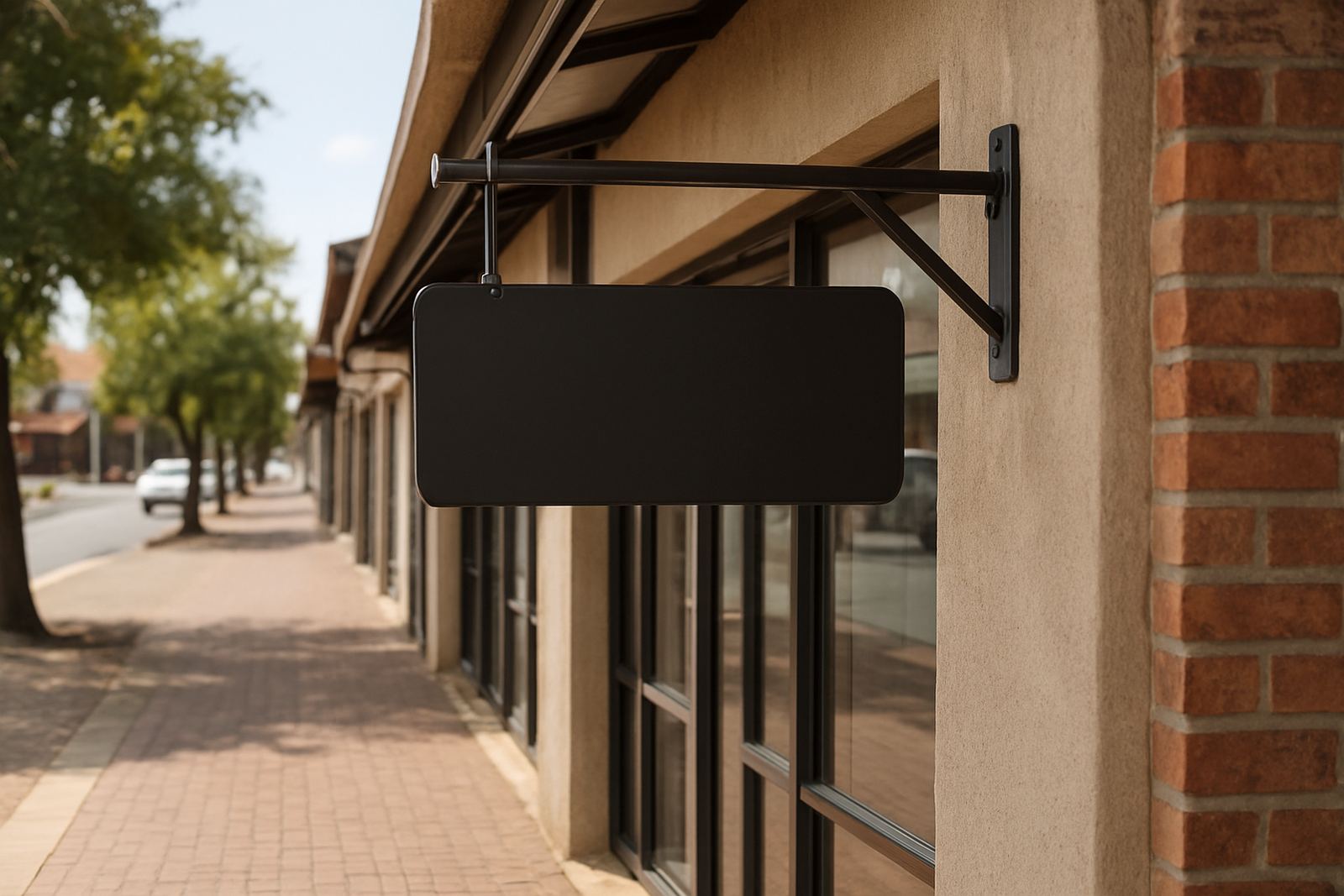
Why a Blade Sign Works Better From the Street
A blade sign projects at right angles from the building, so it faces passing traffic instead of hiding flat against the wall. That simple change matters on streets with parked cars, tree cover, verandas, shaded walkways or shopfronts tucked into arcades, because people often notice what sticks out into their line of sight first.
For retailers, clinics, service counters and municipal offices, this is practicaly one of the quickest ways to improve recognition from both foot traffic and vehicles. Someone walking along the pavement can spot the sign before they reach the entrance, and a driver moving past at 30 km/h gets a clearer read than from a flat fascia sign that can disappear into the building line.
At HM Graphics & Signs, we plan blade signs to suit the site, the viewing distance and the local by-laws. In Hartbeespoort and Pretoria, that often means checking setback, fixing points and whether the sign needs to sit above head height to stay clear of pedestrian movement and security grilles.
More Visibility in Busy North West and Gauteng Locations
In places like Hatfield, Arcadia, Centurion, Brits and the trade strips around Tshwane, many frontages compete for attention at the same time. A blade sign gives your business a second viewing angle, which helps when the main fascia is blocked by awnings, delivery trucks, street poles or a queue of parked cars.
It also helps in mixed-use areas where people approach from different directions. A customer on foot may be coming from the taxi rank side, while a driver may see the sign from the opposite lane. That wider reach is useful for any business that relies on quick recognition, especially where visitors only have a moment to identify the premises.
- Better visibility from side streets and narrow pavements
- Clearer identification for drivers approaching from either direction
- Stronger presence in centres with many similar shopfronts
- Useful where the entrance sits back from the road
For larger properties, more than one blade sign can help guide people along a frontage or to separate entrances. That is common on multi-tenant sites and municipal buildings where visitors need to find the correct access point without guessing.
What to Consider Before You Fit One
Not every blade sign should be the same size or shape. The right solution depends on the width of the pavement, the height of the fascia, the strength of the wall and how far the sign should project. A sign that is too small disappears. One that is too large can look heavy, catch wind or run foul of the site rules.
We normally begin with a site survey, then check sight lines from both directions. That allows us to work out the best projection and mounting height, especially on roads with fast-moving traffic or narrow walkways. If the property falls under municipal control or a landlord's approval process, permit assistance can save time and reduce back-and-forth later on.
- Measure the available frontage and clear projection space
- Check for security gates, trees, poles and loading bays
- Confirm electrical requirements for illuminated options
- Review estate, municipal or landlord sign rules before production
Materials That Hold Up in Sun, Dust and Rain
South African conditions can be hard on outdoor signage. In Hartbeespoort you get strong sun and seasonal dust, while parts of Pretoria and the northern suburbs see rain, heat and road grime all in the same week. On the coast, humidity would be another concern, so the right finish and fixing method matter from day one.
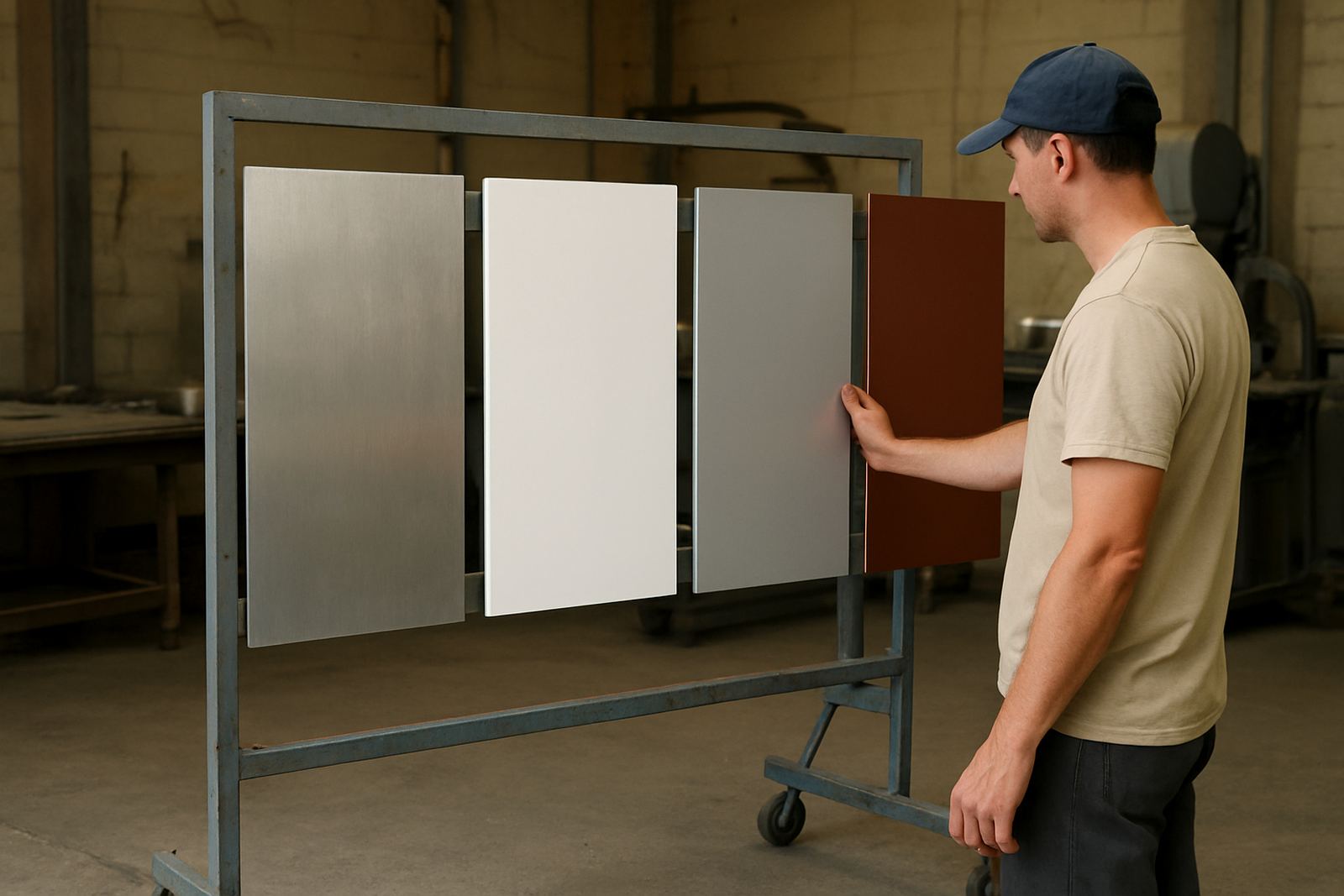
Blade signs are often made with aluminium, ACM, steel framing or durable printed panels, depending on the application. The important thing is matching the material to the site and the expected maintenance schedule. A sign for a busy retail frontage may need a tougher finish than a temporary campaign sign, while a municipal installation may need extra anti-corrosion protection and secure anchoring.
Good fabrication also includes neat edge finishing, weather-safe fixings and graphics prepared for outdoor viewing distance. The aim is to keep the sign readable without it fading, warping or rattling loose after a few hot summers and windy afternoons.
Design Choices That Improve Readability at a Glance
The best blade signs are easy to read in less than a second. That means strong contrast, short wording and a layout that works from a passing angle. Long messages usually fail because people do not have time to read them as they move past.
For many businesses, the smartest approach is a clear name, a simple icon if needed, and no clutter. If the sign is being used for a specific department, entrance or service point, the wording should be direct. A driver should know what the business is before they have passed the frontage.
- Use large lettering with good contrast against the background
- Keep the message short and direct
- Choose a format that reads cleanly from the side
- Match colours to the building and the business identity without overloading the panel
Our graphic design team prepares artwork for large format printing and vinyl cutting so the final sign reads cleanly on site, not just on paper. That step matters when the sign must be seen from a moving vehicle or from across a wide forecourt.
Installation, Maintenance and Refurbishment Across Pretoria and Hartbeespoort
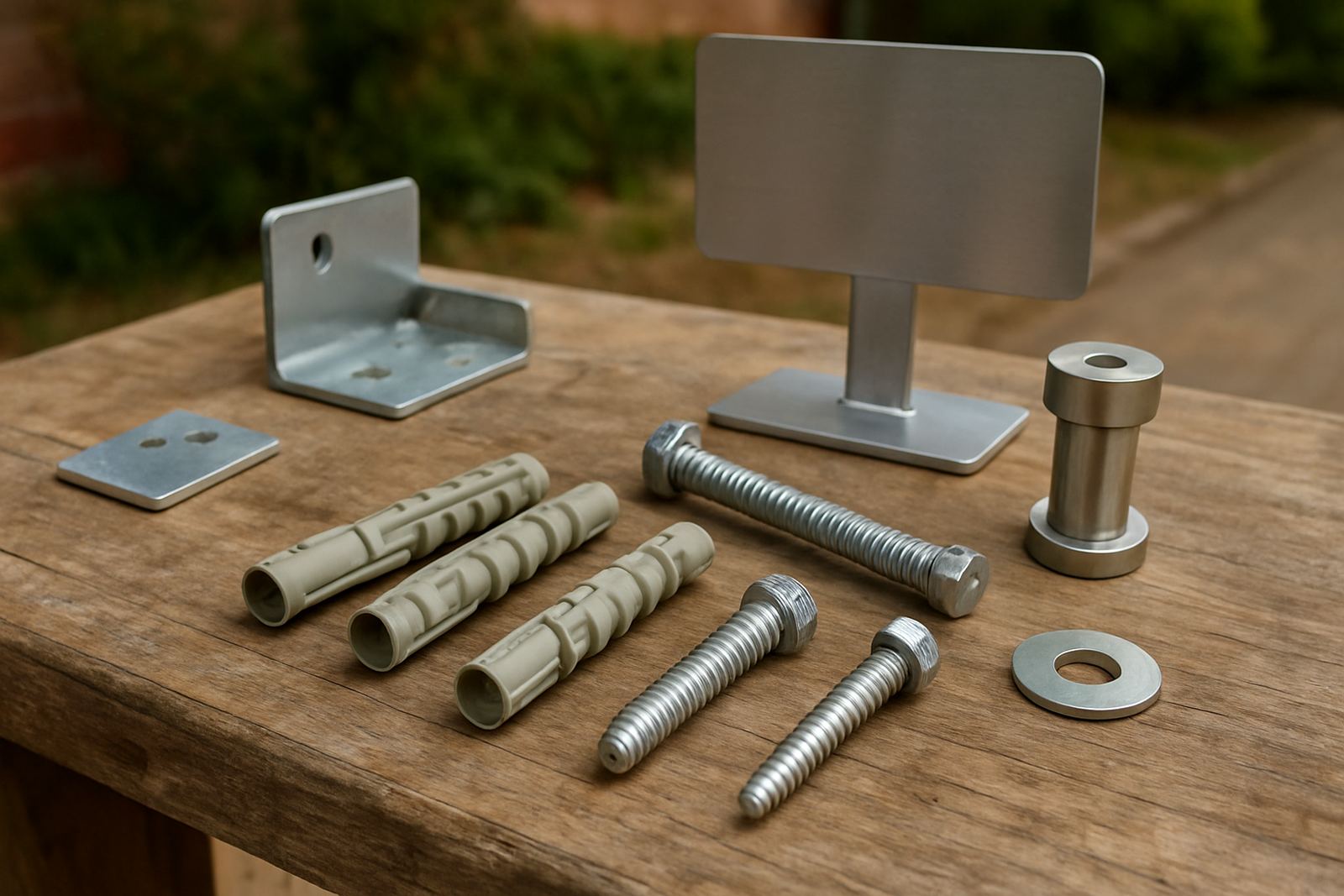
A blade sign is only as good as its installation. If the fixing points are weak or the bracket is wrong for the wall type, the sign can start leaning, vibrating or pulling away over time. That is why on-site installation should be done with the actual structure in mind, not just the size of the sign.
HM Graphics & Signs handles fabrication and installation for retailers, brands and municipalities across Tshwane, Brits, Centurion and surrounding areas. For existing sites, sign maintenance and sign refurbishment can extend the life of a blade sign without replacing the whole structure. Sometimes a fresh graphic panel, new hardware or a repaint is enough to bring it back into good condition.
This is especially useful for businesses running campaign rollouts or phased rebranding. One site can be updated first, then the rest can follow in stages. It keeps the frontage looking organised while work is completed, and it reduces downtime for trading operations.
- Inspect brackets and fasteners regularly
- Replace cracked panels before water enters the sign body
- Clean graphics gently to avoid scratching the finish
- Refresh faded lettering before visibility drops
A Practical Example From a Busy Pretoria Street
Picture a retailer on a side street in Pretoria where the main fascia faces the building line, not the passing road. Cars move steadily, pedestrians approach from different angles, and nearby trees cut down the direct view from a distance. A flat sign may still be visible once people are already at the door, but it does little to guide them there.
A well-placed blade sign changes that. It gives the business a sideways landmark that stands out above the pavement and can be seen early enough for someone to decide to turn in, slow down or look for parking. In practice, that can be the difference between a customer walking past and a customer walking in.
That is the value of thinking beyond just the front face of the building. For the right site, a blade sign is not decoration. It is a navigation tool, a visibility aid and a quiet sales asset all at once. And when it is designed and installed properly, it keeps doing that job day after day.