
Start with the first 48 hours after fitting
The first two days after installation matter more than most owners realise. The adhesive is still settling, so avoid pressure washing, harsh scrubbing and long exposure to standing water around edges and joins. If the vehicle has just been fitted in Hartbeespoort or Pretoria, give it time before it goes straight into a dusty route or a wash bay.
Light rain is usually not a problem, but the wrap should not be soaked, rubbed or picked at. If a corner looks raised or a small bubble appears, leave it alone and contact your installer. Pushing it down with your finger often traps air or dirt and makes the issue worse.
- Keep the vehicle under cover where possible for the first 48 hours.
- Avoid high-pressure washing and wheelie-bin sponge brushes during this period.
- Do not apply polish, wax or cleaning spray on fresh edges.
Wash the vehicle gently, not aggressively
Wraps last longer when they are washed with patience. Dust, road grime and bird droppings should be removed before they bake onto the surface. In Gauteng summer heat that can happen fast, especially on delivery bakkies moving between Tshwane, Centurion and Brits.
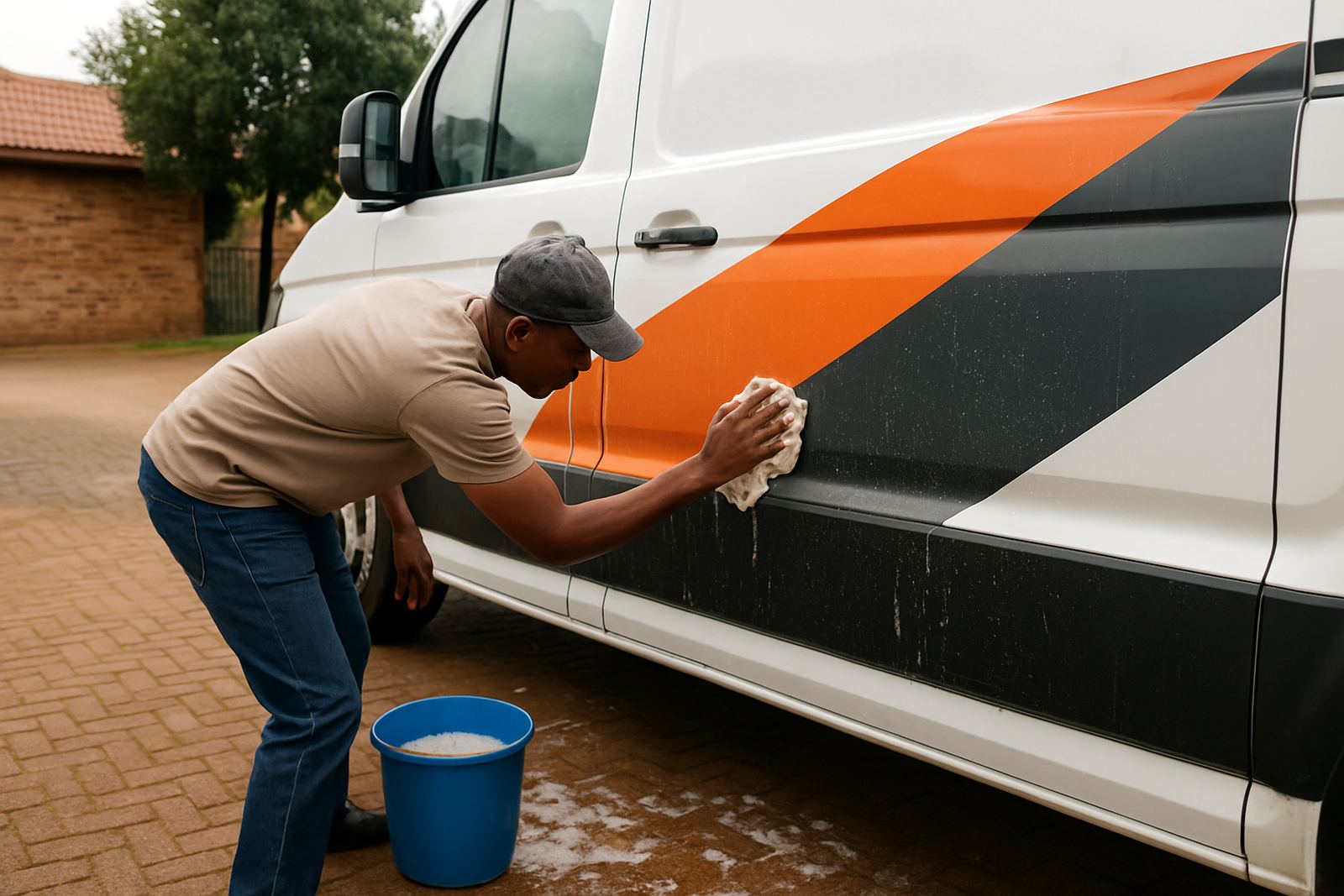
Use clean water, a soft wash mitt and mild soap. Rinse well before wiping. If you drag grit across the vinyl you can mark the finish, and on darker colours the scuffs show quickly. A hose is better than a pressure washer, but if you must use a washer keep the nozzle at a safe distance and never point it directly at seams, edge lifts or door handles.
- Wash from the top down so dirt does not run back over cleaned panels.
- Use separate cloths for wheels and body panels.
- Dry with a soft microfibre cloth to stop water spots.
- Check fuel flaps, bonnet edges and rear corners after washing.
Protect the graphics from sun, sap and salt air
South African sun is hard on any branded finish. Prolonged UV exposure can fade colours and dry out exposed edges. If vehicles spend all day outside, park them in shade where possible or rotate parking positions so one side does not take all the sun. Coastal humidity also adds another layer of wear, even if your fleet mainly works inland and only passes through those areas occasionally.
Tree sap, tar and industrial dust need quick attention. Do not use strong solvents or petrol based cleaners because they can damage the print and the laminate. For stubborn marks, use a product approved for vinyl surfaces and test it on a small area first. On municipal vehicles, especially those that work around refuse sites or construction areas, this small habit saves a lot of repainting and rewrap costs later.
- Park under cover when the vehicle is not in use for long periods.
- Remove bird droppings and sap as soon as possible.
- Rinse off salt and road film after trips through coastal towns.
- Keep the vehicle away from smoke, oil mist and chemical overspray.
Check edges and seams before small problems spread
A wrap often fails in tiny places first. Door edges, mirror bases, wheel arches and fuel cap areas take the most abuse from opening and closing, road vibration and frequent hand contact. A weekly walk around the vehicle can catch lifting edges before they peel further.
Look for scratches from branches, pressure marks from cargo, and chips where the surface has been knocked. If a section starts to lift, do not force it back with heat from a household device. That can distort the print or make the adhesive uneven. A proper repair or re-edge by the installer is usually quicker and neater. For fleets moving between sites in Pretoria, Akasia and Rosslyn, this check should be part of the Friday sign-off process.
- Inspect all corners, seams and door handles once a week.
- Watch for bubbles, lifting vinyl and cracked laminate.
- Report damage early so one wrap panel or vinyl section can be repaired.
- Keep a simple checklist for drivers or supervisors.
Make drivers part of the care routine
The best wrap care plan fails if drivers treat the vehicle like a tool that never needs attention. A fleet in daily service needs everyone to follow the same rules. That means no scrubbing with hard brushes, no scraping stickers with blades, and no using oily rags from the workshop on the graphics.
Drivers should also learn where the wrap is most vulnerable. Loading areas, fuel doors and rear panels are often hit by hands, keys, straps and loose cargo. A quick briefing at handover helps prevent damage. In a busy business in Centurion, for example, one careless loading bay incident can cost more than several months of proper cleaning if the panel has to be replaced.
- Do not stick new labels or tape directly onto the wrap unless approved.
- Keep straps and cargo from rubbing against printed panels.
- Report fuel spills, scratches and impact marks on the same day.
- Use proper washing cloths, not workshop waste cloths.
Plan maintenance around real local conditions
Vehicle wrap care is not the same everywhere. A courier van doing short town runs in Pretoria faces different conditions from a service bakkie on gravel roads near Brits or a municipal fleet parked outdoors in Tshwane all day. Dust, heat, stop-start traffic and long idle periods all affect the finish.
Set a maintenance rhythm that matches the work. Daily checks should focus on obvious dirt, spills and damage. Weekly checks should cover edges and seams. Monthly checks should include a proper wash, a close inspection of the print and a note of any fading or lifting. That way you can plan touch ups before the graphics start looking tired. A little discipline keeps the vehicle looking presentable and helps protect the value of the branding budget.
If your vehicle carries campaign messaging or service branding, fresh presentation matters. Clean graphics are easier to read, and in public-facing work that affects how people view the business before anyone steps out of the cab.
When to call for a repair or replacement
Some wear is normal. A stone chip, a small scratch or a lifted edge can often be dealt with quickly. But if the print is fading badly, the laminate is cracking, or a section has been damaged by heat, chemical spill or impact, do not leave it until the whole panel starts failing. That is when a minor repair turns into a much larger job.
For businesses with branded fleets, it helps to keep one person responsible for reporting the condition of the wraps. That gives you a record of what was fixed, when it was fixed and which vehicles need attention next. It also keeps the brand looking consistent across all vehicles, whether they are working in Hartbeespoort, Pretoria or further into Gauteng.
Good wrap care is not complicated. It is mostly about steady habits, quick action and using the right cleaning methods. Treat the graphics as part of the vehicle, and they will keep doing their job for longer.