Start With the Site, Not the Material List
Before anyone chooses a board or finish, the site should be checked properly. A sign facing the afternoon sun in Pretoria will age differently from one under a covered walkway in Hartbeespoort, and a roadside panel in Brits has to cope with dust, wind and occasional stone chips. Coastal humidity is not the issue inland, but UV exposure is still strong and can fade inks, chalk cheaper plastics and weaken some fixings over time.
That is why a site survey is worth doing first. Height, mounting surface, vehicle impact risk, vandalism, municipal by-law limits and access for maintenance all affect the final material choice. A sign on a shopfront in Centurion can be light and neat. A pylon on a busy road near Rosslyn or Akasia may need stronger framing, thicker faces and proper footing to stay secure in high wind.
For municipal and commercial work, the best material is often the one that balances appearance, lifespan and serviceability. A quick fix can look fine for a few months, then start curling, fading or rusting. That costs more in the end.
Aluminium Composite Board for Clean, Durable Panels
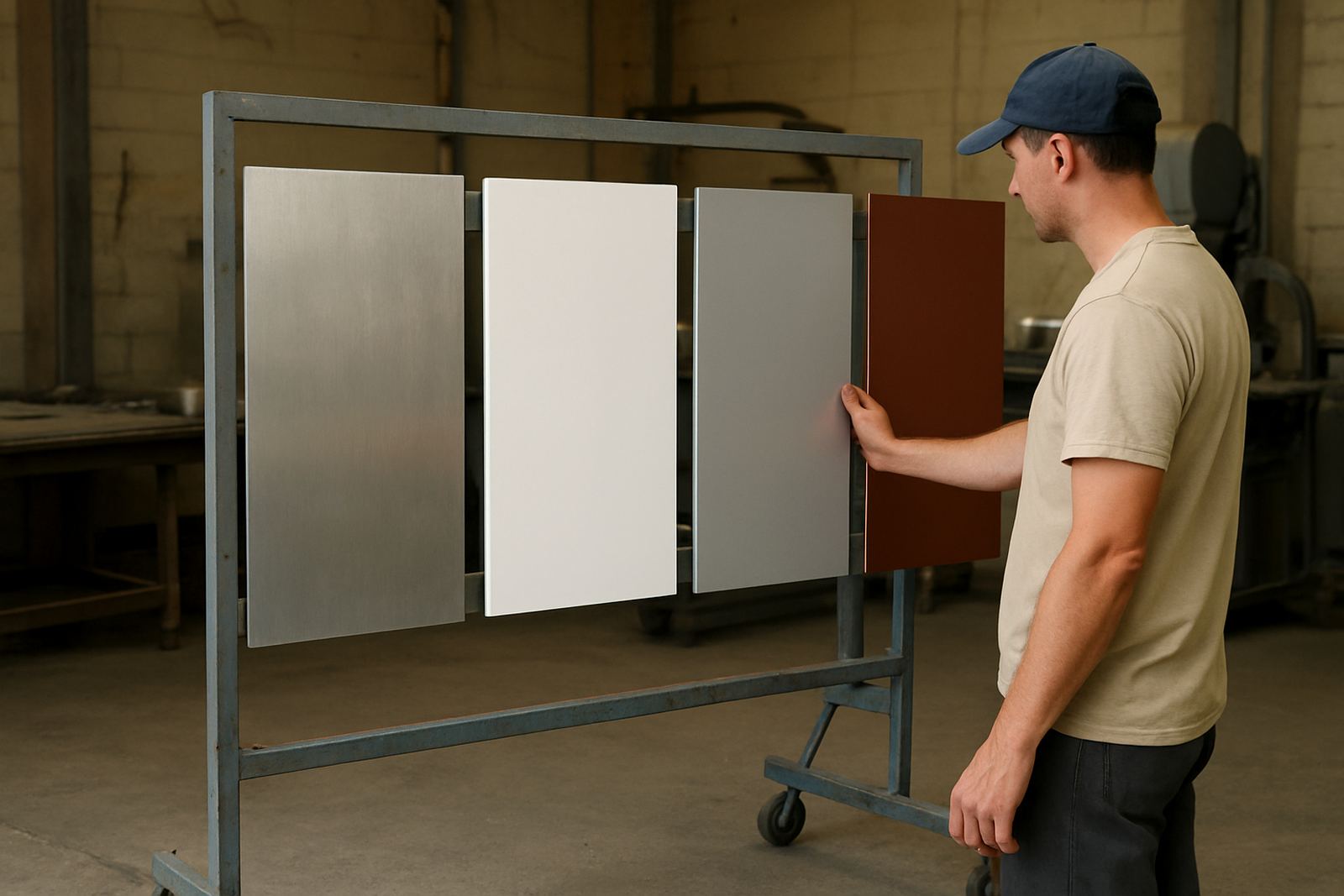
Aluminium composite board is one of the most practical materials for exterior signage. It has a rigid, flat finish and handles large printed graphics well, making it suitable for shop fascias, office identification signs and estate boards. The outer skins give a neat appearance, while the core keeps the panel stable. It is far less likely to warp than plain plastic board when exposed to heat.
It works well for:
- Shopfront fascia panels
- Directional and wayfinding boards
- Estate and development signage
- Municipal information signs
For many projects, this is the best middle ground between cost and durability. It can be cut to size, drilled for mounting and finished with vinyl graphics or direct print. If the sign is high up, a flat clean panel also reads better from a distance. In Gauteng conditions, it keeps its shape well, which matters when a sign has to stay straight for years not months.
Acrylic and Perspex for Lighted Faces and Neat Branding
Acrylic is often used where the sign must look polished and precise. It is common for illuminated faces, name panels and layered logos. When installed properly, it gives a smooth finish and can be cut into shapes for lettering or panels. For outdoor use, it needs the right thickness and the correct fixings so it does not crack under pressure or movement.
It is a good choice when the brand needs a clean premium look, but it is not the answer for every site. In open windy areas, thin acrylic can flex if the mounting is not right. In strong sunlight, poor-quality tint or print can fade, so the print method and protective finish matter. For a client in Pretoria or Centurion who wants a tidy entrance sign, acrylic gives a smart result, but it must be matched to the exposure level.
Common uses include reception name boards mounted outside, illuminated box fronts, wall logos and tenant identification panels. For longer life, edges should be finished properly and all fixings should allow for a bit of movement, because heat expansion is real on South African facades.
Vinyl, Print Film and Overlays for Cost-Effective Outdoor Branding
Vinyl remains one of the most flexible materials in signage. It is useful for temporary promotions, recurring campaigns and branded overlays on existing panels. On vehicle graphics, windows and flat walls, it can deliver sharp colour and good visibility without the cost of fabricating a full new sign. For retail rollouts, this is often the fastest way to apply a consistent look across multiple branches.
Its performance depends on the substrate below it. Vinyl on a properly primed aluminium panel or smooth painted surface will last much better than vinyl stuck onto dusty plaster or a cracked wall. Heat, grime and poor cleaning habits can shorten its life. If the sign will live outdoors, the adhesive and laminate should be selected for UV exposure and daily weather changes.
- Best for seasonal promotions and campaign rollouts
- Useful on glass, metal panels and sealed painted surfaces
- Works well for branding updates without replacing the whole sign
- Needs careful surface prep for long-term adhesion
For businesses with regular specials or changing branch details, vinyl is often the most practical option. It also helps when a sign must be changed quickly after a tenant move or branding update, with less waste and lower cost.
Steel, Aluminium and Frame Work for Larger Structures
Larger outdoor signs need a proper support structure, not just a face panel. Steel is common for frames, posts and brackets because it carries load well and can be fabricated into strong shapes. It must be treated correctly for outdoor use, especially where rust is a concern. In inland Gauteng, moisture and dust may not be as aggressive as coastal air, but corrosion still starts where coatings are damaged or drain holes are missing.
Aluminium is often used where weight matters or where the sign needs better corrosion resistance. It is lighter than steel and useful for fascia framing, slim profile structures and certain mounting systems. A well-designed frame can reduce strain on walls and make future maintenance easier.
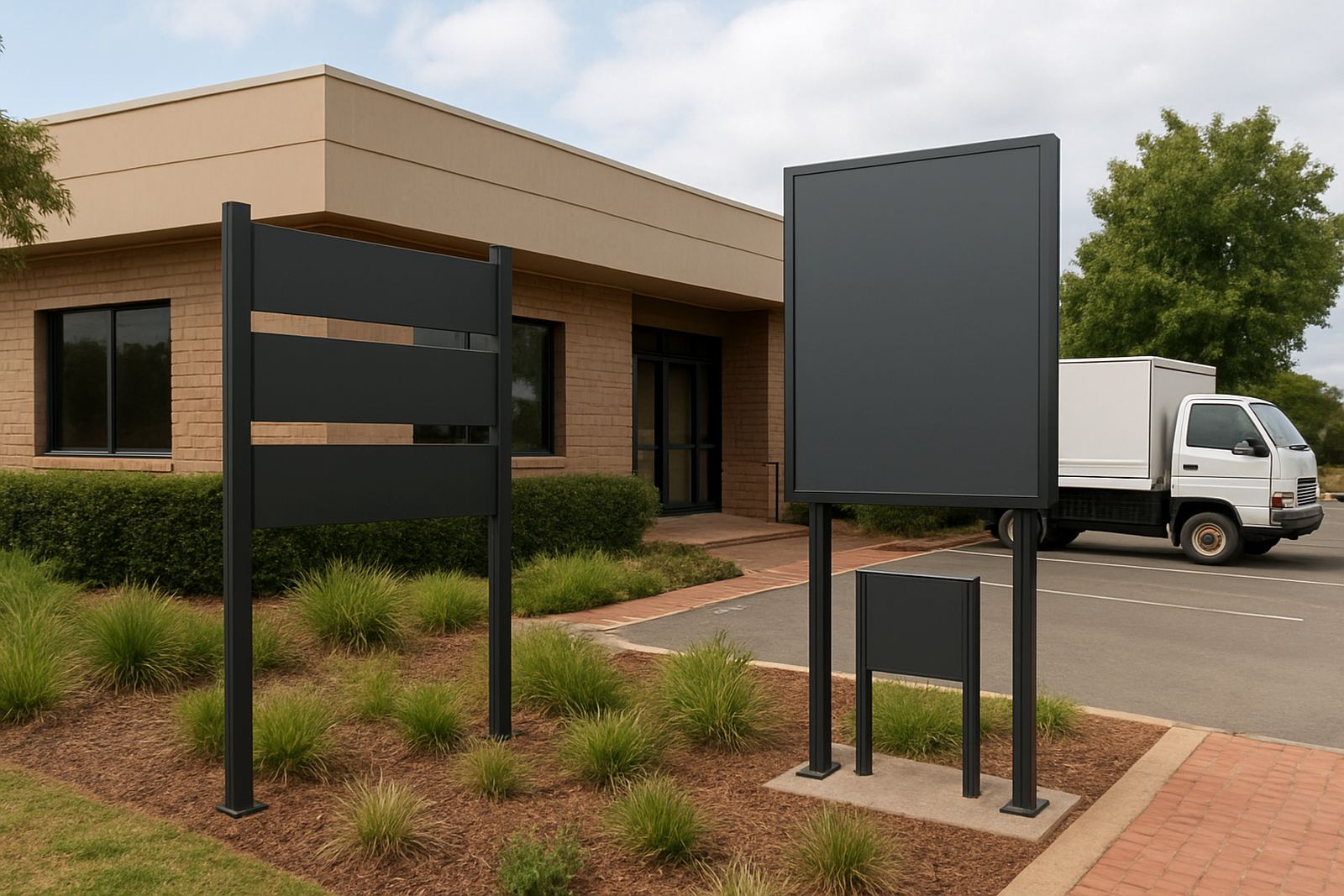
For big pylons, retail forecourts and roadside signs, the structure should be planned together with the face material. Wind load, footing depth and access for repair all count. If the sign has to sit near a busy road in Tshwane or a municipal property with set approval requirements, the frame must also suit the permit conditions.
- Steel suits heavy duty frames and support posts
- Aluminium suits lighter structures and corrosion-sensitive sites
- Protective coatings should be part of the design from day one
- Access panels help with maintenance and electrical repairs
How to Choose Between Cost, Lifespan and Maintenance
There is no single best material for every sign. A small shop fascia does not need the same construction as a roadside pylon, and a short-term campaign should not be priced like a 10-year install. The smartest choice is the one that matches the use case. If the sign must stay sharp in full sun, pay for better print protection and stable board. If the message changes often, choose a system that allows easy updates.
Ask three practical questions: how long must it last, where is it being installed, and who will maintain it? A busy retailer in Pretoria may need a sign that can be cleaned and updated fast. A municipality may need a sign that follows permit rules, uses durable materials and can survive years of public exposure. A property owner in Hartbeespoort may want something neat at the gate but not overly heavy on the wall. The answer shifts with the site.
Good signage is rarely about the cheapest sheet or the thickest board. It is about the right material, the right finish and the right installation. That is what keeps a sign straight, readable and safe in real outdoor conditions.
A Local Example: One Brand, Different Sites, Different Materials
Consider a retailer with branches in Centurion, Brits and Soshanguve. The main shopping centre fascia may need aluminium composite with vinyl branding for a clean front-of-store look. The roadside pylon may need a steel frame with weather-resistant panels and proper footing. The window graphics may be plain cut vinyl, while a temporary campaign board near the entrance could be a lighter print panel that is easy to replace after a promotion ends.
That same brand may also need maintenance after a severe thunderstorm or after contractors have damaged a panel during parking lot work. In those cases, material choice affects repair speed. If the original sign was built with serviceable parts, the damaged section can be replaced without remaking the full structure. That saves time and money, and it keeps the branch trading without a long interruption.
At HM Graphics & Signs, this is where planning, fabrication and installation have to work together. The best outdoor sign is the one that holds up in the real world, not just on paper.