
Why the mounting surface must be checked first
Every site starts with the surface, because a brick wall, plastered facade, steel structure and aluminium frame all behave differently. If the surface is weak, dusty, uneven or damp, even a well-made sign can loosen sooner than expected. We see this often on older buildings in Pretoria, shopfronts in Hartbeespoort and exposed sites in Brits where wind and dust work on the fixing points day after day.
A proper site survey checks the wall type, thickness, access height, water run-off and whether the sign will sit in shade or full sun. That matters for both the fixing method and the hardware. A small panel on smooth concrete may need a different set of anchors from a large illuminated cabinet on a steel gantry, and the wrong choice can lead to movement, vibration or cracks around the holes.
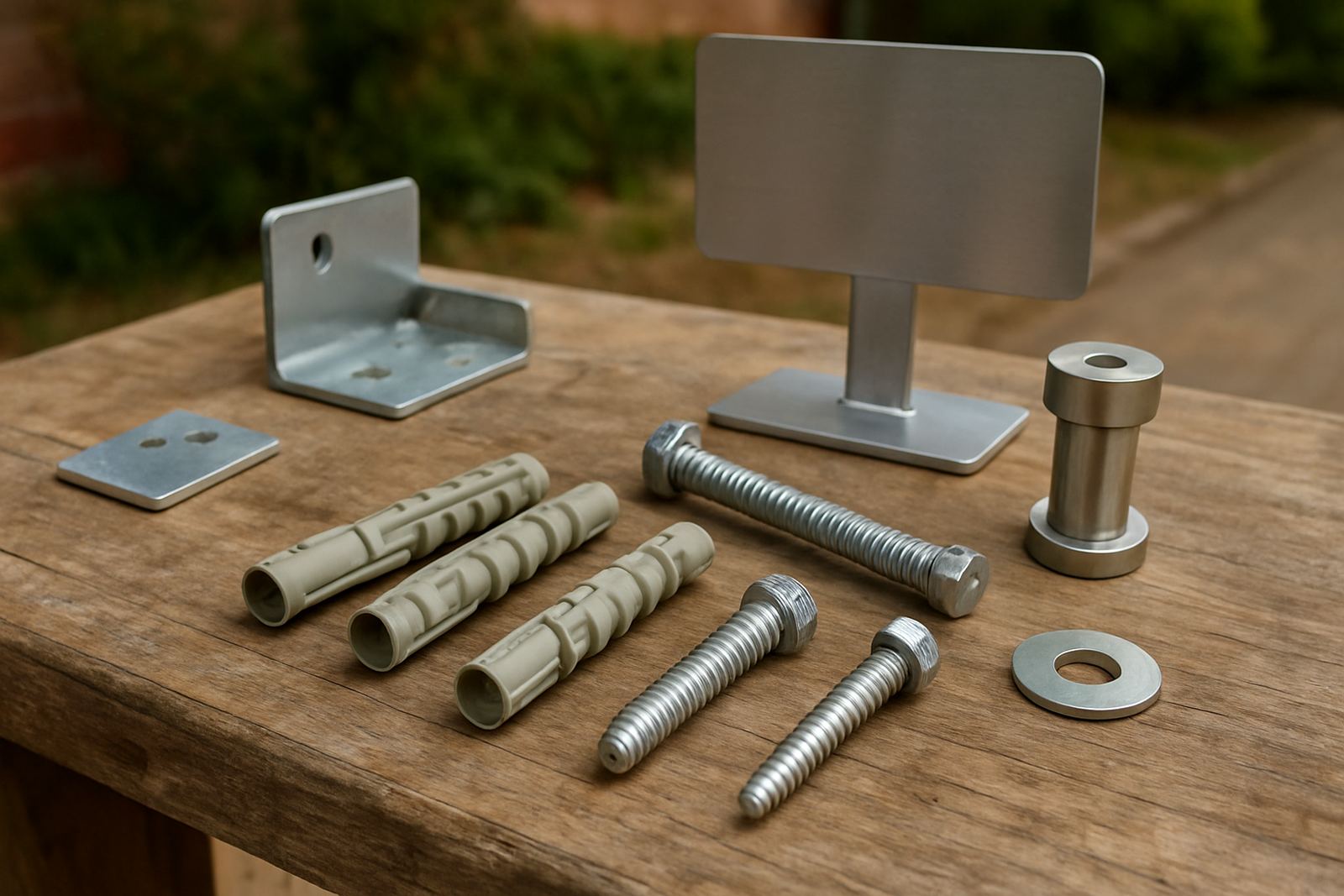
Picking fixings for concrete, brick, plaster and steel
The fixing must suit both the sign weight and the structure it is attached to. A light printed panel does not need the same support as a large fabricated logo with a metal frame. In Gauteng, where summer storms can bring strong gusts and load-shedding often affects timing for site work, it helps to plan the method before production starts.
- Concrete: Common for perimeter walls, pylons and service buildings. Mechanical anchors or chemical anchors are used where the load is heavier.
- Brick: Suitable for lighter signs, but care is needed with older or hollow brick. The fixing should bite cleanly without breaking the face.
- Plaster: Often needs longer anchors and spreaders so the load does not pull the finish loose.
- Steel: Usually fixed with bolts, brackets or welded frames, depending on access and corrosion risk.
- Cladding and aluminium composite: Needs careful drilling and often additional support behind the panel, because the face material alone is not enough.
Where coastal humidity is part of the job, or where a site is washed down regularly, galvanised or stainless hardware becomes important. The fixings are only a small part of the job but they carry the whole sign, so it pays to get them right.
Wind load, vibration and daily wear
Signs fail for reasons that are easy to miss at first. A panel can look fine on day one, then start to rattle after a few weeks because the support points are too few or too close together. If the sign sits near a busy road in Centurion or on a windier edge of Hartbeespoort, vibration from traffic and gusts can work at the fixings over time.
Large signs need enough fixing points to spread the load. Brackets should be set out so the weight does not hang from one side only. If a sign is fitted to a surface that flexes slightly, such as a light steel frame or thin cladding, extra support can reduce movement and extend its life. It is not only about holding the sign up, it is about keeping it steady so the face, print and edges do not fatigue.
Maintenance also matters. If a sign begins to lean, rust stains appear around the holes, or the panel lifts after heavy rain, it should be checked early. Catching a loose fixing in time is a lot cheaper than replacing a damaged sign or repairing the wall behind it.
Outdoor signs need weather-smart hardware
Outdoor installations in South Africa deal with intense sun, sudden rain and seasonal dust. That means the mounting system needs to be chosen with weather in mind, not only strength. Fasteners, brackets and frames should resist corrosion, especially on exposed sites or in areas with high moisture.
- Use hardware that can handle sun and rain without seizing or rusting too quickly.
- Seal drilled points where water could enter a wall or frame.
- Allow for thermal movement on larger panels so the material can expand and contract.
- Use the correct drill size and anchor depth for the substrate, not a guess.
- Keep fixing points neat and level so the sign sits square from the first day.
On municipal sites, the fixing method may also need to respect access rules, safety requirements and any permit conditions. That is especially important where the sign sits near pedestrian areas, roadside verges or public buildings.
A local example from a busy Pretoria frontage
A retail frontage in Pretoria may look simple from the road, but it can be one of the harder places to mount a sign. There may be plaster over brick, wiring behind the wall, a narrow pavement and traffic that leaves little room for a long installation window. In one such case, the sign had to be set so it could be seen clearly from approaching traffic, but without placing too much stress on the older wall.
The solution was to confirm the surface depth during the survey, use a bracket layout that spread the load, and install fixings that suited the wall type rather than forcing a one-size approach. The result was a cleaner finish and far less strain on the facade. That sort of planning is what keeps a sign looking right months later, not just on installation day.
For shops, clinics, estate entrances and municipal buildings across Tshwane, the same principle applies. A good fixing plan saves time on site and keeps the sign in place when weather and daily use start doing their part.
When maintenance and refurbishment are part of the job
Not every mounting issue starts with a new sign. Some signs need refixing, bracket replacement or a full refurbishment because the original hardware has reached the end of its life. You might see corrosion on the bolts, cracked sealant, loose edges or a panel that no longer sits flush after years of sun and wind. Sometimes the face still looks fine but the mounting system is the weak point.
That is why sign maintenance should include the fixings, not only the printed face. During inspections we look at movement, rust, water ingress and whether the original support still matches the size and weight of the sign. If the sign is being updated with new graphics, it is also the right time to improve the mounting rather than reusing tired hardware that may fail again later.
For businesses across Hartbeespoort, Pretoria, Centurion, Brits and the wider Gauteng area, the safest approach is to plan the mounting at the same time as the artwork and fabrication. That way the sign is sized correctly, the hardware suits the site, and the installation team can work with fewer surprises on the day.