The right time to choose an illuminated sign
A lightbox makes sense when visibility matters more than decoration. If people drive past at speed, arrive after dark, or only glance at your frontage from one angle, internal lighting gives the sign a stronger chance of being seen. In retail centres, on corner sites and along busy roads in Pretoria, Centurion and Brits, that extra visibility can help a business stand out without needing a larger sign face.
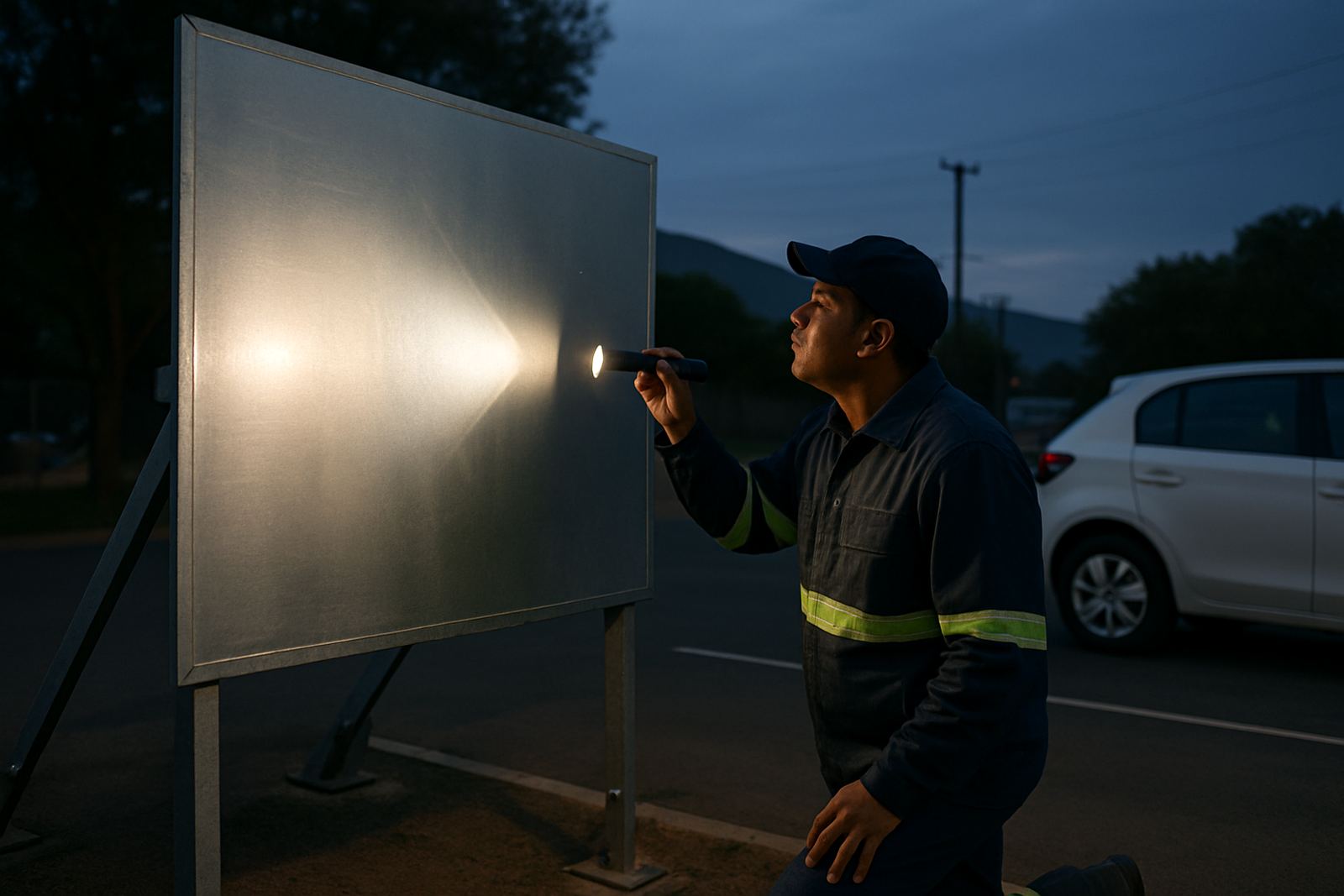
It is also a practical choice for businesses that keep different hours. A pharmacy, restaurant, fuel stop, takeaway, medical practice or 24-hour service point can all benefit from signage that still works when the building is closed. For municipal sites and service depots, an illuminated sign can help the public find the right entrance after hours, during winter evenings, or in areas with poor street lighting.
Where a shopfront or pylon sign has to carry a clear logo, trading name and direction, a lightbox keeps the face legible and neat. It is often a better option than trying to use several smaller signs, because the message stays simple and easy to read.
Where lightboxes perform best in South African conditions
Not every sign needs light, but some locations ask for it. In Hartbeespoort, Pretoria and the surrounding suburbs, we often see stronger results where there is traffic, shade from trees or buildings, and a lot of movement in the evening. Lightboxes also help in places where load-shedding has made businesses think more carefully about what stays visible when power is off.
They are useful in these situations:
- Road-facing shops that rely on passing traffic
- Sites with trading hours that extend into the evening
- Retail fronts inside centres with mixed lighting levels
- Municipal buildings and public service points that need clear wayfinding
- Forecourts, workshops and warehouses where vehicles must identify the site quickly
Coastal humidity is not the only weather issue to plan for. In Gauteng, dust, summer storms and strong sun can still affect the finish and internal components over time. A properly made lightbox should be suited to the site, not just the artwork. That means thinking about the frame, face material, seal quality and how the sign will be maintained later on.
What to consider before you commit
A lightbox works best when the message is short and clean. If you try to place too much information on one face, the sign loses impact and becomes hard to read at a distance. This is where artwork prep matters. Good spacing, strong contrast and the right font weight can make a smaller sign perform better than a larger one with cluttered copy.
Before you go ahead, ask these questions:
- Will the sign be viewed by pedestrians, drivers, or both?
- Do you need it to work only at night, or all day as well?
- Is the wall or pylon strong enough for the size and weight?
- Will municipal approval or site permission be needed?
- Can the sign be safely accessed for cleaning and maintenance?
For some sites, a lightbox is the main brand sign. For others, it sits alongside flat cut lettering, directional signs or vehicle graphics. The best answer depends on the property, the viewing distance and how much the business wants to spend upfront versus over time.
How a lightbox supports branding consistency
If a company has several branches or service points, lighting can help keep the brand looking the same across every location. A consistent illuminated sign at each site gives the public one clear point of reference, whether they are in Akasia, Rosslyn, Soshanguve or central Pretoria. That consistency is especially useful for retailers, national brands and municipalities that need people to recognise them quickly.
When the same artwork is used across multiple sites, the sign family feels organised and easier to manage. It also helps with campaign rollouts. A seasonal message, a new branch opening or a refreshed logo can be produced to the same standard, then installed site by site without changing the whole look each time. Good production planning keeps the result neat and saves time during rollout work.
Lightboxes can also help a business separate its public-facing identity from the activity happening inside the building. A clean illuminated face gives the site a finished look, even if the interior is still being fitted out or the premises are in a busy industrial area.
Practical points that affect cost and upkeep
People often ask if a lightbox is worth it. The answer depends on how much value the sign will bring over time. If it helps bring in more foot traffic, supports late trading hours, or makes a hard-to-find site easier to locate, it can pay for itself in practical terms. If the sign is hidden, over-sized for the site, or poorly lit around the edges, the return drops quickly.
Upkeep matters too. A sign that is built for the site and maintained properly will last better than one that is left dirty, water-damaged or fitted without enough access for repairs. In Gauteng, dust build-up and storm damage can shorten the life of cheaper components. On power-sensitive sites, it is worth planning how lighting will behave during outages and after restoration so the face does not fail early or flicker unevenly.
For businesses with multiple branches, sign maintenance and refurbishment can be folded into the plan from the start. That makes future repairs simpler and helps protect the look of the brand over time.
A local example from Pretoria and Hartbeespoort
A practical example is a retail store that needs to be seen from a main road in Pretoria but also serves customers from Hartbeespoort and surrounding suburbs. During the day, the frontage competes with other shops, trees and traffic. In the evening, the same site may rely on a lit sign to guide customers from a distance. A lightbox on the main facade, paired with smaller directional signs at the entrance, gives the public a clear route in and out.
For a municipal service point in Tshwane, the need is slightly different. The sign must be readable, controlled and easy to recognise after hours. In that case, a lightbox can be part of a wider wayfinding plan that includes permitted signage, entrance markers and internal directional boards. It is not about making the site flashy. It is about making it easier to use.
That is the basic rule: use lightboxes where visibility solves a real problem. If the sign has to work in low light, carry the brand clearly and help people find the place without stress, illuminated signage is usually the right call.