
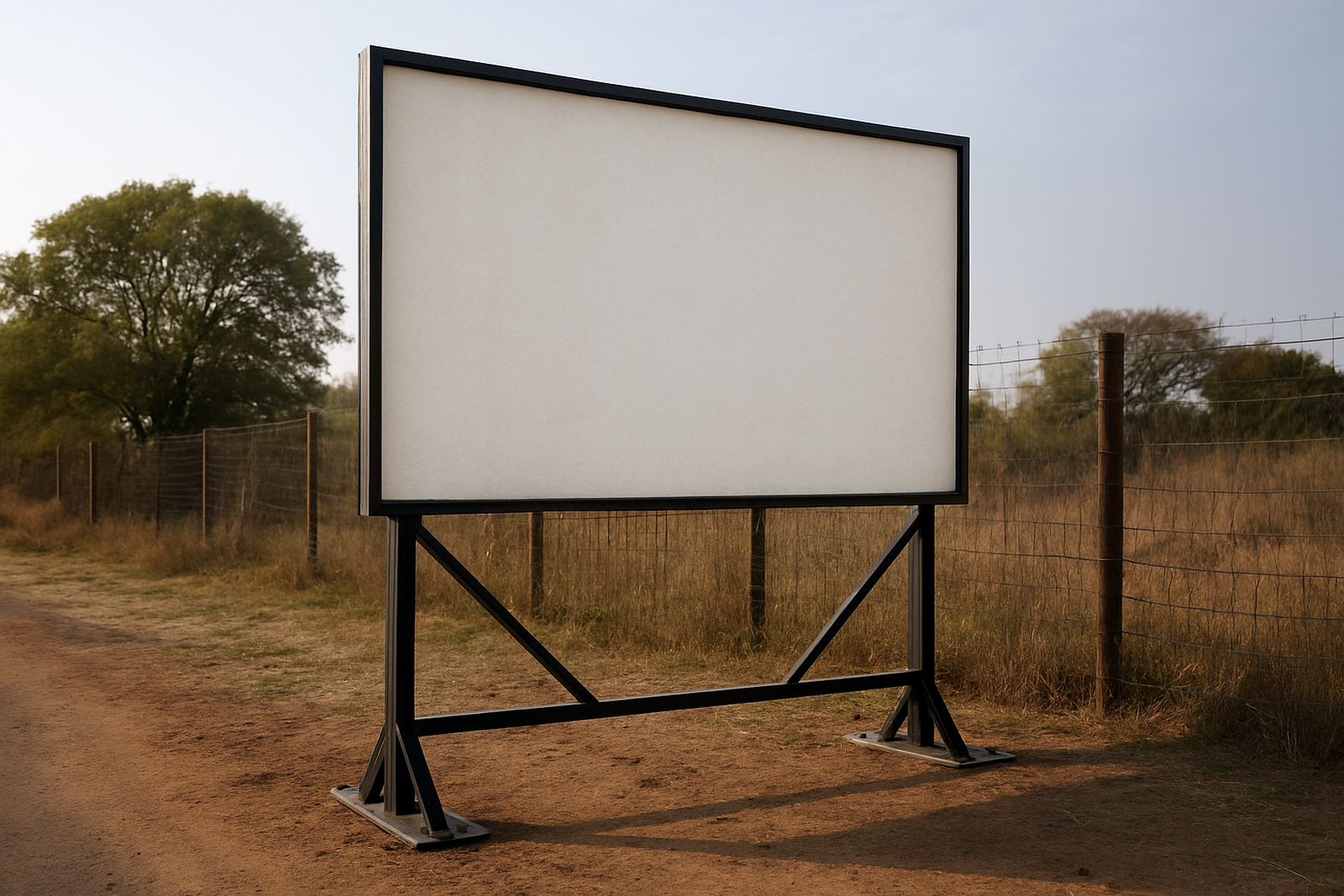
Begin With What the Site Board Needs to Do on Your Property
Before anyone cuts aluminium or prints vinyl, decide what the board must achieve. A project board for a housing development in Centurion needs different treatment from a municipal notice board in Pretoria or a temporary promotion board on a retail site in Brits. The first job is clarity, because a board that is too busy or too small will waste the money spent on it.
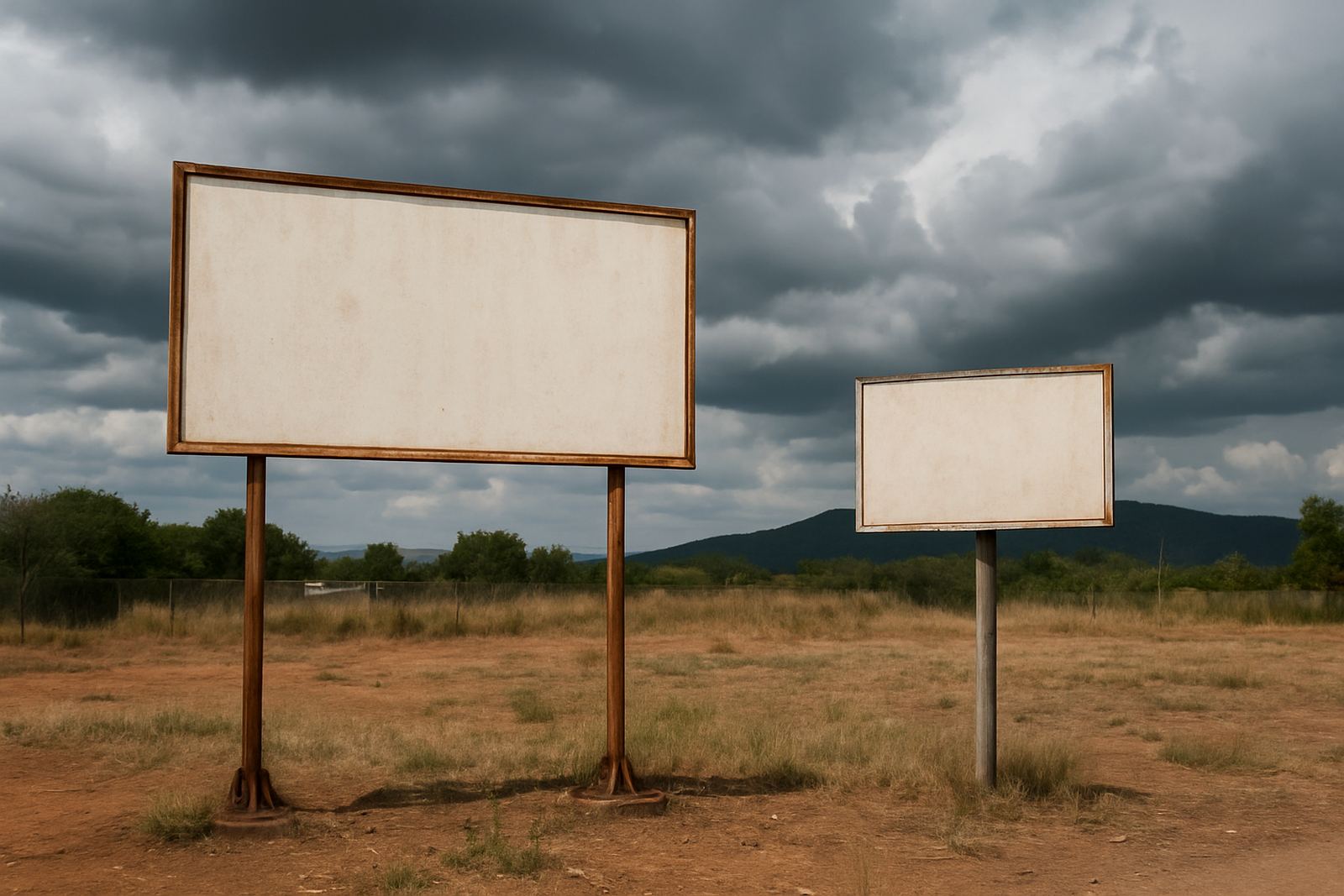
Think about the viewing distance, traffic speed and how long the board must stay up. A board beside a quiet access road can use smaller lettering than one facing fast-moving traffic on a main route. If the site is exposed, allow for dust, strong wind and afternoon rain. If the board is there for only a few months, the structure can be lighter, but it still has to be safe and straight.
- Match the board size to the viewing distance
- Keep the message short and easy to scan
- Decide early if the board is temporary or long term
- Check whether municipal permission is needed
Choose Materials That Can Handle North West and Gauteng Weather
Weather is where many site boards fail first. In Hartbeespoort, humidity and morning mist can work into weak fixings. In Pretoria and Tshwane, the sun can bleach poor print quickly, while summer storms bring wind that will test every bracket. For that reason, the face material, frame and fixing method all need to be selected as one system.
For long lasting boards, a rigid face with proper edge sealing works better than thin board that warps. Outdoor print should be protected from UV and moisture. Frames need galvanised steel or aluminium where appropriate, and fasteners should be chosen for the site conditions. On a coastal site the corrosion risk is higher, but even inland dust and rain can damage a board if the edges are left open.
- Use UV resistant print and protective lamination where suitable
- Seal edges so water cannot creep into the panel
- Choose fixings that match the structure and wind load
- Avoid materials that bend or bubble in heat
Make the Message Readable at a Glance
The best site boards are read in a few seconds. That means clean wording, strong contrast and a layout that gives the eye a clear path. Do not overload the board with too many logos, too much small text or long sentences. If the board must communicate a permit number, contractor details and a safety message, group the information in a sensible order.
Colour choice matters more than many people realise. Pale text on a light background disappears in bright sun, while heavy blocks of dark colour can make the board feel crowded. For road-facing boards, bold lettering and simple icons are usually better than decorative graphics. Keep the main message high on the board where it can be seen over parked vehicles, fencing or roadside grass.
- Use one main message and a short support line
- Keep small print to only what is necessary
- Use high contrast colours for outdoor visibility
- Place the key message above any supporting details
Fixings, Frames and Security Need Real Thought
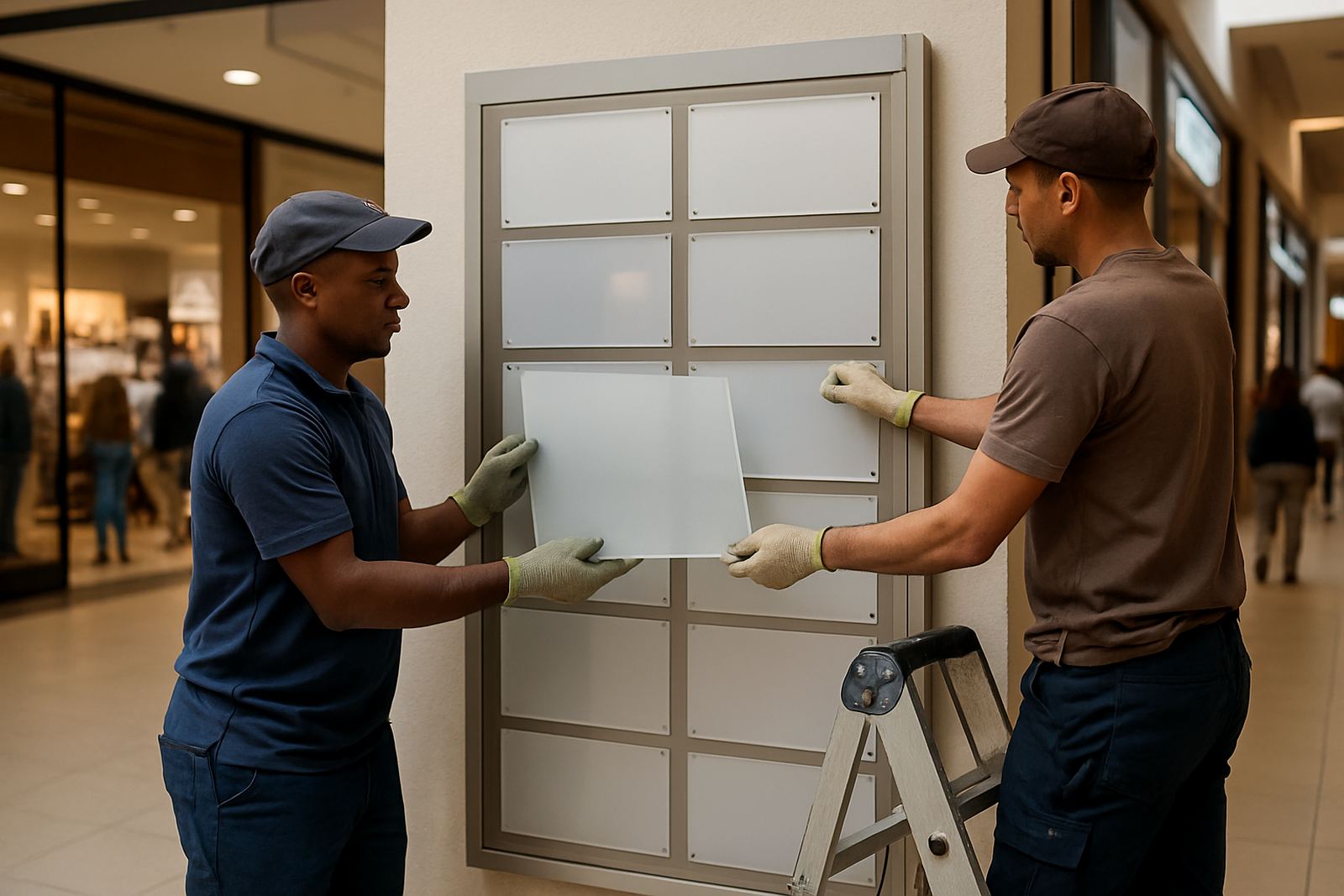
A board that is well designed but badly fixed is a waste of material. On sites around Akasia, Rosslyn and Soshanguve, we often see boards loosened by wind because the frame was underbuilt or the fixings were not matched to the wall or fence. If the board is mounted on poles, those poles need proper footing. If it is fixed to a wall, the substrate must be checked before drilling.
Security matters too. Boards in public areas can be tampered with, bent or stolen if they are easy to remove. Use tamper-resistant fasteners where needed and avoid exposed edges that invite prying. For temporary site boards, make sure the structure can be removed without damaging the property or leaving dangerous anchors behind.
- Check the wall, fence or pole before installation
- Use fixings that suit the substrate, not just what is on hand
- Allow for wind load and the weight of the panel
- Use tamper-resistant hardware where the site is exposed
Plan for Load-Shedding, Delays and Maintenance
Many project boards are installed once and forgotten, but the better approach is to plan for upkeep from day one. Power cuts can slow printing schedules, delay site access and affect night-time work, so the board should be made in a way that still looks presentable if a replacement panel is needed later. If the project will run in phases, leave room for a future date change or updated contractor name.
Maintenance is simple if the board was built with service in mind. It should be easy to clean, inspect and replace. A board that is fixed too tightly or made from the wrong sheet can become expensive to service. On long-running retail rollouts, we often recommend checking the board after heavy rain and again after the first hot spell. That is usually when weak glue, loose fittings or print problems show up.
- Allow space for updates, date changes or contact changes
- Inspect after storms and after major temperature shifts
- Keep a spare panel if the board is part of a longer rollout
- Choose a finish that can be wiped down without damage
A Hartbeespoort Example That Saved Time on Site
For a development outside Hartbeespoort, a client needed a large project board visible from the road and safe enough to stay up through a windy season. We started with a site survey, checked the viewing angle and measured the fixing points before any production work began. That saved time, because the first layout was adjusted to suit the fence line and the traffic approach, not just the artwork on a screen.
We then prepared the artwork for outdoor readability, printed the panel for UV exposure and fabricated a frame that could hold firm in gusty conditions. On installation day, the team made sure the board was plumb, level and securely fastened. The result was a board that stayed legible and tidy through weather changes, with no need for repeated call-backs. That kind of planning is what turns a simple sign into a useful site asset.
If you are setting up a board for a project, property or campaign in Pretoria, Centurion, Brits or across Tshwane, start with the conditions first and the artwork second. That order usually gives the best result, and less trouble later on.