
Start with the fleet role, not just the colour
Before artwork starts, work out what each vehicle must do. A delivery bakkie in Pretoria CBD needs clear contact details and a strong logo that can be read in traffic. A service van travelling between Brits, Hartbeespoort and Centurion may need more practical information such as what the crew does, plus reflective elements for early morning and late afternoon driving.
It also helps to decide whether every vehicle should carry the same layout or whether there should be a family of designs. A consistent fleet does not mean every panel must look identical. What matters is that the branding is recognisable at a glance, from 20 metres away and still clear in parking lots, at loading bays and on busy roads.
- List every vehicle type: hatchbacks, panel vans, bakkies, trucks or trailers.
- Note the daily route and exposure to sun, rain and dust.
- Decide what information must appear on every unit.
- Set the look once, then apply it across the fleet.
Choose a layout system that can grow with the fleet
Fleet branding works best when it follows a system. That means logo placement, font use, colour blocks and contact details stay in the same position across all vehicles. When a new vehicle is added later, it should slot into the same pattern without a fresh redesign.
This is especially useful for businesses with vehicles based in more than one area. A fleet split between Hartbeespoort, Pretoria and Akasia may be used by different teams, but the public should still see one company. A good system also keeps the cost down because artwork can be adapted faster and production stays tidy.
For municipal work or larger rollouts, the layout should also allow room for asset numbers, unit codes, warning markings or permit details where required. That helps with identification during inspections and makes maintenance easier when one panel gets damaged.
- Keep the main logo in one fixed position.
- Use one or two typefaces only.
- Keep enough clear space around the wording so it can be read easily from passing traffic or across a parking area.
- Allow extra space for registration numbers, fleet numbers or compliance text.
Match the material to South African conditions
The right material choice can save you from redoing work too soon. Sun exposure in Gauteng fades poorly made graphics quickly, and vehicles that stand outside in Hartbeespoort or Pretoria will also face dust, heat and sudden rain. Coastal humidity is not the issue here, but UV and daily handling are.
For long life, the printed film or cut vinyl must suit the vehicle surface and the application method. Corrugated panels, curved doors and plastic bumpers each need a different approach. On newer vehicles, some panels are more sensitive to heat during fitting, so the installer must know how to work cleanly without lifting edges or trapping air. Good preparation matters just as much as good print quality.
- Use high quality vinyl for lettering and logos that must stay sharp.
- Choose printed graphics where colour detail or shading is needed.
- Ask for the right overlaminate where the vehicle gets heavy sun exposure.
- Plan for easy cleaning so dirt does not collect at exposed edges.
Build for after-hours and load shedding realities
Fleet branding often happens after business hours so vehicles can stay on the road during the day. That means the installation plan should account for lighting, power availability and turnaround time. If fitting is done during load shedding, there must still be enough light and space for accurate alignment, otherwise a small mistake on one side gets repeated across the whole fleet.
A practical rollout plan also helps operations. If three vehicles are off the road for too long, deliveries slip and customer service suffers. For that reason, experienced teams usually batch similar vehicles together, cut the graphics in advance and sequence the fitting so downtime stays short.
For businesses that operate from Centurion into Tshwane or Brits, this is often the difference between a neat rollout and a messy one. The more vehicles involved, the more important it is to keep one schedule, one artwork set and one sign-off point.
- Book installations in batches to reduce downtime.
- Check lighting and access before the fitting day.
- Confirm who signs off artwork and final placement.
- Keep spare decals for minor repairs later.
Keep the brand consistent across repairs and replacements
Once the fleet is on the road, the work is not finished. Bumpers get scratched, doors get repainted and one vehicle may be replaced before the others. If the branding is not documented properly, each repair becomes a guess and the fleet starts to look uneven.
That is why it helps to keep a simple record of panel sizes, colour references, placement notes and vehicle registration numbers. When a van is repaired in Soshanguve or a bakkie is refitted in Rosslyn, the replacement graphics can match the original without redesigning the entire set. This also makes future campaign updates easier, because only the changed message needs to be swapped out.
Sign maintenance and sign refurbishment principles apply to vehicles as well. Clean graphics last longer, and a small panel replacement is far cheaper than redoing a whole side because one section was ignored.
A Pretoria rollout example that shows the value of planning
Consider a local supplier with six vehicles servicing Pretoria, Centurion and Hartbeespoort, plus one truck that runs between depots and sites. The business wants all units branded before a new contract starts. If the artwork is designed separately for each vehicle, the result is often uneven spacing, different shades and contact details that shift from one side to the next.
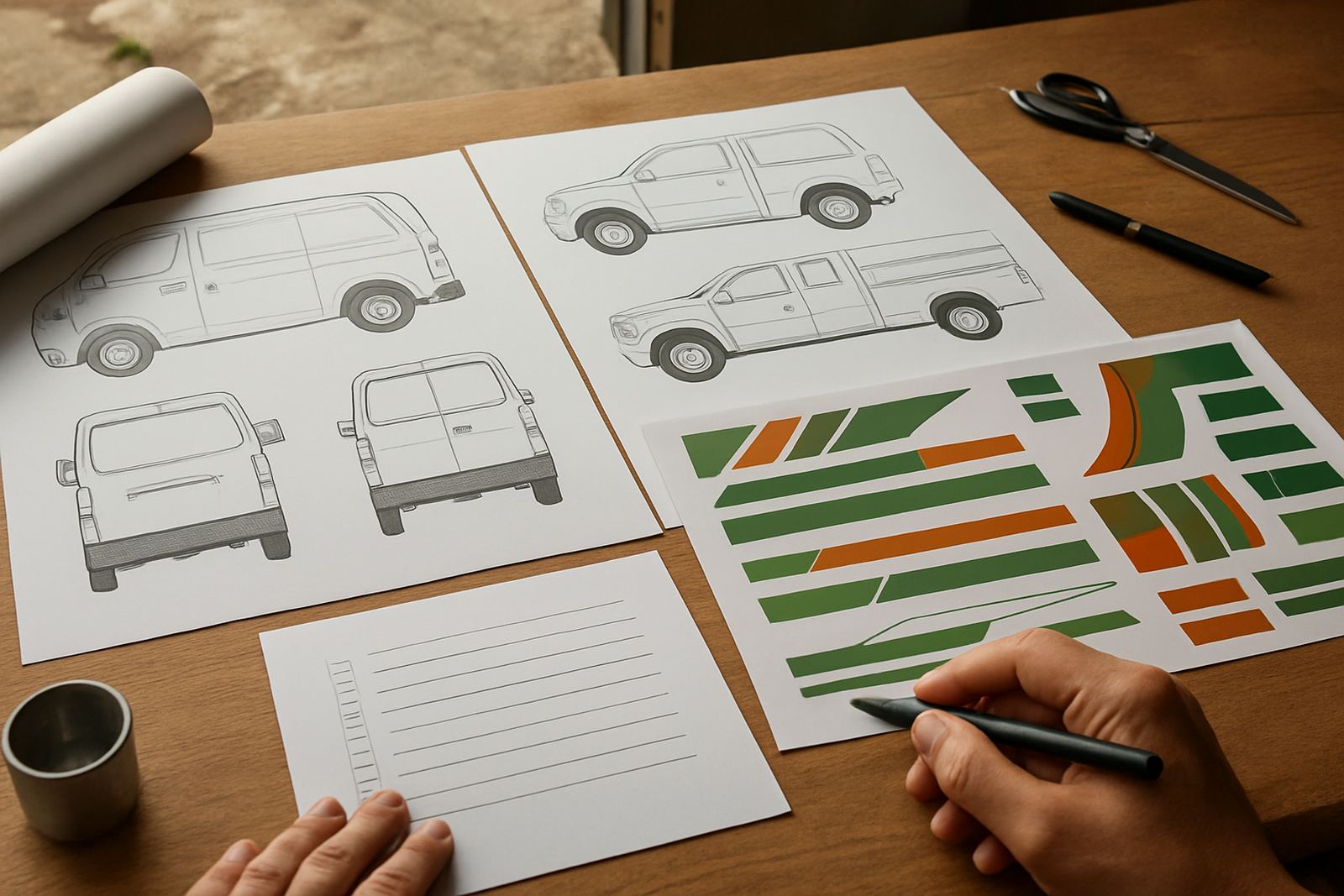
A better approach is to design one master layout, then adapt it to each vehicle size. The same logo, same colour blocks and same contact strip can be used across the fleet, with only the scale adjusted. If one truck needs permit information or reflective strips for a municipal route, that can be added without disturbing the overall look. The fleet then feels organised, reliable and easy to recognise on the road.
That is the real value of fleet branding basics. It is not only about looking tidy, it is about saving time, reducing rework and making sure every vehicle carries the same message, every day.