
Why reflective material earns its keep after dark
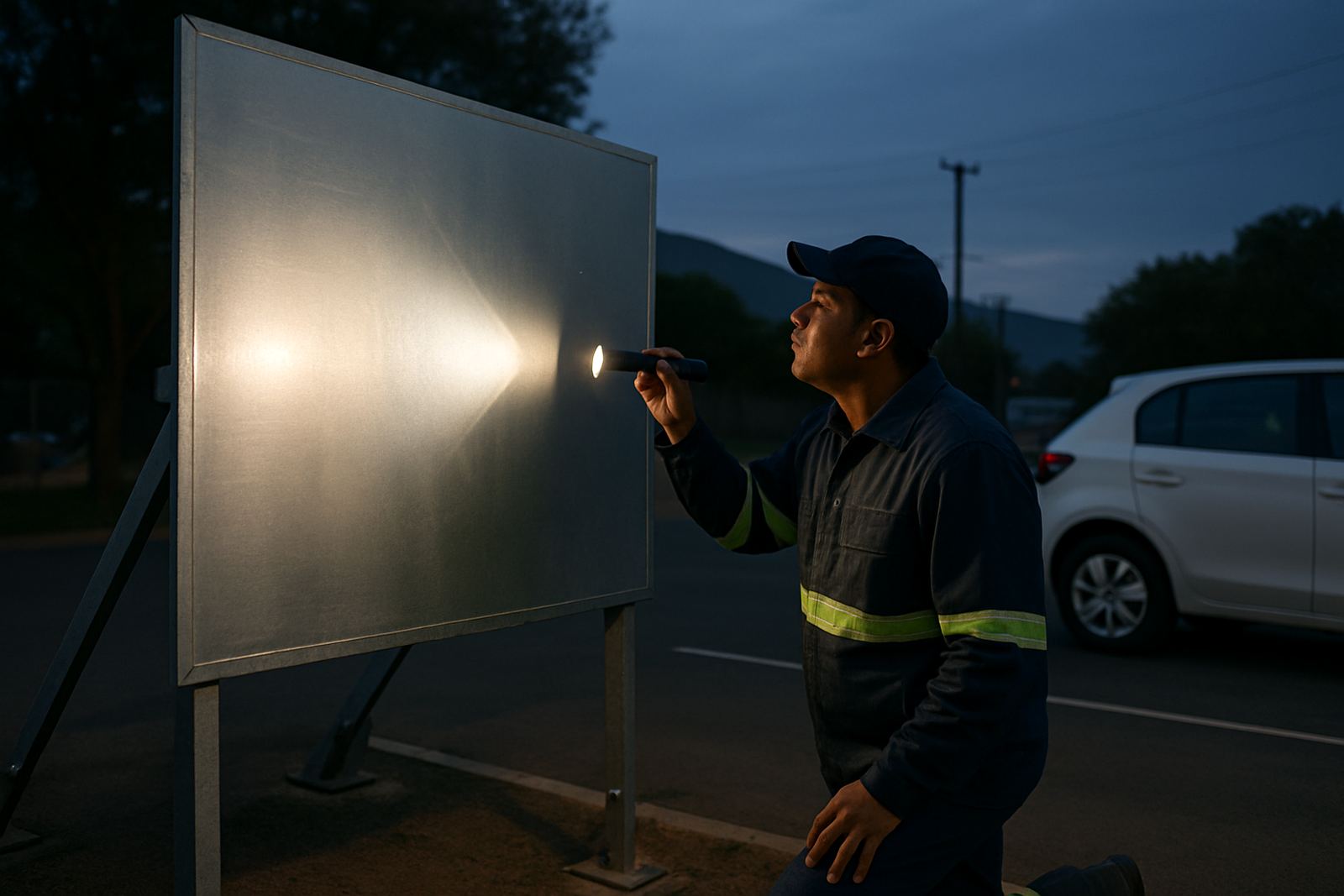
Reflective signage works by bouncing light back toward the driver or passer-by, so the message stands out when headlights, torches or streetlights hit it. That makes it useful on roads, boundary walls, loading bays and any place where people need to spot a sign quickly at night. In Gauteng, where power cuts can leave whole areas darker than usual, this extra visibility can make a real difference.
It also helps in poor weather. Dust, rain and mist can wash out normal printed graphics, but reflective film keeps borders, arrows and warning text easier to pick up. For sites near busy roads in Tshwane or on access routes in Brits, that means fewer missed turns and better control of movement after hours.
Reflective material is not always the right answer for every sign, but when the sign must be seen from a distance or in low light, it is often the practical choice. The trick is matching the grade of reflectivity to the job, not just adding it for appearance.
Common reflective sign uses on roads and in public spaces
Municipal and public-facing signs are the most obvious place to use reflective material. It is common on speed control boards, roadworks notices, detour signs, temporary hazard warnings and access-control boards at depots or civic sites. In these cases the sign needs to speak clearly in a split second, and reflective face material gives it a better chance of being noticed in time.
Reflective finishes are also useful for directional signs at parking areas, clinics, schools, industrial parks and construction entrances. A driver moving slowly through a yard may still miss a non-reflective sign if the area is shaded or if the lighting is patchy. Reflective lettering or panels help with that, especially where night shifts are active.
- Roadworks and diversion notices
- Municipal access and safety boards
- Parking bay numbers and directional arrows
- Loading zone warnings and height restriction signs
- Boundary markers for sites and depots
Retail and brand sites where reflective detail makes sense
Retailers do not always need full reflective signs, but selected use can be very effective. Think of back-of-house delivery entries, staff parking areas, generator rooms, fire exits and service yard markers. These spaces are often visited before sunrise or after closing time, when the wrong door or bay causes delays. Reflective numbering or warning panels can reduce confusion and support site safety.
For branded sites, reflective elements can also be used on pylons, wayfinding signs and fleet graphics. A company name on a vehicle door may be visible during the day, but reflective striping or logo detailing helps the vehicle stand out in early morning traffic or in dim warehouse yards. That is especially useful for delivery fleets working around Pretoria, Akasia and Rosslyn where early starts are common.
Used carefully, reflective detailing can support brand presence without making the whole sign look busy. It works best on text, borders, arrows and key identification points, rather than every surface being reflective.
Choosing the right grade for the job
Not every reflective film behaves the same way. Some products are suited to short-range visibility, while others are built for higher-impact warning applications and longer viewing distances. The choice depends on where the sign will sit, how fast people are moving past it, and what kind of lighting is available.
For a warehouse gate in Centurion, a simpler reflective option may be enough. For a roadside warning sign near fast-moving traffic, the materials and layout need more care. Size, mounting height, angle and background colour all affect how well the sign performs. If the reflective areas are too small or placed badly, the sign may still be hard to read.
It is also worth planning the artwork around the material. Some colours and fine details do not reproduce well on reflective surfaces, especially at smaller sizes. A good layout keeps the critical message large, bold and uncluttered so the sign can be read in one glance.
- Use large lettering for the main message
- Keep fine lines and small copy to a minimum
- Allow enough contrast between text and background
- Match the material to viewing distance and speed
- Check how the sign reads in daylight and at night
Installation and maintenance in real Gauteng conditions
Reflective signs need proper installation if they are going to last. If a panel is mounted crooked, shaded by overgrown plants or hidden by a gate, the reflective benefit is reduced straight away. On busy commercial sites, signs should be placed where vehicle headlights can reach them cleanly, without being blocked by pillars, trees or other boards.
Maintenance matters too. Dust, soot and road grime can cut visibility, and coastal humidity is not the only issue in South Africa. Inland sites around Hartbeespoort and Pretoria also see heat, rain, sun and fine dust that slowly dull signage. A regular wash-down and inspection helps catch loose fixings, peeling edges or damaged faces before they become a safety problem.
Where signs are exposed to repeated contact or weather, the mounting system should be strong enough for wind and vibration. That applies to perimeter signs, temporary construction boards and vehicle graphics too. If the substrate is weak or the adhesive was not suited to the surface, reflective performance will not last as long as it should.
A local example: making night access safer on a busy site
A practical example is a mixed-use site near Pretoria with deliveries, after-hours maintenance and visitor access through the same gate. During the day, normal branding and directional signage may be clear enough. At night, however, a driver arriving for a scheduled drop-off can miss the entrance, especially if there is load-shedding or the streetlight is not working.
In that situation, reflective gate numbers, directional arrows, service-entry boards and hazard markers help guide vehicles to the correct point. Add a reflective fire exit sign, marked parking bays and a lit identification board, and the site becomes easier to manage after hours. It also cuts down on unnecessary phone calls and last-minute confusion at the gate.
That is the value of reflective signage. It is not about making everything shiny. It is about making the right parts readable when visibility drops and people need direction fast.