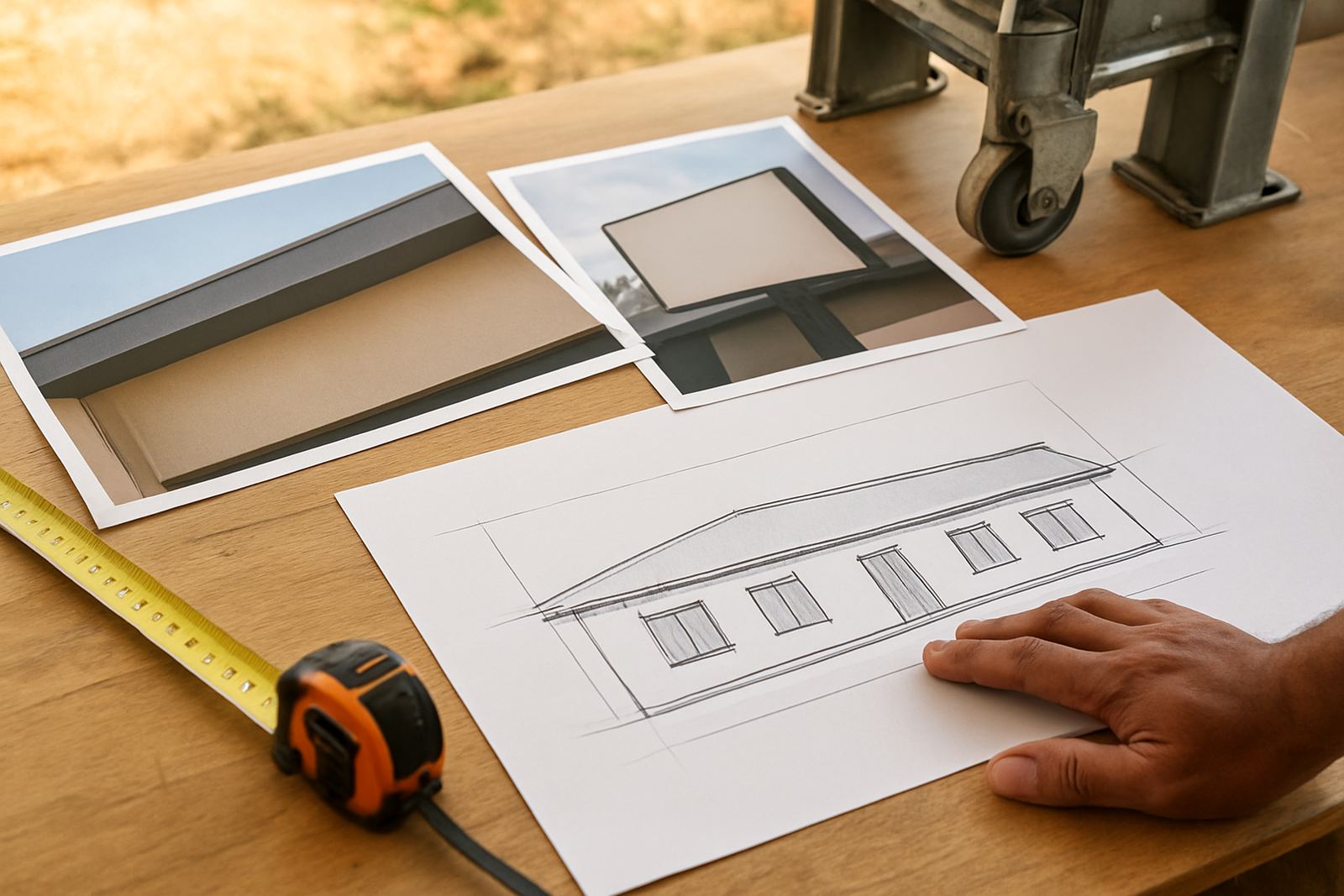

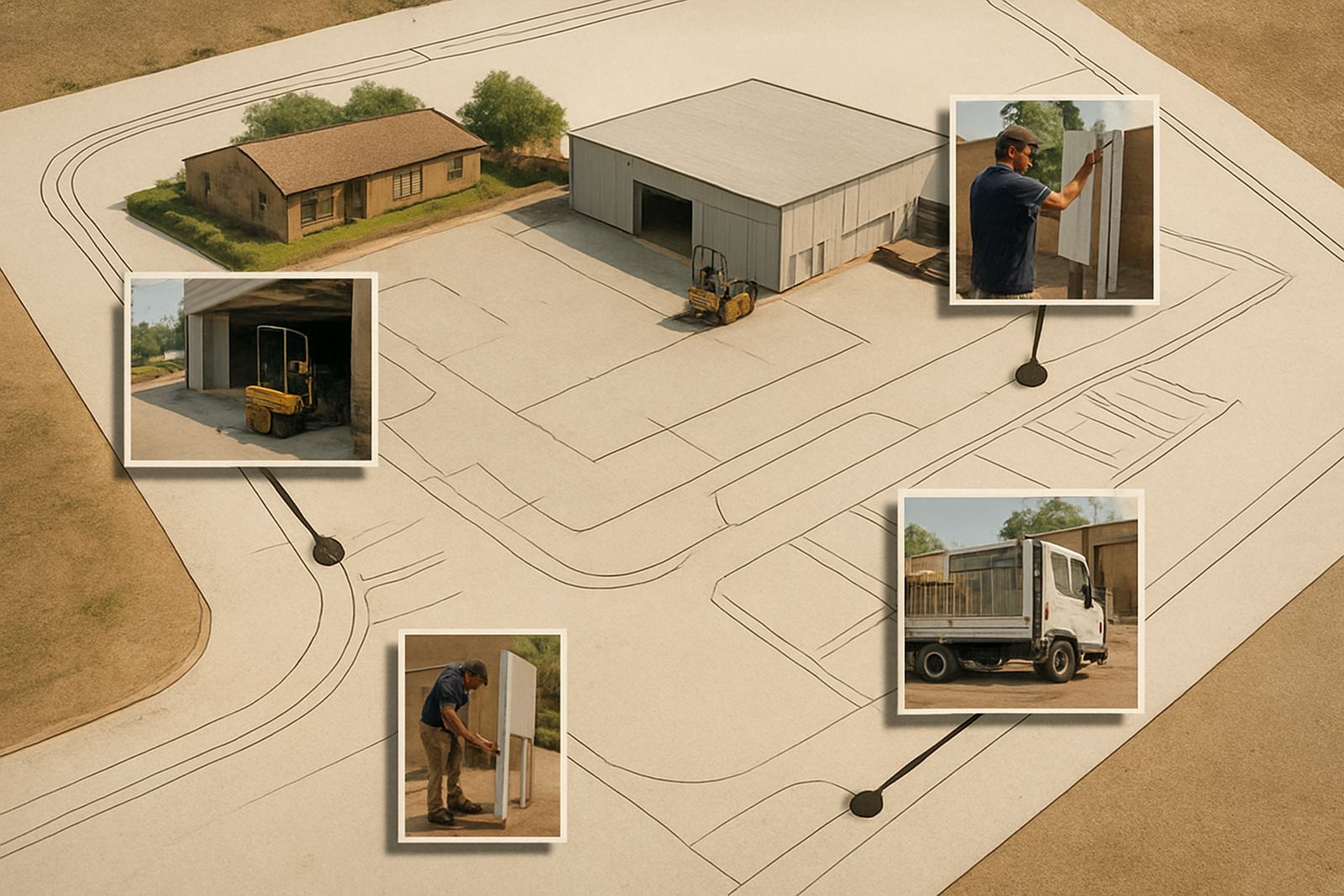
Start With The Customer’s First View
Before you choose a sign position, stand where your customer will stand. It sounds obvious, yet this is the point where plenty of sign positions fail. A sign that looks fine from inside a boardroom can disappear behind a tree, a parked bakkie, or a security gate once people arrive on site. The first view should answer one question quickly: am I in the right place?
For retail sites, the main sign usually needs to be visible from the direction of approach, not only from the front of the building. On a busy street in Pretoria or Centurion, people may have only a few seconds to register your brand while moving through traffic. At a municipal office or industrial yard, the important view might be from the gate, the parking area or the pedestrian entrance. We often do a site survey first because the best position is not always the biggest wall.
Match The Sign To Traffic Movement
Good sign placement follows the way people and vehicles move on the property. If the sign is too early, it gets missed. If it is too late, people have already turned or driven past. The same applies to foot traffic. A sign near the entrance should support the flow, not block it. In places like Brits and Akasia where yards can be busy with deliveries, turning space matters just as much as visibility.
Think about where drivers slow down, where pedestrians pause, and where queues form. That is often the best place for a directional sign, branding panel or safety notice. On larger sites, different signs must work together so visitors are guided in stages, from the road to the gate, then to reception, parking or collection point.
- Place entrance signs where drivers naturally reduce speed
- Use smaller directional signs at decision points, not after the turn
- Keep pedestrian signs at eye level and clear of clutter
- Avoid positions where trucks, branches or open gates hide the sign
Use Height, Angle And Distance Properly
There is no single correct height for every sign. The right position depends on viewing distance, speed and the type of sign. A pylon sign along a roadside needs enough height to clear walls, hedges and traffic. A wall sign above a shopfront must sit high enough to be seen but still close enough to read. On a high-speed road, the sign should be readable in one glance, not after a long search.
We also look at angle. A sign facing straight ahead may work on one building but fail on a corner site where most people approach from the side. In those cases, a slight angle can make a big difference. In Pretoria, where many properties sit close to the road with narrow frontages, the angle of the sign can matter as much as the size. And in Hartbeespoort, tree cover, slopes and uneven ground often change what can actually be seen from the road.
Distance is just as important. If a sign is too close to the viewer, there may not be enough time to read it. If it is too far, the message becomes weak. This is why the viewing height, letter size and background colour all need to work together.
Think About Weather, Wear And Maintenance Access
A sign position should not only look right on day one, it should still work after months of sun, wind and rain. In Gauteng, strong afternoon light can cause glare on certain finishes. In Hartbeespoort and other exposed areas, wind loads can be high enough to affect large panels, especially on open sites or tall structures. If the sign sits in a place that is difficult to reach, future cleaning and maintenance become more expensive.
For coastal humidity elsewhere in the country the concern is corrosion, but inland we still deal with dust, dust build-up and UV damage. A sign mounted too close to sprinkler lines, tree branches or car park overhangs may also need more repairs. When we advise on location, we look at long-term access for cleaning, lamp replacement where relevant, and safe working space for installers and maintenance teams.
- Avoid spots with constant water spray, dust or debris
- Leave enough access for future cleaning and repairs
- Check for shadows from roofs, poles and nearby trees
- Allow for load-shedding where illuminated signs need backup power planning
Follow Municipal Rules Before You Fix Anything
Many sign problems start with a good design but a poor location choice that ignores municipal rules. In Tshwane and surrounding areas, sign size, projection, height and placement can be controlled by local bylaws or property conditions. A sign that crosses a boundary, blocks a road reserve or interferes with visibility at an intersection can be refused or ordered down. That is why permit assistance is part of a proper sign process.
For retailers, brands and municipalities, this matters most on busy roads and at sites with shared access. A well-placed sign still has to stay within the rules. If the location needs approval, we check the position early so the concept, fabrication and installation all move in the same direction. It saves time and avoids costly changes after manufacture.
One practical point is to keep sign positions consistent with the property layout. If the main entrance changes for security reasons, the sign positions may need to change too. The best location is the one that remains legal, visible and useful even when site conditions shift.
Use One Site In Hartbeespoort As A Real Example
Take a busy retail or service site near Hartbeespoort where customers arrive from different directions. The road-facing sign may need to catch passing traffic, while a second sign at the gate helps visitors identify the entrance. Once inside, a third directional sign may be needed for parking or reception. If the site also serves suppliers, a separate delivery sign can keep trucks away from customer parking. The goal is not to place more signs everywhere, but to place the right signs where decisions happen.
On one side of such a site, a wall might be perfect for branding but useless for road visibility because of a stand of trees. In that case, a freestanding sign near the entrance can carry the main message while the wall sign supports the brand once people are on site. That kind of planning makes the whole property easier to use, especially when there are multiple entrances or shared access points.
Choose Positions That Support The Whole Campaign
Sign location should be planned as part of the full campaign, not as the last step. A launch promotion, retail roll-out or municipal awareness drive may need several sign types working together, from large format prints and vinyl graphics to fabricated signs and vehicle wrap fitting. If the positions are inconsistent, the campaign feels scattered. If the positions are planned properly, the public sees the message in the right order.
Before final installation, a good checklist helps:
- Can the sign be seen from the main approach route?
- Does it support the movement of people and vehicles?
- Is it legal and practical for the site?
- Will it still be clear in bright sun, rain or evening light?
- Can it be cleaned, repaired or updated without difficulty?
When those points are answered properly, the sign does more than look neat. It helps people find the place faster, move through it more easily, and remember the brand for the right reasons.