Start With the Site, Not the Material
Before you choose a sign face or panel, look at where it will live. A street-facing shop in Pretoria CBD needs a different material from a warehouse yard in Rosslyn, a school in Soshanguve or a short-term promotion in Centurion. Sun exposure, wind, vandalism risk, moisture and how often the message changes all matter.
We usually begin with a simple site survey: where people approach from, how far away they read the sign, whether the surface will flex, and if the job needs municipal permission. If the sign is going outdoors for years, the material must handle UV, dust and cleaning. If it is for a campaign that runs six weeks, cost and turnaround time matter more than long-term durability.
- Ask how long the sign must last.
- Check if the site is indoors, outdoors, shaded or fully exposed.
- Note whether the sign must be moved, replaced or updated often.
- Confirm if there are landlord or municipal approval rules.
When Acrylic Makes Sense
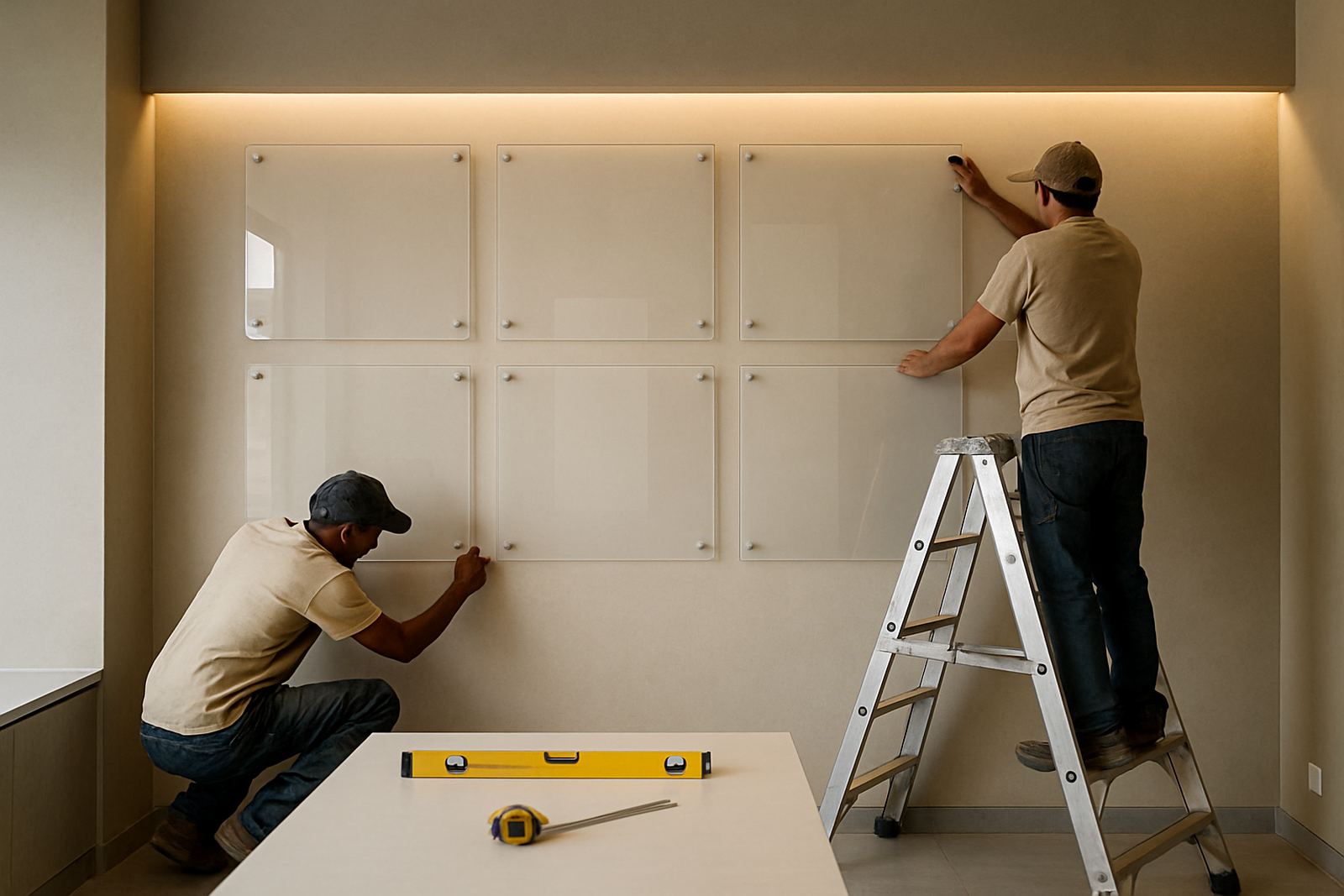
Acrylic is a strong choice where you want a clean, smart finish with good colour clarity. It works well for reception branding, illuminated faces, directional panels and neat retail signage. It can be cut into shapes, layered, edge-lit or mounted with spacers for a more polished look.
It suits controlled environments and signs that need a neat appearance rather than rough handling. In bright sunlight, acrylic gives a crisp finish, but it can scratch if it is cleaned with the wrong cloth or stored badly. For outdoor use, we often pair it with a proper backing or frame so it does not take strain from wind or heat. It is a good option when the brand look matters and the panel size is moderate.
- Best for indoor branding and premium retail signs.
- Good for illuminated or layered sign faces.
- Needs careful handling during transport and installation.
- Not ideal for rough industrial areas with heavy impact risk.
Why Aluminium Suits Long-Term Outdoor Work
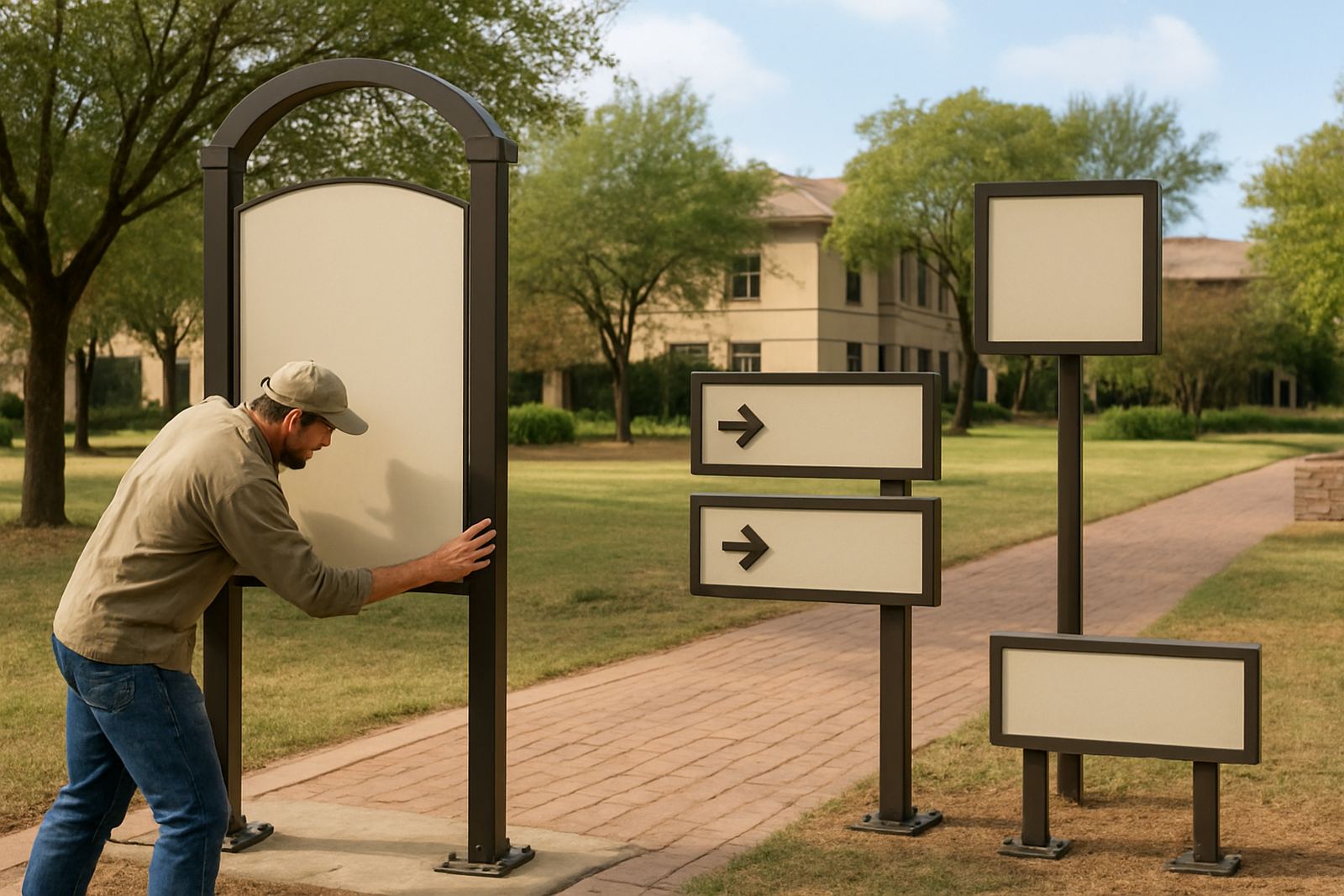
Aluminium is one of the most practical choices for outdoor signage in Gauteng. It handles sun, rain and temperature changes well, and it does not rust like steel. That makes it useful for wayfinding, wall signs, estate boards, building identification and directional signs at business parks or municipal sites.
It is also lighter than steel, which helps on larger panels and reduces load on fixings. For multi-panel projects and campaign rollouts, aluminium is easier to standardise because it stays stable over time. If a site is near busy roads or in areas with strong wind, aluminium can be specified with the right thickness and frame support. It does cost more than temporary board, but over several years the value is often better.
Use aluminium when you want low maintenance, decent strength and a tidy appearance that stays presentable after many summers.
Steel for Heavy-Duty or High-Risk Applications
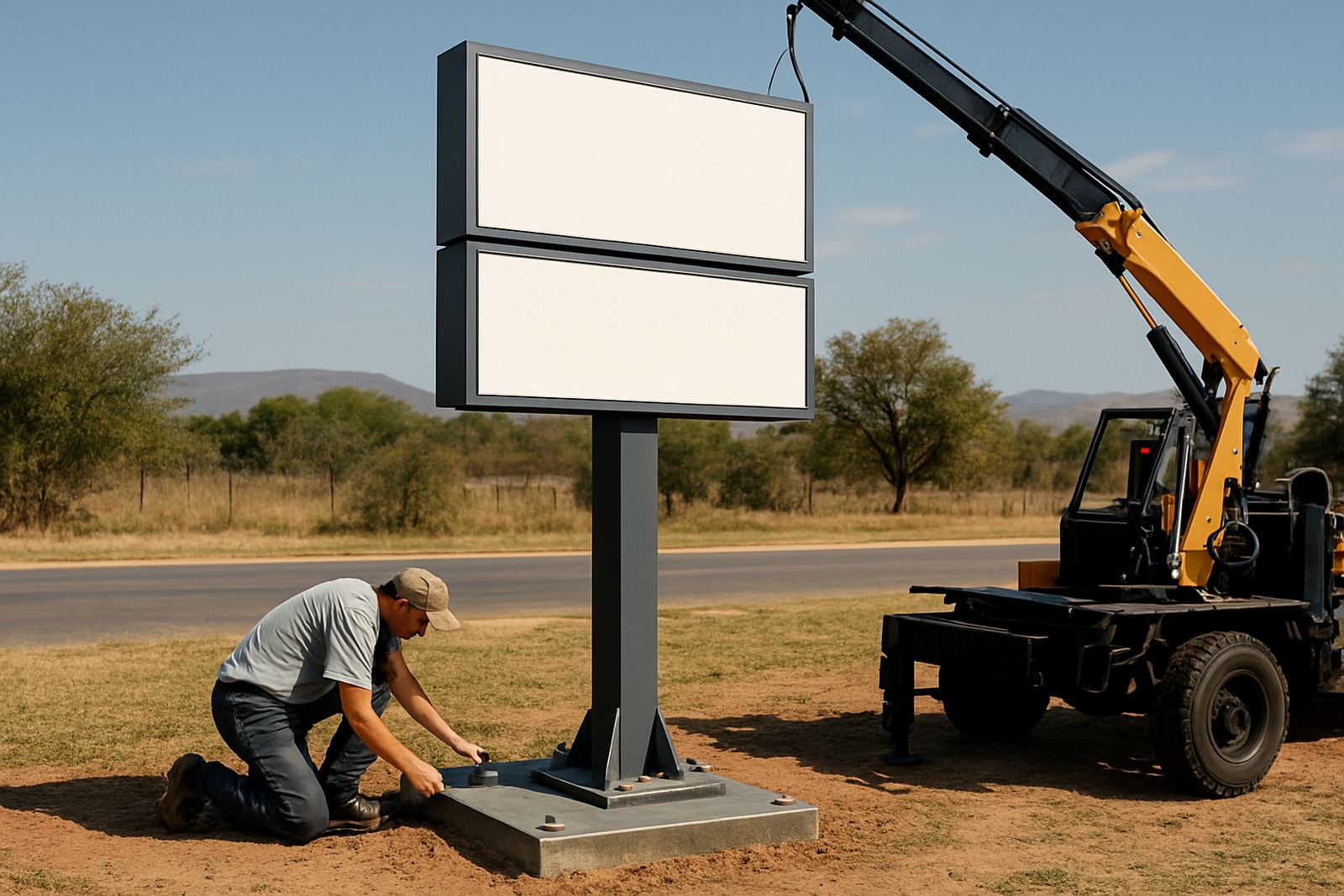
Steel is the right choice when strength is the main issue. It is used for frames, posts, brackets, cages and signs that must resist impact, tampering or high wind loading. On municipal sites, industrial yards and roadside structures, steel gives the backbone that lighter materials cannot match.
Because steel can rust, the finish and coating matter. In hotter inland areas it will last well if properly prepared, primed and painted. In damp environments or where the sign is washed often, corrosion protection becomes even more important. Steel is usually not chosen for the visible face unless there is a specific reason, since it is heavier and more expensive to fabricate and install.
- Best for frames, supports and large external structures.
- Useful where vandalism or impact is a concern.
- Needs good rust protection and regular checks.
- Heavier than aluminium, so installation planning matters.
Temporary Board Materials for Promotions and Short Runs
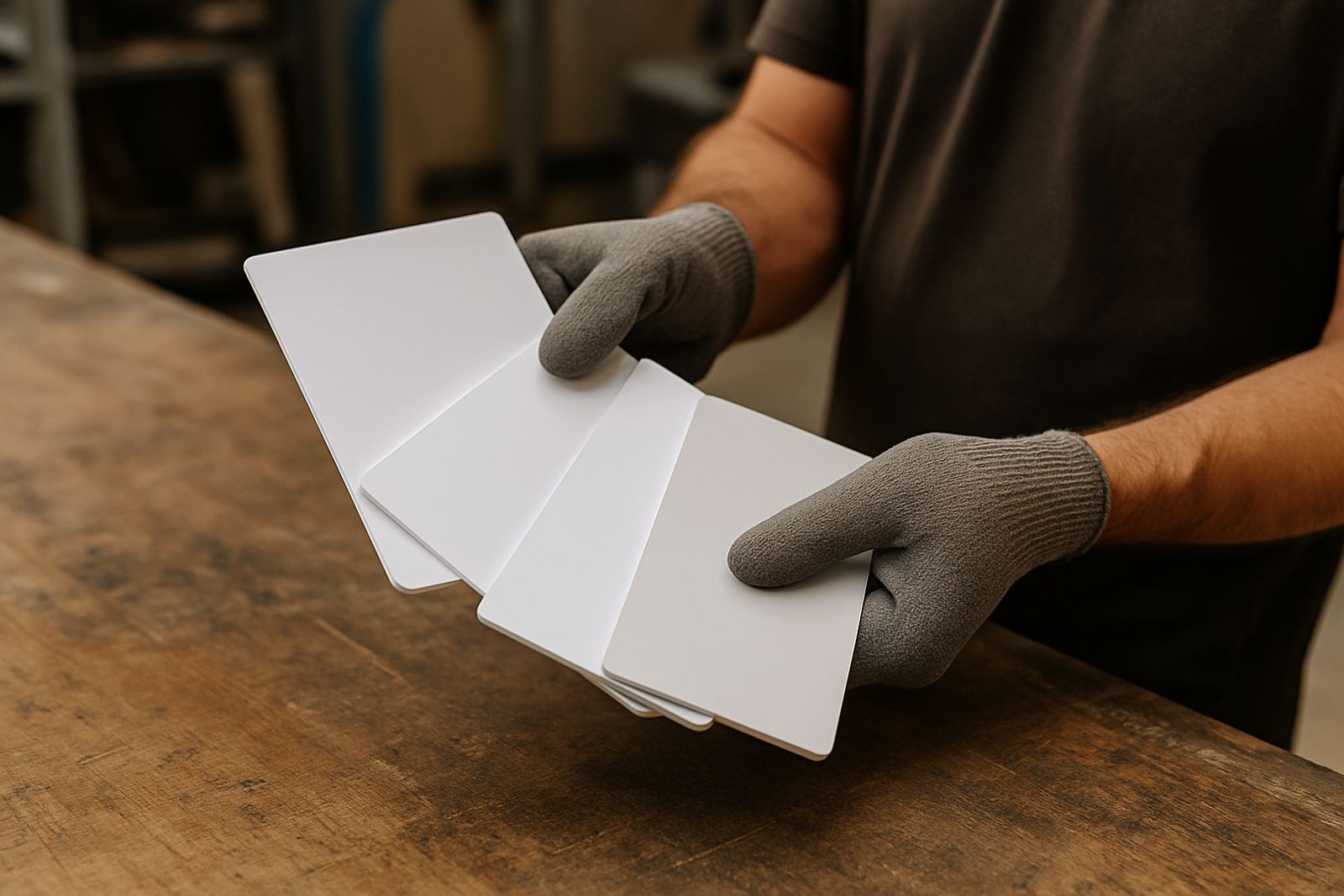
Temporary board materials are ideal for launches, sales, site notices, events and seasonal campaigns. If the message changes often, a board-based solution can save time and money. These materials are best when the sign only needs to stay up for a few weeks or months, not years.
They are common for internal promotions, construction notices, estate marketing and branded displays at events in Pretoria, Brits and Hartbeespoort. The key is to specify the right board thickness and mounting method so the panel does not warp or flap. In strong sun, some boards can fade or bow, so the expected lifespan should be clear from the start. For short jobs, speed matters and temporary board usually offers the best value.
- Choose for short-term campaigns and notices.
- Good when artwork will change often.
- Keep the mounting method simple and secure.
- Not suited to long exposure or repeated weathering.
A Simple Selection Checklist Before You Order
A good material choice comes from a few practical questions. What is the viewing distance? Will the sign be touched, cleaned or bumped? Is the surface flat or curved? Will it be fixed to a wall, freestanding, or mounted on a vehicle? Will it face full sun, wind or moisture? The more often you can answer yes to long-term exposure, the more you should lean toward aluminium or steel support with a durable face.
If the sign is for a retailer or brand campaign, we also look at colour matching, production method and how the graphics will be applied. Some jobs need vinyl, others direct print, and some need cut lettering or layered construction. The material choice should support the finish, not fight it.
- Long-term outdoor sign: aluminium or steel structure with suitable face material.
- Premium indoor sign: acrylic.
- Campaign or event sign: temporary board.
- High-traffic or vandal-prone site: stronger fixings and tougher substrate.
How HM Graphics & Signs Helps You Decide
We help clients compare options before production starts so the sign matches the site and the budget. That includes measuring the location, checking mounting points, advising on thickness and finish, and planning installation across Hartbeespoort, Pretoria, Centurion, Brits and the wider Tshwane area. If permit assistance is needed, we can guide the process so the job does not stall halfway through.
For a store rollout, municipality project or single branch refresh, the right material can reduce maintenance and avoid early replacement. A sign that looks good on day one should still hold up after heat, dust and a few load-shedding related power cuts affecting illuminated areas. If you are unsure between two materials, start with the one that suits the longest use case and the toughest weather, then work back from there. It usually saves money in the long run, even if the upfront price is a little higher.