
Start with the visitor journey, not the sign list
The first step is to map how people actually enter, park and walk through the property. A good wayfinding system follows the visitor journey from the main road or gate, then the parking area, reception, lifts, stairs and final destination. On larger sites in Pretoria, Centurion and Brits this usually means planning for drivers, pedestrians, delivery teams and emergency access separately.
Walk the site before you order anything. Note where visitors pause, where they turn back, and where they miss a key route. Take photos at eye level and write down the exact wording used by security, tenants and reception staff. If a person has to guess at any point, that is a sign a directional board, blade sign or ground marker may be needed.
- List every entry point, including secondary gates and loading bays
- Mark parking, reception, lifts, stairs, ramps and drop-off zones
- Identify decision points where people must choose left, right or straight ahead
- Check which areas need visitor access and which are staff only
Build a simple sign schedule before artwork starts
A sign schedule keeps the project controlled. It sets out each sign type, size, position, message and fixing method before any graphic work begins. For campuses, retail centres and municipal properties, this step prevents duplicate signs and mixed messages. It also helps with budget planning because you can separate essential directional signs from longer-term branding pieces.
Include the exact text for each sign, such as building names, block numbers, parking bays, toilet directions and exit routes. Keep wording short and direct. If the site uses lettered blocks or colour coded zones, make sure the same system is used from the entrance right through to the destination. When the plan is done properly, one person can follow it without asking security for help.
- Sign name and location
- Message or arrow direction
- Approximate size and viewing distance
- Material type for indoors or outdoors
- Fixing method and surface type
- Installation priority and approval status
Choose materials that suit heat, rain and cleaning routines
In Gauteng, outdoor wayfinding signs need to cope with sun exposure, summer rain and dust from roads and site traffic. On coastal routes it is a different challenge, with humidity and corrosion affecting fixings and frames. The right material choice depends on whether the sign is temporary, semi-permanent or part of a long term property system. A sign near a loading area will face more wear than one inside a foyer.
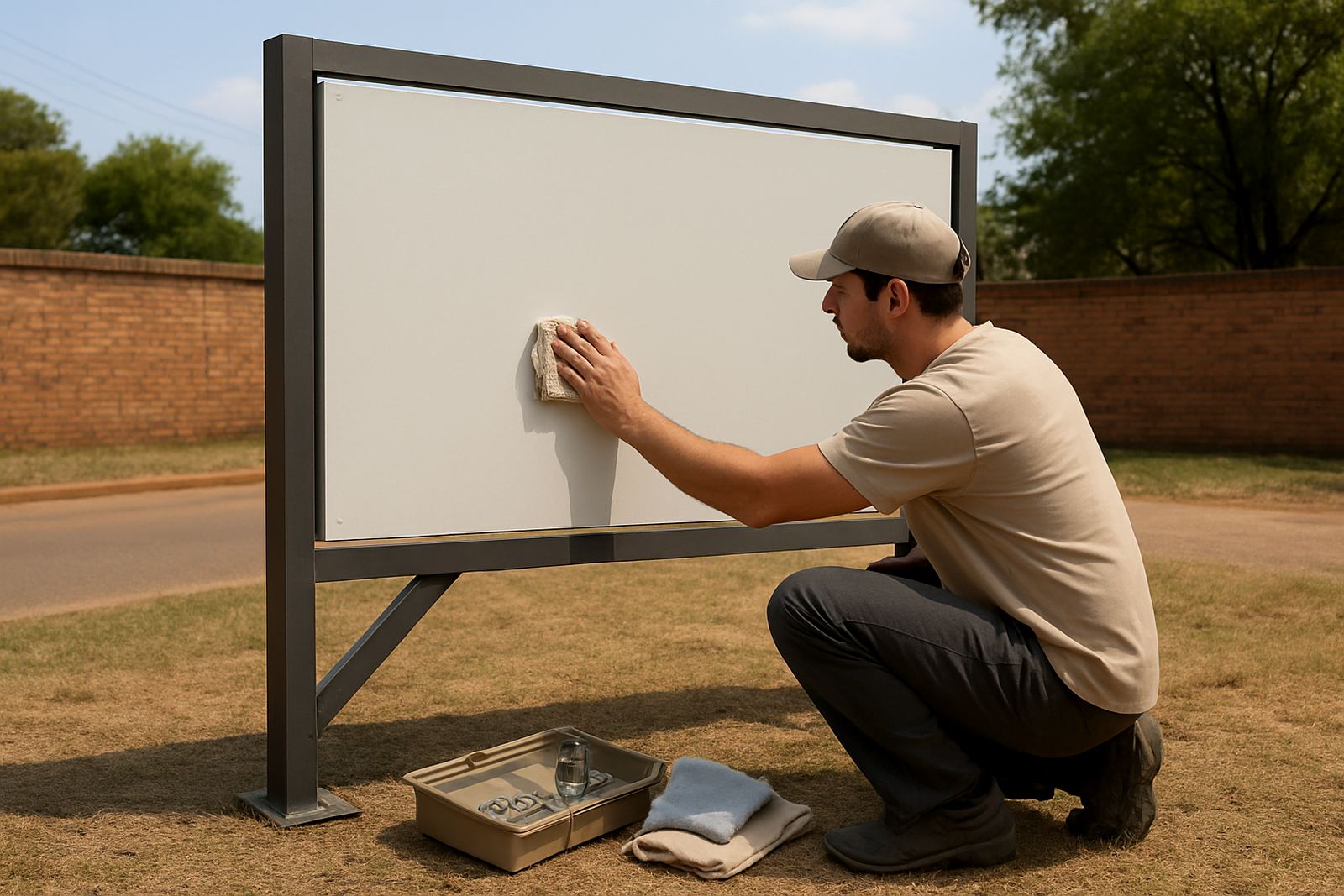
For a busy property, consider materials that can be wiped down and replaced without disturbing the whole system. If the site is affected by load shedding, make sure any illuminated direction panels or light boxes are still readable in daylight. Good contrast matters more than fancy graphics. A clear arrow on a plain background is often the easiest thing for visitors to follow.
- Use weather resistant panels for gates, parking and road-facing signs
- Use durable vinyl graphics for internal walls, glass and doors
- Use mounting methods that allow cleaning and future updates
- Choose colours that stay visible in shade, glare and night conditions
Keep wording clear and readable at driving speed
Directional signage should be written for someone who is tired, distracted or driving slowly through a car park. That means short words, clear arrows and a layout that can be read in a few seconds. If the message is too long, the driver has already passed the turn. For that reason, avoid crowded panels and too many lines of text.
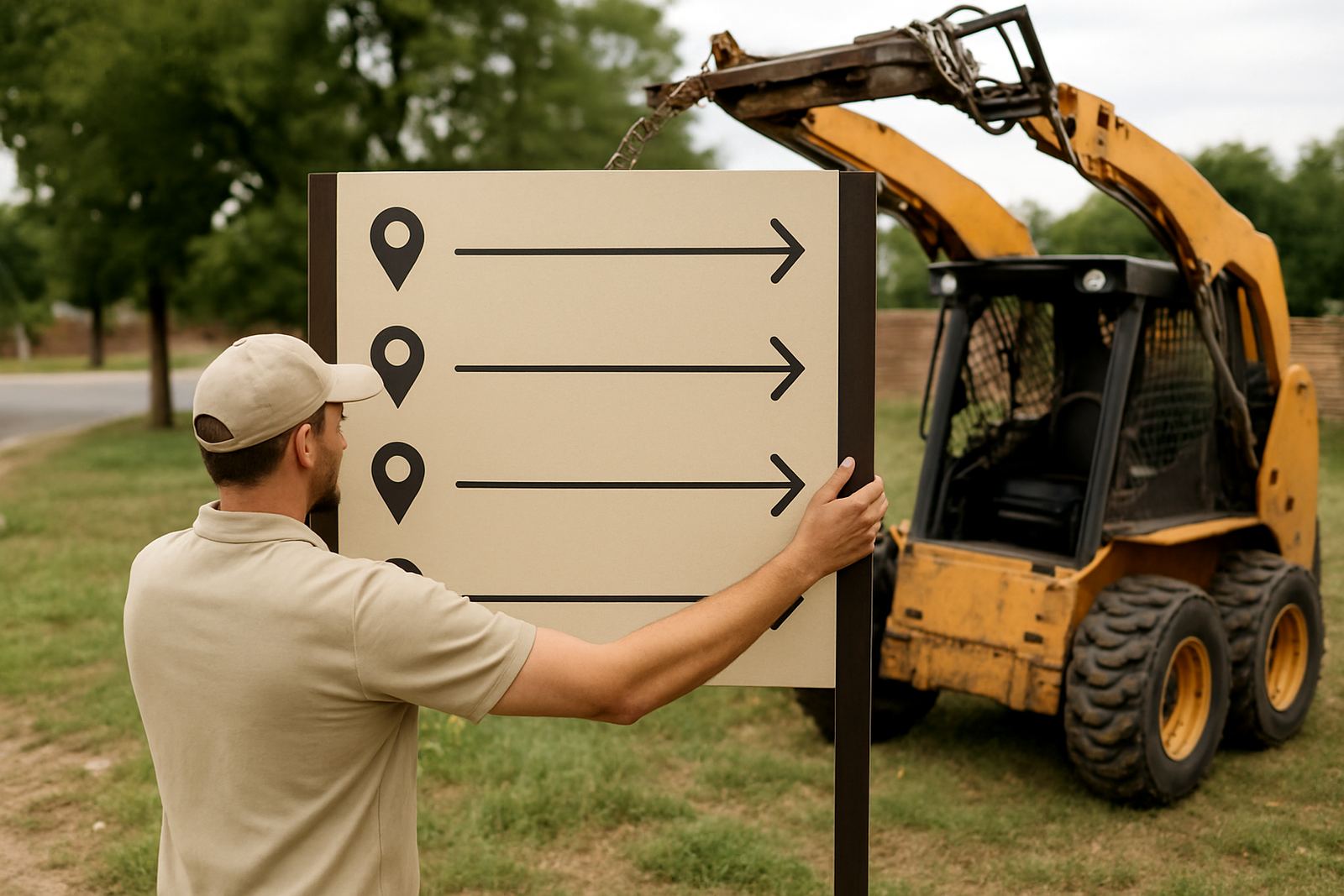
Use one message per sign where possible. If a location has multiple destinations, break them into a sequence instead of listing everything on one board. For example, one sign can direct to main reception, another to service entry and another to visitor parking. The aim is to reduce hesitation. A visitor should never need to stop in the middle of the access road to work out where to go.
Font size, contrast and placement all matter. Signs placed too high can be missed by pedestrians. Signs placed too low can be blocked by parked vehicles or landscaping. During a site survey, check sightlines from the driver seat and from standing height. A slight adjustment to mounting height or viewing angle can change readability completely.
Plan approvals early for municipal and multi-tenant sites
Some sites need more than just design approval. Municipal properties, business parks and multi-tenant premises may require checks on wording, placement, size or visibility. If the property falls under specific site rules or access requirements, it is better to confirm those details before fabrication starts. That avoids delays and keeps the rollout in line with the property manager’s instructions.
When tenants share one site, clarity is important. Each tenant may want stronger visibility, but the overall wayfinding plan still needs to work as one system. A common colour palette, matched arrow style and consistent naming format help the whole site read properly. If the property changes hands or tenants move in and out, a well planned system is easier to update.
- Check landlord or property manager approval requirements
- Confirm branding rules for shared entrances and common areas
- Verify any municipal or site access restrictions
- Record who signs off on final wording and positioning
Install in phases so the site stays open
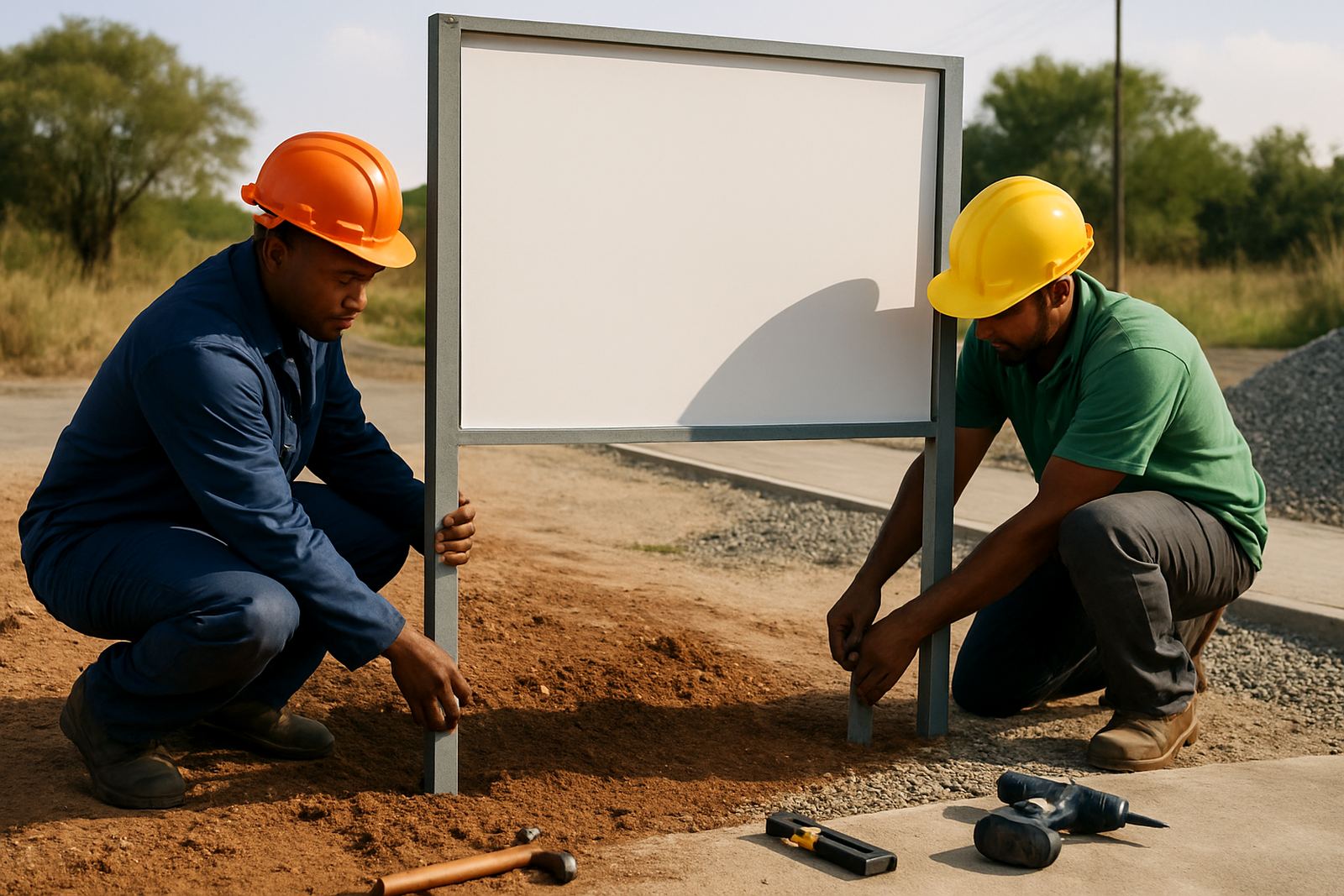
On active sites, installation needs to happen without disrupting traffic, tenants or public access. A phased rollout usually works best. Start with the main entry points, then the parking areas, then internal direction markers and finally room or block identifiers. This approach lets people keep moving while the project is completed in sections.
Before installation day, confirm access times, working hours and any safety requirements. On industrial or public sites, we also check where tools, ladders and vehicles can be positioned without blocking emergency routes. Once the signs are up, we do a final walk through to check straightness, alignment and visibility from the main approach points. If a sign is crooked or hidden by a tree branch, it will not do its job.
- Schedule work around opening hours and peak visitor times
- Confirm safe access for installers and equipment
- Test sightlines from gate to destination after fixing
- Update the site map if any sign position changes
Keep the system current after the rollout
Wayfinding is not a once-off job. When a site grows, offices move, roads change or departments are renamed, the signage should be updated too. Maintenance is easier when the original plan was well recorded. Keep a list of sign locations, materials and sizes so replacements can be matched properly. That saves time when a panel is damaged or a route changes after renovations.
Regular checks are useful after heavy rain, strong wind or construction work. Look for faded vinyl, loose fixings, broken posts and changed access routes. On larger properties in Hartbeespoort, Pretoria and surrounding areas, even a small change in parking layout can affect how visitors move. A clean, current system makes the property easier to use and reflects well on the business or institution.
HM Graphics & Signs assists with site surveys, graphic design, artwork prep, fabrication, installation and maintenance for directional signage across Tshwane, Centurion, Brits and Gauteng. If you need a practical wayfinding plan for a campus, retail property or municipal site, start with the visitor journey and build the signage from there.