What a blade sign does on a busy street
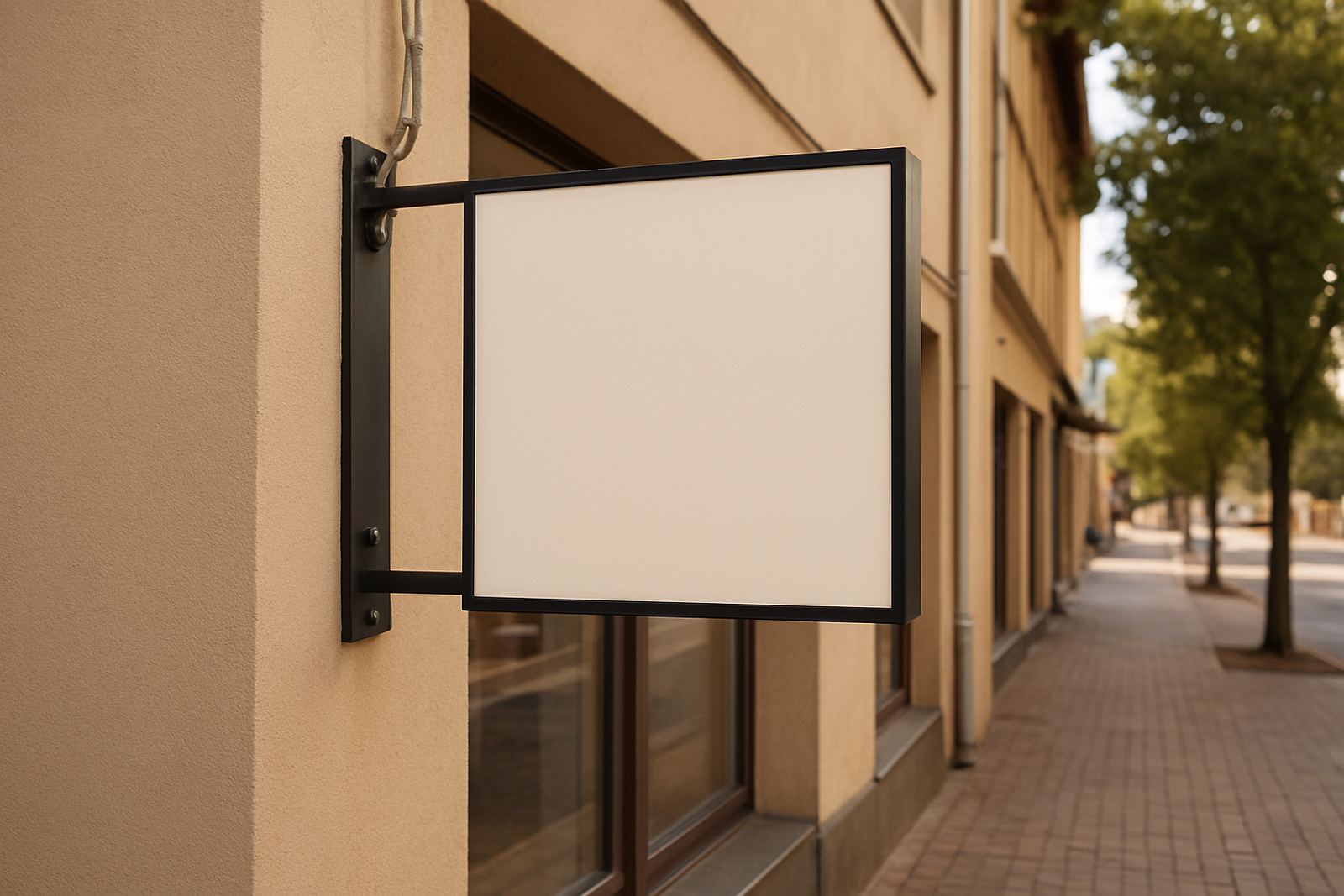
A blade sign, sometimes called a projecting sign, is fixed at right angles to a wall so it can be seen before someone reaches your frontage. That extra angle makes a big difference where foot traffic moves along pavements, in shopping centres, hospital corridors, office parks and mixed-use buildings. It gives your brand a second chance to be seen when front-facing signage is blocked by parked cars, trees or other tenants.
These signs suit businesses that need quick recognition from a distance of 10 to 30 metres, especially where people are walking, queuing or turning a corner. In Tshwane and Centurion, many clients use them for retail units, restaurants, medical rooms and service counters. For municipal sites and public facilities, a blade sign can also help visitors find entrances, departments or service points without confusion.
- Visible from the side, not only straight on
- Useful in narrow streets, malls and multi-tenant centres
- Can carry a logo, name, directional message or room number
- Works well where wall space is limited
Sizes, shapes and build choices that suit your site
Blade signs can be made in square, rectangular, round, oval or custom-cut shapes. The right size depends on how far away people will read it, how fast they are moving and how much wall clearance you have. A small indoor unit might be 450 x 450 mm, while a street-facing sign for a forecourt or shopping node may be 600 x 900 mm or larger. For taller walls or wider roads, we can go bigger, provided the structure and wind load allow it.
Typical build options include a single-sided face, double-sided face or a light box. Faces are commonly made from aluminium composite, acrylic or aluminium sheet, with print, vinyl or routed letters applied to the surface. Frames and brackets are usually powder-coated steel or aluminium, chosen to suit coastal humidity, sunlight and general wear. In areas like Brits, Akasia and Rosslyn, we often recommend stronger fixings where dust and weather exposure are higher.
- Small: about 300 to 450 mm for internal use or tight spaces
- Medium: 600 to 900 mm for shopfronts and corridors
- Large: 1 200 mm and above for roadsides and campus sites
- Lighting can be added where night visibility is needed
Where blade signs work best in Gauteng
Blade signs are a practical choice for retail centres, service businesses, schools, clinics, churches, salons, eateries, hardware stores and municipal buildings. They are especially useful where entrances sit back from the pavement, or where several businesses share one block and need clear identification from either direction. In Pretoria and Hartbeespoort, many clients use them on streets with angled parking, trees or high pedestrian movement.
They also work well inside buildings. In corridors, reception areas and shared walkways, a projecting sign can guide visitors without taking up floor space. For a business with multiple rooms or floors, one sign can carry a number, department name or directional arrow. On a retail strip, matching blade signs across several units can also create a neat and orderly look, while still keeping each tenant distinct.
- Shopfronts and mall corridors
- Office parks and reception entries
- Medical suites and consulting rooms
- Schools, churches and public buildings
- Municipal offices and service points
Installation, fixings and power requirements
Installation starts with a site survey so we can check wall type, height, clearance, pedestrian movement and wind exposure. A blade sign must be fixed properly because it acts like a sail when the wind picks up. We look at the substrate first, whether it is brick, concrete, cladding or steel, then select anchors and brackets that suit the surface and the sign weight. For larger signs, a reinforcement plate or standoff arm may be needed.
Many blade signs are non-illuminated and need no power at all. If the sign includes internal or external lighting, we plan for electrical supply, conduit route and safe isolation. In load-shedding areas, it is wise to consider low-energy lighting with backup power if the sign must stay visible at night. We can also advise on permit requirements where a sign faces a public road or sits on a municipal boundary. The goal is simple: safe fixing, neat finish, no surprises later.
- Confirm wall strength before ordering
- Allow for wind exposure and maintenance access
- Check whether a power point is available for lit signs
- Ask about municipal consent if the sign projects over public space
How to keep the sign clean and serviceable
A blade sign should stay readable, straight and secure. For most signs, a gentle clean with water and mild soap is enough to remove dust, soot and insect marks. In busy roadside areas, cleaning may be needed every few months. Near the coast or in damp conditions, metal fittings should be checked more often for corrosion, especially on exposed brackets and fixings.
If the sign is lit, lamps, drivers and wiring should be inspected during routine maintenance. Flickering, dim areas or water ingress usually mean something needs attention. We also recommend checking alignment after heavy wind or after nearby building work, since vibration can loosen fasteners over time. If the face is cracked, faded or damaged, it is often cheaper to refurbish the panel than replace the full frame.
- Wipe down the face with non-abrasive cloths
- Inspect brackets and screws after storms
- Replace damaged graphics before they look tired
- Schedule maintenance before the busy season
Before You Order an A-Frame Sign
Before we manufacture a blade sign, we need a few practical details so the final result fits the site and the purpose. The first is the viewing distance. A sign that must be read from across a parking area needs different sizing from one meant for a corridor. The second is the mounting surface and height, because this affects the bracket design and the fixings. The third is the message itself, since a logo, full business name and directional arrow may need more space than a simple room number.
It also helps to know whether the sign must match existing branding, whether it should be one-sided or double-sided, and whether lighting is required. If your site has multiple tenants or several entry points, we can help standardise size and layout so the signage remains consistent. For rollout work across Tshwane, Centurion or Gauteng, our team can handle artwork prep, fabrication, installation and follow-up maintenance in one process, which saves time and avoids mismatched finishes.
- Exact site address and photos of the wall or post
- Preferred size, shape and wording
- Tell us if the blade sign will be mounted indoors or exposed to weather outdoors.
- Lighting, permit and access requirements
- Deadlines for launches, openings or campaign rollouts
Key facts
| Product type | Perpendicular projecting sign for wall or post mounting |
|---|---|
| Common sizes | 300 x 300 mm to 1200 x 900 mm, custom sizes available |
| Materials | Aluminium composite, acrylic, aluminium sheet, steel or aluminium bracket |
| Finish options | Printed face, vinyl graphics, routed lettering, powder-coated frame |
| Lighting | Non-illuminated or lit, subject to site power and design |
| Best use | Retail fronts, corridors, offices, public buildings and directional signage |